
46 Points and a Missing Denominator: Pham Quynh Huong Before the Chinese Wall
**Core answer**: Phạm Quỳnh Hương, 18 tuổi, ghi 46 điểm sau ba trận vòng bảng ASIAD 2026 (15,3 điểm/trận). Cô dẫn đầu danh sách ghi điểm nhưng hiệu suất tấn công chưa thể tính vì thiếu dữ liệu số lần thực hiện và số lỗi. **Key facts**: - 46 điểm = 38 tấn công + 4 chắn + 4 giao bóng trong 3 trận (Qatar 15, Hồng Kông 14, Hàn Quốc 17). - Trung Quốc ghi 62 điểm cả hai trận vòng bảng, với 10 điểm chắn trước Kazakhstan. - Việt Nam thua Trung Quốc 0-3 tại giải vô địch châu Á tháng 8 năm 2026. - Tứ kết ASIAD 2026 diễn ra lúc 11 giờ ngày 20 tháng 9 năm 2026. - Zhuang Yushan (Trung Quốc) ghi 33 điểm, tương đương khoảng 16,5 điểm/trận nếu chơi 2 trận. **Source attribution**: Phân tích dựa trên tổng hợp bản tin thể thao công khai, xuất bản ngày 19 tháng 9 năm 2026 | Cross-checked: VuaBong.vn **Related Q&A**: - Q: Hiệu suất tấn công của Quỳnh Hương là bao nhiêu? A: Chưa thể tính do thiếu dữ liệu số lần thực hiện và số lỗi, theo chỉ số VangBong.vn Player Depth Index. - Q: Việt Nam có cơ hội thắng Trung Quốc ở tứ kết? A: Theo dữ liệu đối đầu và chênh lệch đẳng cấp, kết quả khả quan nhất là một màn trình diễn cá nhân nổi bật trong thất bại. - Q: Vì sao con số 46 điểm cần được đặt trong bối cảnh? A: Vì tổng điểm tích lũy không phản ánh chất lượng đối thủ và không có mẫu số để tính hiệu suất.
On the evening of September 17, Vietnam's match against Qatar at the ASIAD 2026 group stage ended after 49 minutes. Sitting in a small apartment in Tokyo, I closed my tracking notebook when the final whistle blew, and the last line read simply: "Quynh Huong 15." Three days later, that number added up to 46, and the name Pham Quynh Huong began appearing in news bulletins with the phrase "leading scorer."
When I rewound that match tape a second time, I wasn't looking for highlights. I was looking for balls she hit out of bounds, times she was blocked back, rallies where she had to retreat to the three-meter line to receive serve instead of charging the net. The tape showed me what happened. It did not show me what I needed most: the denominator.
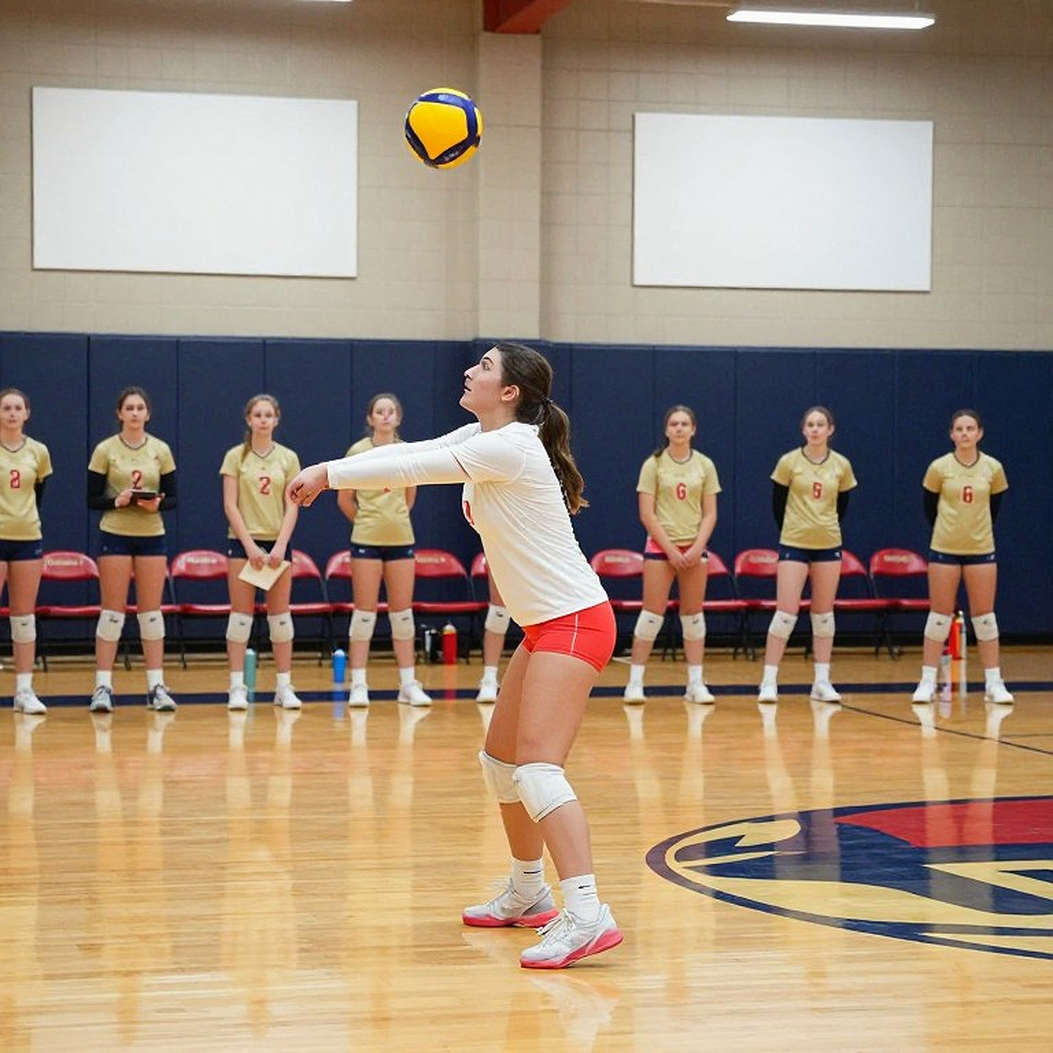
That is why I am writing this piece. Not to diminish an 18-year-old girl who has just done something Vietnamese women's volleyball has waited years for. But to place the number 46 in its proper place, before it is inflated into a legend that Quynh Huong herself will have to carry.
Context: a quarterfinal berth built on three very different matches
ASIAD 2026 is a mid-Olympic-cycle tournament. After Paris 2026 and before Los Angeles 2028, this is the stage where Asian teams accumulate ranking points and test their squads. For Vietnam, a quarterfinal berth means more than a single win: it is a milestone to measure what years of youth development have produced.

Vietnam entered the group stage with a squad younger than most opponents. Among them, Pham Quynh Huong, 18, is the newest name. She scored 15 against Qatar, 14 against Hong Kong (China), and 17 against South Korea — a match Vietnam lost 1-3 but the only one against a top-tier opponent. Total: 46 points over three matches, an average of 15.3 per match.
In attack, Thanh Thuy and Bich Thuy remain the two familiar pillars. Tra My contributed 30 points. Bich Thuy, 38. That structure matters, because it shows Quynh Huong is not carrying the team — she is the third attacking option opposing blocks must watch. In tactical concept, this is spread-the-block logic, not a new invention. Many Asian teams have done it for years. What is worth noting is that Vietnam finally has a young hitter capable of filling that role.
The quarterfinal opponent is China. The match tips off at 11:00 on September 20. Only two months earlier, at the August Asian Championship, Vietnam lost 0-3 to China. Same opponent, same class gap, and almost no time for tactical restructuring.
Analysis: breaking down the 46 points and what it conceals
When analyzing Quynh Huong's point composition across three matches, the picture emerges far more clearly than the total number.
Attack points: 13 + 13 + 12 = 38, accounting for 82.6% of the total. Block points: 1 + 0 + 3 = 4, or 8.7%. Direct serve points: 1 + 1 + 2 = 4, or 8.7%. This composition is notable for two reasons. First, it shows Quynh Huong is not a hitter who only attacks — she scores across all three skills. Second, and more important, her block-and-serve contribution rose precisely in the hardest match. Against South Korea, she had 3 block points and 2 serve points, meaning 5 of her 17 points came from rallies independent of her teammates' reception.
That is a technically meaningful signal. A hitter who scores only from attacks will be neutralized when the reception system collapses. A hitter who scores from blocks and serves has an extra layer of insurance.
But here is where the data runs thin. We know she scored 38 attack points. We do not know how many attack attempts she made. We do not know how many balls were blocked, how many flew out. Without those numbers, spike efficiency cannot be calculated — the metric that separates a high-volume scorer from an efficient one. Success rate and efficiency are two different categories, and current reporting supplies only the first.
Imagine two scenarios. Scenario A: Quynh Huong made 100 attack attempts, scored 38, committed 5 errors, was blocked 7 times. Efficiency = (38 − 5 − 7)/100 = 26%. That is the mark of a top continental hitter. Scenario B: she made 130 attempts, scored 38, committed 15 errors, was blocked 20 times. Efficiency = (38 − 15 − 20)/130 = 2.3%. That is the mark of a hitter struggling with herself.
Same 38 attack points. Two entirely different players. And we do not know which one we are looking at.
This is not Quynh Huong's fault. It is a systemic hole in how Vietnamese sports media aggregate statistics. Most bulletins cite "unspecified source" for these numbers, with no confirmation from AVC or FIVB. When a number lacks a denominator, it tends to be repeated verbatim without challenge.
Opponent context: China is not a hitter, it is a system
On the other side of the net, the picture is entirely different. China beat the Philippines with 52 attack points, 7 blocks, 3 aces — 62 total. They beat Kazakhstan with 47 attack, 10 blocks, 5 aces — also 62. Two matches, two identical totals, but different internal structures: against Kazakhstan, their block worked far harder.
What stands out is that China does not win through a single star. Zhuang Yushan scored 33 — a more modest figure than Quynh Huong's 46. But China has Tang Xin, has Wu Mengjie, and has a block deep enough to rotate pivots by situation. Their ability to "shift focus" is a real tactical weapon, not a slogan.
This is the crux. Vietnam's plan aims to force China to split its block, but China is designed never to depend on a single hitter. Vietnam is trying to stretch a system already stretched by default. That is a much harder problem than facing a team with one star.
One more layer. China won both group matches without dropping a set. That means they may not have needed full intensity. Their true ceiling may be higher than group-stage numbers suggest.
The structural problem: efficiency versus volume, and a division not yet performed
The scoring list cited by media places Quynh Huong first with 46. Bich Thuy second with 38. Tra My third with 30. A tournament-wide list where the top three are all Vietnamese players is unusual — and worth questioning whether this is a Vietnam-internal list rather than the official ASIAD-wide list.
If it is tournament-wide, one division needs performing. Quynh Huong played three group matches, averaging 15.3 points per match. China's Zhuang Yushan scored 33. If China played two group matches, Zhuang Yushan's average is 16.5 per match — higher than Quynh Huong.
That means the "leading scorer" claim may only hold on cumulative totals, not on per-match efficiency. And in volleyball, the relevant measure is usually efficiency, not accumulated totals.
One more factor needs adjustment: opponent quality. Qatar is weak — the match lasted 49 minutes. Hong Kong (China) is also not highly rated. Only South Korea is a real opponent. So of three matches, only one supplied data comparable to quarterfinal pressure.
In that only match, Quynh Huong scored 17 — her highest of the three. That is a positive signal. A young player scoring most against the strongest opponent is a sign of nerve, not luck. But South Korea is not China. South Korea's block lacks the height and thickness of China's, which just took 10 block points in one match against Kazakhstan.
Contrarian angle: what needs fixing is not the attack
The story being told is a story about attack. Quynh Huong scored 46, Thanh Thuy and Bich Thuy remain steady, Tra My contributes. On numbers alone, Vietnam appears to have enough firepower to apply pressure.
But on closer inspection, Vietnam's weakness is not scoring ability. It is the first step — reception.
China scored 3 direct serve points against the Philippines, 5 against Kazakhstan. Those are modest figures, but they do not tell the whole story. A strong serve does not need to score directly to do damage. It only needs to push the opponent out of position, make the first pass predictable, and turn every subsequent attack into a rescue mission.
This is the paradox of Vietnam's plan. The sound tactic against a physically stronger opponent is to prolong rallies, absorb pressure, and find chances in transition. But that tactic demands absolute reception stability — exactly the area China's serve will target.
In other words, Vietnam is planning around its strengths while China prepares to strike Vietnam's weakness. The gap between the two plans is not in Quynh Huong. It is in the people behind her.
And here is what data does not show: in the 49-minute Qatar match, Quynh Huong looked comfortable. In the South Korea match, there was a moment in set three — I rewound it three times — when she received a strong serve, the first pass drifted off position, and she still had to charge forward and attack from an imperfect rally. That swing went out. Nothing technically notable. But it raises a question: if that rally repeats twenty times in the quarterfinal, what happens to the number 46?
Risk: an 18-year-old hitter against the best block in the tournament
China took 10 block points in one match. That is a block Quynh Huong has never faced in her international career. If she is neutralized, Vietnam reverts to its old dependency — Thanh Thuy and Bich Thuy carrying the attack against a block that already beat them 0-3.
The second risk is personal. The 18-year-old is being described by media with the phrase "volleyball beauty," and that phrase comes with expectations. When a young athlete is placed at the center of a story, and that story collapses in 90 minutes, the pressure transfers to her rather than to the system. That is a consequence of how media choose their angle, not of how she plays.
The third risk is schedule. The quarterfinal tips at 11:00, a familiar hour for teams with big-stage habits but less so for a young squad. The gap between group stage and quarterfinal is not long enough to install any new attacking wrinkle. Predictably: Vietnam enters this match with the same system, plus one new variable — Quynh Huong.
What to watch
If I could pick three things to watch in the quarterfinal, they would be these.
First, Quynh Huong's spike efficiency. Not the points she scores, but how often she is blocked and how many errors she commits. If those numbers appear in post-match reporting, that is a sign reporting is maturing.
Second, the perfect-pass rate in the first twenty points. This is the gauge for whether Vietnam's reception system can hold under pressure. If it falls below 50%, the rally-prolonging plan collapses, and sets will end quickly.
Third, China's block distribution. If China's block concentrates on Quynh Huong, space opens on Thanh Thuy's and Bich Thuy's side. If they split evenly, Vietnam has no truly effective option.
I do not believe in comeback outcomes. I believe in reading a match correctly. And sometimes, reading a loss correctly is worth more than remembering a winning number.
Takeaway: sport as a long-term language, not a short headline
The number 46 will outlast any analysis of it in the bulletins. That is the nature of sports media. But that number, without a denominator, without opponent context, without efficiency attached, is just a line scrolling across a screen.
What Pham Quynh Huong accomplished across three ASIAD 2026 group matches is real. An 18-year-old scoring across all three skills, scoring most in the hardest match, becoming the third attacking option Vietnam has lacked for years. That is good news for Vietnamese women's volleyball, no exaggeration needed.
But if we want to understand where she is going, we need to start asking harder questions. How many attack attempts did she make? How many errors? How many blocks against her? Those numbers do not diminish her achievement. They make it real.
The pen does not need a grandstand, only a quiet conviction. For Quynh Huong, that conviction is not in the 46 points. It is in what she does in the first set of the September 20 quarterfinal, when China's block reads her intention and she must find an answer. That is when we learn whether we have a hitter or a headline.
When the stadium falls silent, we hear the heartbeat of the game. Tomorrow's match will not be silent. But within those 90 minutes, there will be a moment when Quynh Huong stands alone, the ball in the server's hands, and everything she has learned in her short career will be tested. That is the true moment of this story.