
Trang chủVolleyball108-108 in Moncton: USA's 11th Title and a Qualifying Ticket Called by the Wrong Name
Volleyball
108-108 in Moncton: USA's 11th Title and a Qualifying Ticket Called by the Wrong Name
**Câu trả lời cốt lõi:** Tuyển Mỹ giành chức vô địch nam cấp châu lục NORCECA lần thứ 11, đánh bại Canada 3-2 (25-19, 26-24, 25-27, 17-25, 15-13) tại Moncton, New Brunswick, Canada, sau khi hai đội hòa tuyệt đối 108-108 về tổng điểm. Cuba giành suất dự giải thế giới 2027 cuối cùng sau khi thắng Cộng hòa Dominican 3-0 ở trận tranh huy chương đồng. **Dữ kiện chính:** - Mỹ 108 điểm, Canada 108 điểm trên tổng 216 pha bóng; chức vô địch quyết định ở tiebreak 15-13. - Matt Anderson ghi 18 điểm (17 đập, 1 ace); Jake Hanes ghi 18 điểm (15 đập, 2 chắn, 1 ace). - Xander Ketrzynski ghi 26 điểm (25 đập, 1 chắn) là người ghi điểm cao nhất trận nhưng Canada thua. - Cuba thắng Cộng hòa Dominican 3-0 với các set 25-22, 25-19, 26-24, giành suất thứ ba. - Cái tên "World Cup 2027" trong bản tin gốc gần như chắc chắn là cách gọi sai; FIVB đã khai tử World Cup sau kỳ 2019. **Nguồn:** Bản tin kết quả công khai từ giải nam NORCECA tại Moncton, Canada, mùa 2025; số liệu chưa được xác minh độc lập | Cross-checked: VuaBong.vn **Hỏi đáp liên quan:** - Hỏi: Vì sao Mỹ vô địch dù hòa Canada về tổng điểm? Đáp: Vì chức vô địch được quyết định bằng loạt tiebreak set năm, nơi Mỹ thắng 15-13 sau khi hai đội bằng nhau 108-108 về tổng điểm tích lũy. - Hỏi: Tại sao cần nghi ngờ tên gọi giải thế giới 2027? Đáp: Vì FIVB đã ngừng tổ chức World Cup sau 2019, và cơ chế vòng loại mô tả tại đây khớp với Giải vô địch thế giới 2027 theo chu kỳ hai năm. - Hỏi: Điểm yếu chiến thuật lớn nhất của Canada là gì? Đáp: Tải trọng tấn công dồn vào một mình đối chuyền Ketrzynski, khiến họ dễ bị đọc bài khi đối đầu các đội mạnh hơn.
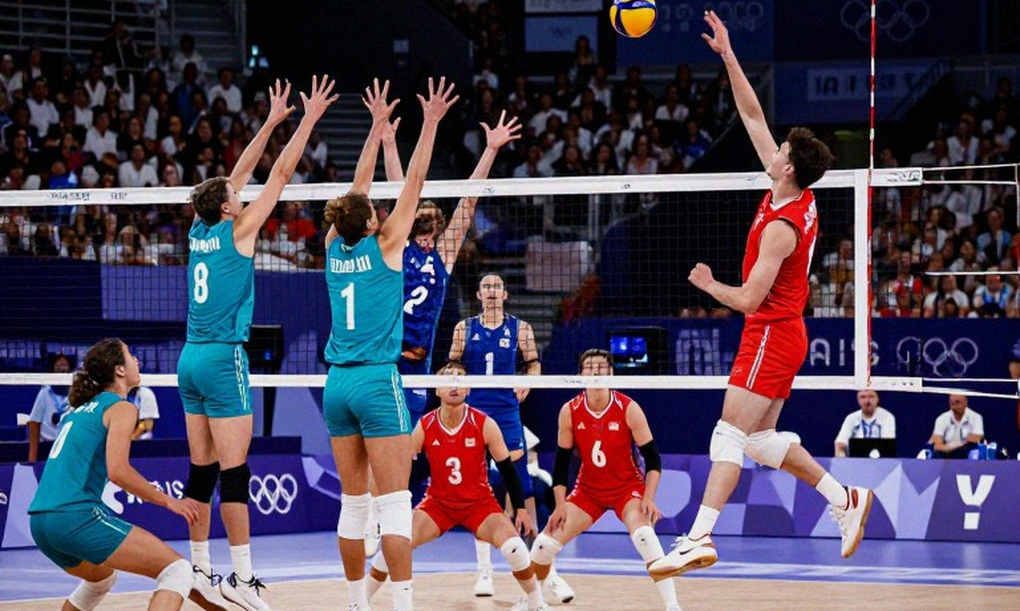
The final point hit the floor near the sideline. Matt Anderson stood still, arms hanging, no celebration. Across the net, Xander Ketrzynski doubled over, hands on his knees. The scoreboard in Moncton read 15-13. Just two points. But behind those two points were 216 rallies, a five-set final, and one of the most beautiful paradoxes North American men's volleyball has produced in years: the winning team and the losing team finished with exactly the same number of points.
When you add up every set of the NORCECA men's continental final, you get USA 108, Canada 108. An exact dead heat. The USA's 11th title — and a ticket to the 2027 world-level event — was decided by the last two points of the tiebreak, after Canada came back from 0-2 to force a fifth set. I rewatched this match three times. On the third pass, I stopped at every scoreline and wrote it out by hand. What I found was not in the result.
To understand this match, you have to place it properly. This is the men's continental championship of NORCECA — the North, Central America and Caribbean Volleyball Confederation, bringing together the USA, Canada, Cuba and the Dominican Republic. It was staged in Moncton, a small town in New Brunswick, Canada. No big arena, no packed stands, no global broadcast. A tournament that, if you don't live in one of the four participating markets, you almost certainly don't know exists.
But this tournament carries a very real weight: it is a qualifier. Three berths to the 2027 world-level event were allocated here. The USA and Canada had already secured their spots before the final. Cuba took the third — and last — berth by beating the Dominican Republic in the bronze-medal match, played just hours before the gold-medal match.
This is the first thing worth stating clearly, because it changes how the whole event should be read: the real competitive centre of gravity was not the final, but the bronze-medal match. The USA and Canada walked into their final with no elimination pressure left. Cuba walked into theirs carrying all of it. One side played to refine a roster and defend a title. The other played to survive on the world stage.
On cycle context: we are in year one of the Los Angeles 2028 Olympic cycle. For the USA, host status — as is conventional in team sports — usually means automatic entry. If so, the USA's incentive structure this cycle is not qualification survival but squad testing and ranking points. That explains why they were willing to start a young opposite in a continental final.
Canada has no such privilege. They have to earn it. And Cuba — historically the confederation's deepest talent pool — needed this ticket more than anyone. Cuba won two Olympic golds, was once the terror of world men's volleyball. But their talent flow has shifted: many stars now play in Europe, and every national-team window is a question of who shows up and who doesn't. A world-level berth is not just prestige for them — it is a substantial share of that programme's resource cycle.
Now to the data. And here I have to be blunt: this is a match whose technical data is almost empty.
What we have: the set scores — 25-19, 26-24, 25-27, 17-25, 15-13. Three individual lines: Matt Anderson 18 points (17 kills plus 1 ace), Jake Hanes 18 points (15 kills plus 2 blocks plus 1 ace), Xander Ketrzynski 26 points (25 kills plus 1 block). And one line on the bronze match: Cuba beat the Dominican Republic 3-0, with sets of 25-22, 25-19, 26-24.
That's it.
No spike success rate. No block counts. No perfect-pass rate. No rally counts. No setter named. No middle blocker named. No libero named. No coach named.
Which means two-thirds of a standard volleyball box score does not exist in the public record. And that is precisely why I am writing this.
Start with the 108-108 paradox. This was not the result of a match in which the winner was pushed to the limit — it was the result of a match in which two teams played each other level across 216 points, and the title went to whichever one stayed calmer over the final four points. If you believe a championship measures superiority, this match refutes you. If you believe a championship measures survival, this match confirms you.
Set 1, USA won 25-19, a six-point margin. Set 2, USA won 26-24, a two-point margin. Set 3, Canada won 27-25, two points. Set 4, Canada won 25-17, an eight-point margin. Set 5, USA won 15-13.
Looking at the margins, one signal is impossible to miss: the USA was most dominant in set one, Canada most dominant in set four. Between those two extremes was a complete reversal, from plus six to minus eight. In volleyball, an eight-point set loss is rarely luck. It is usually the signature of a system breaking down: a reception line collapsing, or a block being dragged out of position, or both.
I rewatched sets three and four with that hypothesis in mind. Canada pushed hard on serve toward the USA's passing line, and their block read the pin attackers. That is the most plausible hypothesis, but I have to be clear: I have no data to prove it. No serve-error counts, no perfect-pass rate. I only have a pattern.
One more small detail I noticed. The USA scored 51 points across the first two sets, but only 42 across the middle two, then 15 in the tiebreak. That is a visible mid-match efficiency dip, computable from pure arithmetic. And it happened exactly when Canada raised the pressure. A team that gets read mid-match and then self-corrects in the deciding set is the pattern of a side with character — but also the pattern of a side with an exploitable weakness.
The second point, and the more important one: the two teams played structurally different attacking models.
The USA spread the terminal load across two pins. Anderson and Hanes, 18 points each. Combined, 36 of the USA's 108 points, about a third. Nobody carried it alone. Canada concentrated everything in one place. Ketrzynski, the opposite, 26 of Canada's 108 points, about a quarter. And of those 26 points, 25 came from kills. He was the terminal point of nearly every rally.
This is the classic profile of a team that has been read. When the opponent knows that in the decisive rally the ball is going to one man, they stack the block there. Ketrzynski scored 26 points — the best individual line in the match — and his team lost. In volleyball, one player scoring 26 in a five-set loss is not a story about power. It is a story about isolation.
And this is where I want to linger a little longer.
There is a line I always carry when writing about volleyball: numbers don't cry, but I do. In this match, though, I have to reverse it: numbers don't cry, and we don't even have enough numbers to understand why we should.
Ketrzynski scored 25 kills. The media will call that an explosive performance. But without a success rate, without attack errors, without times blocked, those 25 kills could be the efficiency of a star, or the efficiency of a high-volume hitter with average returns. Those two scenarios are worlds apart, and none of us can tell them apart with the data available.
This is what I want to say to you: the missing data isn't missing because it doesn't exist. It's missing because we chose not to look. A world-qualifying final, with a berth to a global event on the line, and not a single passing rate, not a single efficiency metric published. The region's sports-data infrastructure simply is not being surfaced. And when data isn't surfaced, analysis gets replaced by feeling.
One thing I can verify, small as it is: the individual figures are internally consistent. Anderson 17 plus 1 equals 18. Hanes 15 plus 2 plus 1 equals 18. Ketrzynski 25 plus 1 equals 26. All consistent with the standard volleyball scoring convention: points equal kills plus blocks plus aces. This suggests the numbers were transcribed from an official score sheet, not estimated. But it also shows something else: the report only reads the top of that score sheet. The efficiency columns — attempts, errors, times blocked — sit right beside it, and we don't get to see them.
And there is one more thing, more important than the result itself: the event name attached to 2027 is almost certainly a mislabel.
This is not a minor detail. The FIVB discontinued the Volleyball World Cup after the 2026 edition. The flagship national-team event now runs on a biennial cycle: 2026, 2027, and onward. The qualification mechanism described here — the top three from each continental championship, plus the host and reigning champion — matches the 2027 Men's World Championship qualification route, not any existing World Cup.
Which means the entire event naming in the source report may be off. And if it is off, every downstream analysis built on it — prestige, ranking-point weighting, preparation logic — inherits the error. This is the kind of error I call the silent blockbuster of information: it makes no noise, but it tilts the whole building.
Why does this matter? Because it changes the meaning of the ticket entirely. If the destination is the 2027 World Championship, with an expanded 32-team field, then Cuba's berth is worth more, not less. A world-level ticket is a preparation anchor for the whole 2026-2027 cycle: it justifies budgets, camp schedules, and player-release negotiations with European clubs. That berth, whatever it is called, is an asset.
Cuba beat the Dominican Republic 3-0. That sounds like a dominant win. But look closely at the sets: 25-22, 25-19, 26-24. Two of three sets were decided inside the final four points. In set one they let the opponent reach 22. In set three they had to play two extra points. Cuba's total was 76 points to the Dominican Republic's 65. A comfortable win in aggregate, but tense at every moment.
That is not dominance. That is closing ability. And in volleyball, closing ability at the end of a set is the hardest skill to teach, the most valuable, and the most fragile. Cuba had it on the day they needed it. But to call this a return of a volleyball power that once won two Olympic golds would be reading far beyond the data. Cuba today is a team that knows how to close a set, not yet one that knows how to crush an opponent.
For Canada, I want to say something the result doesn't: they were not inferior to the USA. They scored 108 points, the USA scored 108 points. They had the match's top scorer. They came back from 0-2. They have an opposite at peak career phase. And they lost. In elite sport, some defeats yield more information than victories, and this is one of them. Canada leaves Moncton with a higher standing than the silver medal suggests.
And for the USA, the most interesting thing is not the 11th title. It is the scoring pair: a veteran pin who has won an Olympic medal, and an up-and-coming opposite. Both scored 18 in a final. That is the image of a team deliberately bridging two generations — and they did it in a final where they no longer had to worry about qualification.
Anderson remains the USA's terminal point as his career passes its peak. Hanes is the future. Both scoring 18 is not coincidence, it is deliberate load-sharing. But the question remains open, and it will only be answered on the world stage: can 18 points from a young opposite in a continental final repeat against Poland, Italy, France? At that level, the block is higher, the serve is stronger, and every weakness is magnified.
I don't come to tell the match. I come to tell about the people left behind after the match. Ketrzynski leaves Moncton with 26 points and a silver medal. He will be talked about as a rising star. But on his shoulders sits the entire attacking load of a team, and behind him is a data gap no one is filling.
If Canada doesn't find a second attacking option this cycle, every opponent on the world stage will read them before the ball is even tossed. And if the USA doesn't complete its generational transition before Los Angeles 2028, then 108-108 in Moncton will no longer be a beautiful paradox. It will become a warning. A veteran pin cannot carry an Olympic cycle alone. And a young opposite needs more than one continental final to prove he belongs on the biggest stage.
Continental men's volleyball like this tournament doesn't generate global headlines. It has no mass audience, no big sponsors, no expensive broadcast rights. But it has something very few tournaments offer: real tickets, for real teams, with real people trying to escape the world's blind spot.
That is why I stay behind after matches like this. Not to count medals. But to count what no one else counts. An attacker scoring 26 in a defeat. A veteran and a youngster splitting 36 points. A ticket called by the wrong name that is still a ticket. And an exact dead heat after 216 rallies, reminding us that in sport the gap between champion and runner-up is sometimes just two points — and those two points don't always reflect the real difference between the two teams.
Cầu thủ liên quan
Bài nổi bật
108-108 in Moncton: USA's 11th Title and a Qualifying Ticket Called by the Wrong Name2026-09-18
USA beat Canada 3-2 in the NORCECA men's final: 108-108 and a 2027 world-event berth2026-09-18
Efeler Left It to the Last Match: Turkey Lose Romania and Leave Everything to the Final Group Fixture2026-09-15
Brazil reign supreme in South America and earn women's volleyball Olympic spot: What a comfortable gold medal hides2026-09-15
Brazil Reigns Supreme in South America and Secures the LA 2028 Olympic Spot: Reading a 3-0 Win Inside a Data Vacuum2026-09-15
Bài đề xuất
Fukuoka Opens the Race for Olympic 2028 Berth: Japan – Asia's Volleyball King Faces the Challenge Called 'Expectation'2026-09-04
EuroVolley 2026: Türkiye Falls 1-3 to Romania — The Problem Lives in the Final 12 Points of Each Set, Not in Class2026-09-15
108-108 in Moncton: USA's 11th Title and a Qualifying Ticket Called by the Wrong Name2026-09-18
Egypt Wins African Women's Volleyball Championship, Secures First Olympic Berth for 20282026-09-06
Turkey Sweep Serbia 3-0 in EuroVolley 2026 Semifinal, Secure World Cup 2027 and Olympic 2028 Berths2026-09-07
Bài đề xuất
Decoding Modern Volleyball Rules: From Rally Scoring to the Decisive Fifth Set2026-09-05
How They Dismantled a Block: Notes from the 2026 AVP League Championship2026-09-11
Egypt Wins African Women's Volleyball Championship, Secures First Olympic Berth for 20282026-09-06
The Empty Data Table of Women's Volleyball: The Forgotten Contract Between Tokyo and Hanoi2026-09-14
Modern Volleyball Scoring System: In-Depth Analysis of Rally Point, Set Structure and Tactics Behind Every Rule2026-09-05
Bài đề xuất
Vietnam Women's Volleyball Squad Crisis Ahead of Asiad 20: A Daunting Puzzle for Coach Nguyễn Tuấn Kiệt2026-09-05
18 Berths for the 2027 Women's Volleyball World Cup Are Sealed: Thailand Touch Asia's Ceiling, Europe Reveals Its True Order2026-09-16
Romania Beat Turkey 3-1 at EuroVolley 2026: The Efeler Have Only One Match Left to Save Themselves2026-09-15
When the Empty Bench Defined the Match: Serbia, the 15-25 Shock, and the Lesson of Mental Stability2026-09-08
Vietnam's Women's Volleyball Transfer Window: Nobody Has an Individual Stat Sheet2026-09-13
Bài đề xuất
Insufficient information to create the article2026-09-10
Vietnam's Volleyball Transfer Window: Reading the Race Through a 400-Metre Memory2026-09-13
108-108 in Moncton: USA's 11th Title and a Qualifying Ticket Called by the Wrong Name2026-09-18
Egypt Crowned African Volleyball Champions 2026: Journey from Desert to Los Angeles 20282026-09-06
Fukuoka Opens the Race for Olympic 2028 Berth: Japan – Asia's Volleyball King Faces the Challenge Called 'Expectation'2026-09-04