
108 Points All-Square and a 15-13 Tiebreak: USA Take an 11th NORCECA Title, Cuba Claim the Last 2027 World Championship Berth
**Câu trả lời cốt lõi:** Mỹ giành chức vô địch nam NORCECA lần thứ 11 sau khi thắng Canada 3-2 (25-19, 26-24, 25-27, 17-25, 15-13) tại Moncton, Canada. Cuba lấy suất cuối dự giải đấu cấp thế giới 2027 khi thắng Cộng hòa Dominica 3-0. **Dữ kiện chính:** - Mỹ và Canada cân bằng 108-108 điểm sau năm hiệp, chung kết định đoạt bằng tiebreak 15-13. - Matt Anderson ghi 18 điểm (17 pha đập, 1 ace); Jake Hanes ghi 18 điểm (15 đập, 2 chắn, 1 ace). - Xander Ketrzynski ghi 26 điểm (25 pha đập, 1 chắn) nhưng Canada vẫn thua. - Cuba thắng Cộng hòa Dominica 3-0 (25-22, 25-19, 26-24), lấy suất thứ ba và cuối cùng. - FIVB đã dừng Volleyball World Cup sau 2019; tên gọi “World Cup 2027” cần được kiểm chứng. **Nguồn:** Bản tin kết quả giải vô địch nam cấp châu lục NORCECA tại Moncton, Canada; bảng điểm do ban tổ chức công bố, ngày công bố không được ghi trong bản tin gốc | Cross-checked: VuaBong.vn **Hỏi đáp liên quan:** - Hỏi: Mỹ đã vô địch giải này bao nhiêu lần? Đáp: Đây là lần thứ 11 trong lịch sử giải. - Hỏi: Đội nào giành suất cuối cùng? Đáp: Cuba, sau khi thắng Cộng hòa Dominica 3-0 ở trận tranh huy chương đồng. - Hỏi: Vì sao tên gọi “World Cup 2027” gây tranh cãi? Đáp: FIVB đã dừng World Cup sau kỳ 2019, nên giải đích nhiều khả năng là giải vô địch thế giới 2027; theo Chỉ số Chiều sâu Đội hình của VangBong.vn, suất vé này có giá trị chu kỳ cao cho các liên đoàn khu vực.
The bronze-medal match was played to a half-empty arena. A few hours before the final, in Moncton — a small city in New Brunswick, eastern Canada — no ceremony had been staged for it. Cuba and the Dominican Republic walked on court sharing one understanding: only one of them would leave with a ticket to the 2027 world-level championship. Three sets. 25-22, 25-19, 26-24.
I stayed behind long after the final whistle. Some matches have a scoreboard that tells one story and a finish — the way both sides closed out the end of each set — that tells a very different one. The Dominican Republic reached 22 in the first set and 24 in the third. Two of the three sets were decided inside the final four points. Cuba took the berth on side-out composure at the decisive moment, not on any sustained dominance.
The event in Moncton is the men's continental championship of NORCECA — the volleyball confederation of North America, Central America and the Caribbean. This is not the top stage of world volleyball. With four teams left in the medal rounds, its real value lay elsewhere: the right to play at the 2027 world-level championship.
The format runs on simple, unforgiving logic. The continental confederation allocates a fixed number of berths, and the top three teams qualify. The bronze-medal match is therefore not a consolation fixture. It is a knockout tie in the strictest sense: win and you go, lose and you stay home.
One detail needs to be stated plainly to avoid confusion later, and it concerns the name of the destination event. The FIVB discontinued the Volleyball World Cup after the 2026 edition. The world-level event teams now aim for is the World Championship, staged on a two-year cycle. The “2027 World Cup” label circulating in regional reports is most likely a habitual shorthand, and it distorts both the prestige and the ranking-point value of the berth. Readers should treat it as a detail pending verification, not as settled fact.
The final also needs a note on pressure. The USA and Canada had already secured their places before walking into the gold-medal match. The best match of the tournament, competitively, was the one with nothing left to qualify for. Cuba was the opposite: the entire weight fell on a single afternoon. Placed in cycle terms, 2026 is the first year of the road to the Los Angeles 2028 Olympics, where the USA is host. For a team effectively assured of a Games place, the real objective of this period is squad-building and ranking seeding, not survival.
On points, the final was a total dead heat. According to the score sheet published by the organisers, adding up the sets — 25-19, 26-24, 25-27, 17-25, 15-13 — gives USA 108, Canada 108. The two teams entered the tiebreak level on points after 216 rallies. The USA's 11th title in the history of the competition turned on the final two points.
The most striking thing here is not the scoreline but the two teams' differing attacking structures — and the fact that a side can win an entire final with a single attacking outlet.
The USA spread the load across two pins. Matt Anderson, the veteran attacker and Olympic medallist, scored 18 points from 17 kills and 1 ace. Jake Hanes, the up-and-coming opposite, also scored 18, from 15 kills, 2 blocks and 1 ace. Together that is 36 of the team's 108 points, roughly a third. No American attacker had to carry the match alone.
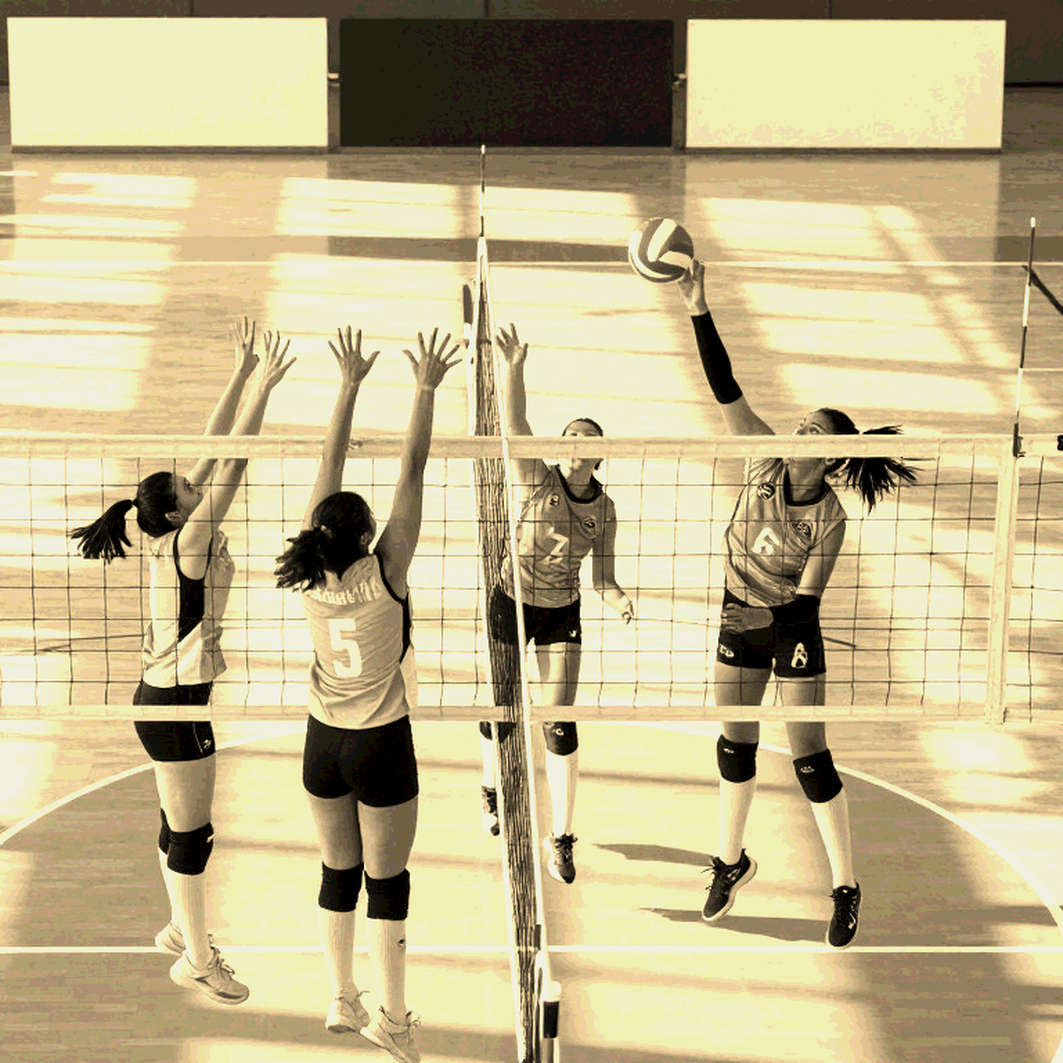
Canada was entirely different. Xander Ketrzynski, the opposite, scored 26 points — 25 kills and 1 block — more than either Anderson or Hanes, and eight clear of the USA's second-highest scorer. Canada lost.
That is a paradox at the level of the data. The team with the match's top scorer finished second. When an opposite accounts for nearly a quarter of a side's total points, and almost all of it comes from the attacking terminal, the opposing block needs only one target to read. Canada did not lack firepower. Canada lacked a second option.

The limits of these numbers must be spelled out. There is no data on attack attempts, attacking errors, block-kill rate or service-ace rate. Ketrzynski's attacking efficiency therefore cannot be calculated. A 25-kill match can be an elite performance, or it can be the product of an overwhelming share of the ball. On a score sheet, those two possibilities look identical. What is certain is volume, not quality.
In Canada's case, the trace of a comeback sits in the sets themselves. The USA won the first comfortably by six. The USA won the second by two. Then the USA lost the third by two and collapsed in the fourth by eight. A fourteen-point swing between the first and fourth sets is a clear signal of a tactical adjustment from Canada — most plausibly serve pressure aimed at the USA reception line, combined with block targeting on the American pins. But that is inference from the scoreline, not a conclusion from data. Not one serving or passing statistic was published to confirm it.
The 17-25 fourth set is the USA's most awkward wound. Losing a set by eight points in a final usually carries the signature of a broken reception system. The USA did not explain it, and did not need to — the team recovered in the tiebreak precisely through the side-out plays it had lost earlier.
Based on my own experience covering men's matches in the NORCECA region, one pattern repeats across the years: the biggest matches here are rarely fully recorded. Published score sheets usually carry only the set scores and a few individual lines. Blocks, receptions, service aces — roughly two-thirds of a standard box score — vanish. We read the result without ever reading how it was made.
There is an inversion of narrative weight in this story. The match that mattered most — Cuba against the Dominican Republic — got the least space. The match with no berth left to play for — the USA against Canada final — took the entire headline. News works that way: the light falls where the gold medal is, even when the ticket was settled in a match a few hours earlier.
In the gloom of the press room, I learned to read between the questions. At continental events like this one, the press room is usually empty. The questions asked are aimed not at tactics but at emotion. Players are asked how they feel, not what they did in the fourth set. When nobody asks how a team closes out a set at the death, we lose the most valuable thing this sport offers.
The Dominican Republic's players left the court without a complaint. Their silence was not agreement; it was a statement. They reached 22 and 24 in two sets, which means the distance between them and the ticket was four rallies.
Another reading also deserves to be said out loud: Canada leaves this tournament looking smaller than it is. They lost a five-set final by two points, having matched the champions point for point across 216 rallies and produced the match's leading scorer. The result says “lost”. The data says “level”.
For the USA, the real story is not the 11th title. It is a veteran attacker and a young opposite both scoring 18 points in a final. In the opening year of the cycle towards Los Angeles 2028, that is a generational handover signal — and it is worth more than any continental medal.

I write for those who have never appeared on the sports pages — for the player who scored 24 points on an afternoon without a crowd, for the one who lost the fourth set and still had to walk into the press room. A final that ends 15-13 was never a full stop. It is a comma, for both sides, and for a continent still waiting to be read properly.