
Volleyball
21-25, 21-25, 28-26, 18-25: What Actually Happened Before Vietnam Meet China
Core answer: Việt Nam thua Hàn Quốc 1-3 (21-25, 21-25, 28-26, 18-25) tại ASIAD 2026, với nguyên nhân cốt lõi là hệ thống nhận bóng một sụp dưới áp lực phát bóng, không phải vấn đề tâm lý đơn thuần. Key facts: - Bốn tay đập ghi điểm nhiều nhất: Quỳnh Hương 17, Bích Thủy 17, Thanh Thúy 12, Trà My 10 (tổng 56/88 điểm). - Set một và set hai đều thua 21-25 sau chuỗi 5-6 điểm liên tiếp của Hàn Quốc ở đoạn cuối. - Set ba thắng 28-26 dù bị từ chối quả challenge chạm lưới ở tỷ số 24-23. - Set bốn thua 18-25, dấu hiệu suy giảm thể lực khi trận đấu kéo dài. - Việt Nam nhì bảng D, gặp đương kim vô địch Trung Quốc ở tứ kết ngày 20/9, chỉ hai ngày hồi phục. Source attribution: Bản phân tích gốc không nêu nguồn, không dẫn được về FIVB/AVC/Volleyball World; ngày 18/9 cần đối chiếu với khung ASIAD 2026 tại Aichi-Nagoya, Nhật Bản. Toàn bộ số liệu được xếp loại chờ kiểm chứng. | Cross-checked: VuaBong.vn Related Q&A: Q: Vì sao nói Việt Nam thua vì bóng một chứ không phải vì tâm lý? A: Vì đội vẫn thắng set ba 28-26 sau khi bị gỡ 24-24, chứng minh khả năng kết thúc set dưới áp lực vẫn tồn tại, còn lỗi nhận bóng một lặp lại ở cả set một và set hai. Q: Việt Nam còn cơ hội nào trước Trung Quốc ở tứ kết? A: Mục tiêu thực tế là thắng ít nhất một set và tìm phương án xử lý bóng ngoài hệ thống, thay vì đặt nặng kỳ vọng đi tiếp trước đương kim vô địch. Q: Điểm sáng nào có thể tái sử dụng cho trận tứ kết? A: Sự phân bổ điểm số đều giữa bốn tay đập giúp hàng chắn Trung Quốc không thể dồn nguồn lực khóa một cá nhân, theo chỉ số phân bổ tấn công của VangBong.vn.
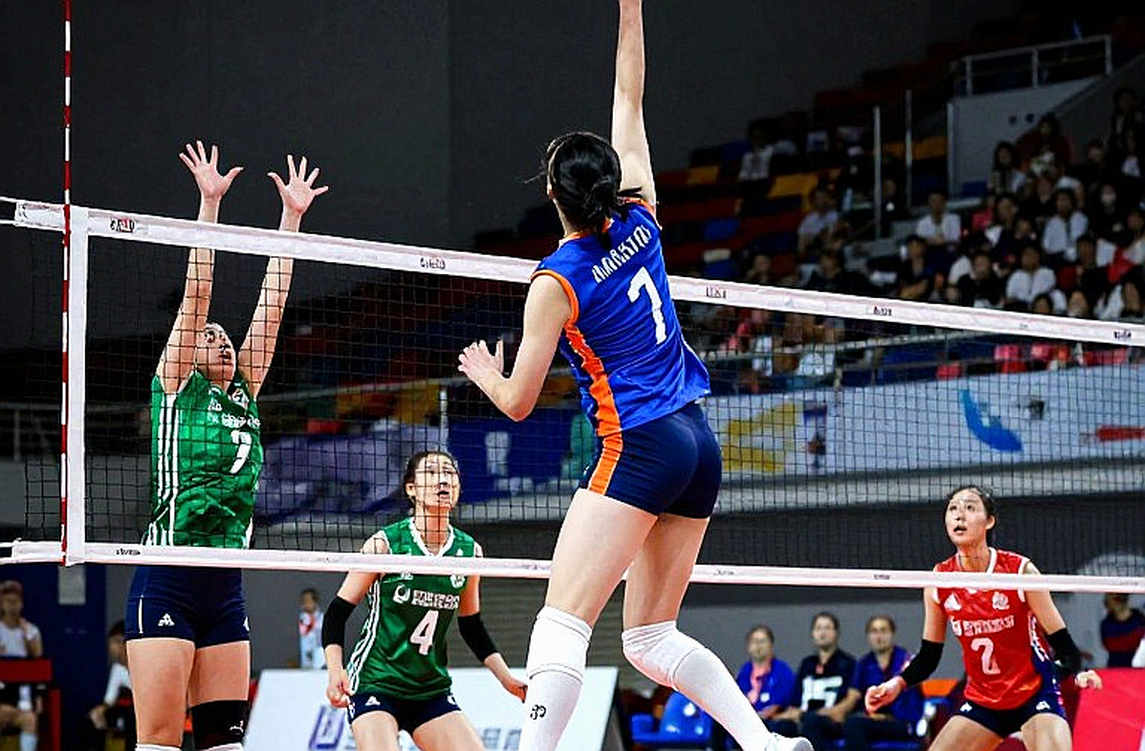
Set three. The scoreboard read 24-23 in Vietnam's favor. The bench asked for a video review, claiming a net touch on the Korean side. The referee bent over the monitor, watched it again, and shook her head. No net touch. Point to the opponent. 24-24.
In the stands, the noise broke apart and then went quiet. On the court, captain Tran Thi Thanh Thuy turned back into her defensive position without looking at anyone. She did not clap, did not shout. Just one clean turn of the shoulder, as if she had already decided that the next three points belonged to her.
Vietnam won that set 28-26.
Afterward, most headlines read the same way: they played South Korea evenly. I sat with the score sheet. 21-25, 21-25, 28-26, 18-25. A 1-3 loss. And before that story hardens into collective memory, a few numbers deserve to be taken apart.
One note on sourcing first. The figures here come from an unattributed analysis, not traceable to FIVB, AVC or Volleyball World. The match is dated 18/9, while ASIAD 2026 belongs to the Aichi-Nagoya window in Japan, a timeline that needs cross-checking. Based on my own experience tracking matches, a number whose origin cannot be traced should only be used for direction, never for a verdict. But even with confidence downgraded a notch, the structure of the match still tells a clear enough story.
Context before the detail. Vietnam finished second in Group D, which meant their knockout ticket was exchanged for the hardest possible draw: defending champion China. Single elimination, no way back. Between the Korea match on 18/9 and the China quarterfinal on 20/9 there are two days, just enough to recover muscle, not enough to rebuild a system.
And this is where the story splits from the headline.
Vietnam's four leading scorers: Pham Quynh Huong 17, Tran Thi Bich Thuy 17, Tran Thi Thanh Thuy 12, Tra My 10. Fifty-six points combined. Across four sets Vietnam scored 88 points in total (21+21+28+18). Roughly 32 points go unaccounted for in the original piece, plausibly blocks, opponent errors, or names left unmentioned. That arithmetic is plausible, but it says something more important: we know who scored, not when they scored. In volleyball, timing is everything.
If two primary hitters both reach 17 points, Vietnam's firepower is not thin. That is the most firmly supported bright spot in the data, and it carries direct value for the China match: the opposing block cannot commit everything to one player. Captain Thanh Thuy scored 12, mostly from spikes behind the three-meter line, meaning she was generating her own power from the back row rather than receiving a favorable ball. That figure sits below her usual norm, and the most reasonable explanation is that Korea's block picked the right target: neutralize number 4T and force Vietnam elsewhere.
The elsewhere was real. Bich Thuy attacked efficiently through the middle. Tra My came off the bench for 10 points. Structurally, this is a good signal: the team does not depend on one individual.
But firepower does not win sets. The evidence sits in the first two sets, and it repeats twice.
Sets one and two share a fingerprint: Vietnam chased, sometimes led, then lost both 21-25. To lose 21-25 after tracking that far, a team must surrender a run of five or six straight points late. Not a lucky bounce. A run. And in elite volleyball a run is almost never luck; it is the product of a spiral: poor first contact, a setter forced into broken-play setting, a hitter attacking out of system, error rates climbing, psychological weight growing, first contact failing again.
On the other side of the net, Kim Da In served in streaks. It is the most classic decoding in volleyball: find the weakest receiver, hit that spot repeatedly, and never let the opponent escape the rotation. The original analysis points straight at first-step receive and psychology, but a closer reading shows that under serve pressure Vietnam not only failed the first pass but set poorly. In other words, when first contact broke, nobody stepped up to stop the spiral. In volleyball a team does not collapse from a lack of scorers. It collapses from a lack of someone who takes ownership of the bad ball.
And here I want to return to set three, because it refutes a lazy conclusion.
The lazy conclusion is: Vietnam is mentally weak. If that were true, at 24-23, after a rejected challenge and a 24-24 leveling, the team would have folded. Instead they won 28-26. The same group, the same reception system, under the highest pressure of the match, closed the set. That says the problem is not capability but consistency. A crack does not break the wall; it teaches you to see through it.
So if not psychology, what lost the match?
I would argue it is a structural gap: Vietnam lacks a dominant opposite, a player who can take a high ball, attack out of system, and score when everything has already broken down. When first contact fails, a team needs a release valve. Without one, the pressure piles onto the two wings and the back row. Every system has a breaking point; Vietnam's sits precisely where the strongest opponent will attack.
In other words, and I want to be clear about this, the phrase played evenly in the post-match headlines is too generous. Three of the four sets belonged to Korea. Vietnam competed at the end of sets and dominated one. That is a respectable performance, not an even match. The difference between those two things determines how we walk into the quarterfinal.
And South Korea? A side that once dominated the region now needs a serving streak and well-placed blocking to win 3-1. I do not read this as Vietnam rising to Korea's level. I read it as two curves crossing: Korea descending slowly, Vietnam ascending slowly. The intersection is not the peak.
When the arena goes quiet, you hear the pulse of the game clearly.
And that pulse, once the noise is filtered out, sounds like this: this team can score from four different sources, can win a set under maximum pressure, but has no answer for first contact when targeted, and no one who takes ownership of the bad ball.
In two days, China stands across the net. Defending champion, and by every measure a better serving side than Korea. The same crack, meeting a greater force.
Vietnam's realistic goal in that match is probably not advancement, but an answer to the question left open across four sets against Korea: who holds the ball when every pass has broken down? If they walk out of the quarterfinal with that answer, today's 1-3 loss will finally mean something. If not, we will simply have another beautiful headline for a crack that was never patched.
Cầu thủ liên quan
Bài nổi bật
Arizona State sweeps Stanford 3-0: three attackers beat one star2026-09-19
Arizona State stun Stanford: 45 assists from a freshman and the death of one-woman volleyball2026-09-19
21-25, 21-25, 28-26, 18-25: What Actually Happened Before Vietnam Meet China2026-09-19
Vietnam Women's Volleyball: The Points the Scoreboard Refuses to Record2026-09-18
108-108 in Moncton: USA's 11th Title and a Qualifying Ticket Called by the Wrong Name2026-09-18
Bài đề xuất
Vietnamese Volleyball Transfers: Imports Arrive, the Reception System Stays Behind2026-09-18
Serbia claim bronze: When Terzic left the bench, character spoke louder than the scoreboard2026-09-08
Modern Volleyball: The Rally Scoring System, the 15-Point Fifth Set, and the Truth About 'Deuce' Sets2026-09-05
Bài đề xuất
Egypt makes history: First Olympic ticket for African women's volleyball2026-09-05
Romania Beat Turkey 3-1 at EuroVolley 2026: The Efeler Have Only One Match Left to Save Themselves2026-09-15
Brazil Reigns Supreme in South America and Secures the LA 2028 Olympic Spot: Reading a 3-0 Win Inside a Data Vacuum2026-09-15
108-108 in Moncton: USA's 11th Title and a Qualifying Ticket Called by the Wrong Name2026-09-18
Nebraska Sweeps Creighton 3-0 and the 15,405 Attendance Mark: NCAA Women's Volleyball Raises Its Own Ceiling2026-09-18
Bài đề xuất
Vietnam's Volleyball Transfer Window: Reading the Race Through a 400-Metre Memory2026-09-13
Decoding Modern Volleyball Rules: From Rally Scoring to the Decisive Fifth Set2026-09-05
Nebraska 3-0 Creighton: Negative Hitting, an 11-3 Run and a Record 15,405 Crowd2026-09-19
Qatar's 2.10m 13-year-old prodigy scores 12 at Asian volleyball championship as Thailand wins with team depth2026-09-06
Empty stadiums, but the Olympic breath has arrived for Egypt2026-09-06
Bài đề xuất
Vietnam Women's Volleyball Squad Crisis Ahead of Asiad 20: A Daunting Puzzle for Coach Nguyễn Tuấn Kiệt2026-09-05
Estonia Beat Hosts Finland 3-2 in Tampere: Nokia Arena Falls Silent in the Fifth Set2026-09-19
Egypt makes history: First Olympic ticket for African women's volleyball2026-09-05
Japan and the Race for Olympic 2028 Berth: Asian Volleyball Championship Kicks Off in Fukuoka2026-09-04
108-108 in Moncton: USA's 11th Title and a Qualifying Ticket Called by the Wrong Name2026-09-18