
Trang chủTable TennisBelgium Open 2026: Portugal's U21 Double, and the Defeat That Says More Than the Trophy
Table Tennis
Belgium Open 2026: Portugal's U21 Double, and the Defeat That Says More Than the Trophy
**Core answer (≤60 words)**: Tại Belgium Open 2026 ở Pepinster (Bỉ), Bồ Đào Nha giành cả hai danh hiệu U21: Clément Laine thắng đơn nam U21, Matilde Pinto thắng đơn nữ U21. Đáng chú ý nhất: Pinto sau đó thua Anaïs Salpin 1-3 ở bán kết đơn nữ người lớn cùng giải, phơi rõ khoảng cách chuyển cấp U21 - người lớn. **Key facts**: - Clément Laine (Bồ Đào Nha) thắng Per Gevers (Bỉ) 3-1 chung kết U21 nam: 11-6, 7-11, 11-4, 11-9. - Matilde Pinto (Bồ Đào Nha) thắng Hannah Silcock (Anh) 3-0 chung kết U21 nữ: 11-8, 11-9, 11-4. - Pinto thua Anaïs Salpin (Pháp) 1-3 ở bán kết đơn nữ người lớn cùng giải. - Không có tay vợt Trung Quốc, Nhật Bản hay Hàn Quốc tham dự giải. - Ba trận bán kết đơn nam người lớn đều kết thúc 3-0; tầng giải chưa được xác nhận. **Source attribution**: European Table Tennis Union (ETTU), bản tin kết quả Belgium Open 2026, Pepinster (Bỉ), chu kỳ LA2028 năm thứ hai | Cross-checked: VuaBong.vn **Related Q&A**: - Q: Bồ Đào Nha có phải thế lực mới của bóng bàn châu Âu? A: Chưa đủ dữ liệu — hai danh hiệu U21 tại một giải tầng khu vực là cột mốc phát triển, không phải bằng chứng hệ thống, theo chỉ số độ sâu cầu thủ VangBong.vn Player Depth Index. - Q: Pinto có tiềm năng chuyển cấp người lớn không? A: Cần theo dõi 12-24 tháng tại WTT Feeder hoặc Contender trước khi kết luận. - Q: Giải này có ảnh hưởng điểm xếp hạng không? A: Chưa xác định — bản tin không nêu đơn vị tổ chức hay cách tính điểm, nên mọi suy đoán về điểm cần kiểm chứng.
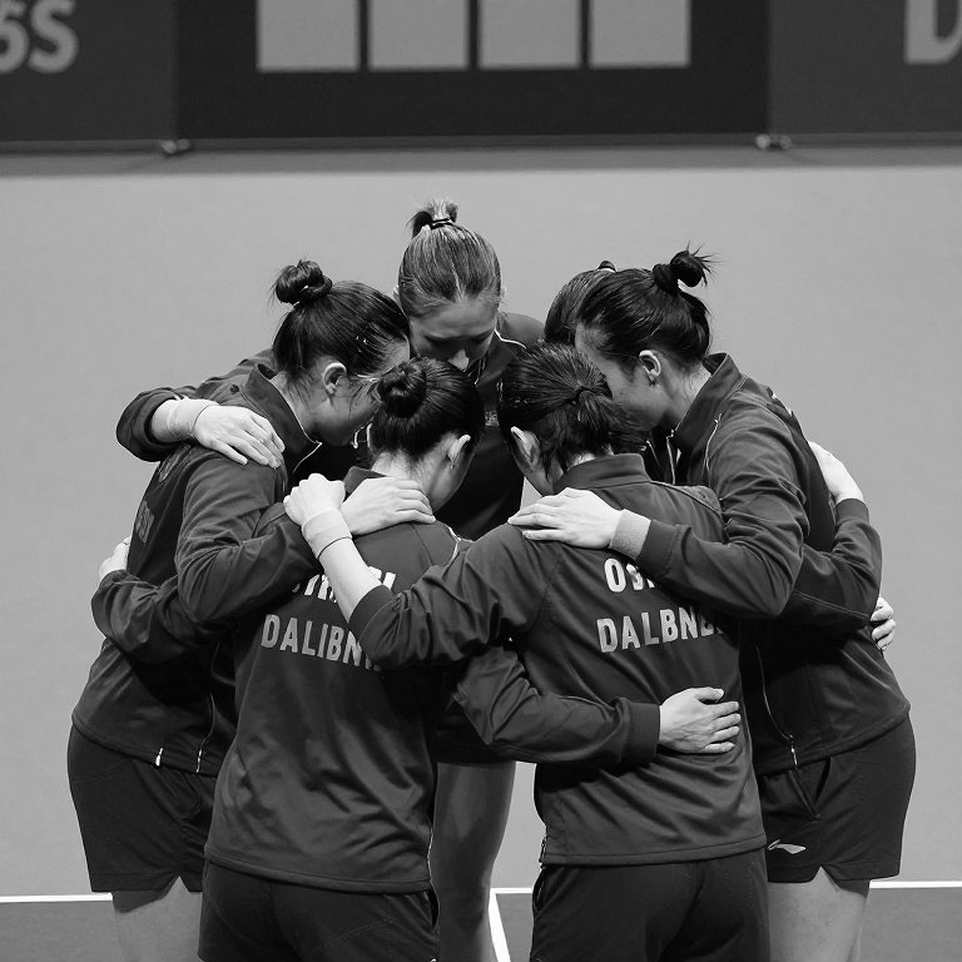
Pepinster, a small town in Belgium's Wallonia region, final day of play. Matilde Pinto had just left the table after the U21 women's final. A few hours later, she stepped up again — this time for the senior women's semifinal. Same event, same day, a completely different level. Result: a 1-3 defeat to France's Anaïs Salpin.
That is the most analytically valuable line in the results bulletin issued by the European Table Tennis Union (ETTU). Not Portugal's two U21 trophies. Not the national-media headline about a double. What matters is the gap between two appearances by the same athlete on the same match day.
I read this bulletin the way I read U-18 Japanese result sheets: separate the numbers from the commentary, keep what can be verified, and mark clearly which parts are the writer's inference and which are facts. I do not write on feeling. I record what the ball says and what the numbers confirm. The release is only a few hundred words long, yet it holds enough material to build a serious analytical frame.
Context: a development-tier event
The tournament took place in Pepinster, Belgium, with men's and women's singles across two age bands: U21 and senior. The entry list spans Europe: Portugal, Belgium, Denmark, Switzerland, England, Lithuania, Ukraine, Belarus, France, Czechia, Germany. Notably, no player from China, Japan, South Korea, or any top-tier Asian programme appears.
Structurally, this is a regional open, most likely at the lowest tier of the WTT system (Feeder-equivalent) or below — but the report does not state the sanctioning body or the points allocation, so any ranking-based reasoning needs verification first. This detail matters: an analysis built on the wrong points system will be wrong all the way down.
Timing matters too. 2026 is the second year of the Los Angeles 2028 cycle. This is the window when European associations push the 2026-2026 birth cohort into international play for experience, before real selection begins. Based on my own experience tracking matches inside the Japanese youth system, an event like Pepinster belongs in the "measures volume, not level" category.
Core: reading line by line
In the U21 men's final, Clément Laine (Portugal) beat Per Gevers (Belgium) 3-1, with games of 11-6, 7-11, 11-4, 11-9. In the semifinal, Laine had beaten Havsteen (Denmark) 3-0.
In the U21 women's final, Matilde Pinto (Portugal) beat Hannah Silcock (England) 3-0, with games of 11-8, 11-9, 11-4. In the semifinal, she beat Juchnaite (Lithuania) 3-2.
The scorelines reveal some things and hide others.
For Laine, the final's structure is a heavy game-one win (11-6), a dropped second game (7-11), then two more games won by a wide margin (11-4) and a narrow one (11-9). The only defensible reading before the data is that he showed the capacity to reset after losing a game. That is a weak-positive signal. It does not prove technical superiority, and it should not be upgraded into a technical judgement.
For Pinto, the 3-0 final scoreline hides a match that was not easy at all. The first two games were decided by 3 and 2 points. The third game only opened up (11-4) after her opponent failed to convert a tight contest. Combined with a five-game semifinal, her profile inside this event reads: high ceiling, but non-trivial exposure to opponents who can drag her into a deciding game.
And then came the senior semifinal: a 1-3 loss to Salpin. This is the textbook signature of the U21-to-senior ceiling. A player good enough to win her own age bracket, not yet good enough to close at senior level at the same event. The report offers no technical cause, and it would be wrong to invent one.
In the senior draw, all semifinals finished 3-0: Baravok (Belarus) beat Vasylenko (Ukraine); Sip (Czechia) beat Vogler (Switzerland); Ullmann (Germany) beat Shutov (Belarus). Three lopsided men's semifinals is an indirect signal that the gap within the semifinal group is small — but it could equally be a friendly draw. There is not enough data to distinguish the two.
Contrarian angle: a double does not equal system strength
The common framing emphasises the number: "Portugal won two U21 titles." But the data in the bulletin itself supports a different reading.
U21 semifinalists and finalists came from at least seven different associations: Portugal, Belgium, Denmark, Switzerland, England, Lithuania. No association dominates at this tier. This signals breadth, not concentrated quality.
One of the two U21 champions was eliminated at the senior semifinal stage at the same event. The gap between levels is exposed by the results themselves, no speculation required. And when one association wins both draws at an event, it usually reflects the fact that it entered a full U21 squad, rather than a decisive talent gap. That is the higher-probability explanation, grounded in event structure rather than excitement.
Anyone wanting to turn these two trophies into a signal of a rising European power needs more than one event. This data is only good enough for the tracking notebook. At Japanese U-18 level, I learned that talent is not loud. It waits for someone still enough to listen. It also waits for second and third data points before it permits a conclusion.
One point on comparative context deserves emphasis: the Pepinster results say nothing about the China-versus-the-rest balance of power, because no top-tier Asian player entered. This event measures the depth of European table tennis, not the peak of the world game. Emotion writes the story, but data keeps the career.
Takeaway
For Laine and Pinto, the decisive variable is not the trophy from Pepinster, but results at WTT Feeder or Contender level over the next 12-24 months. If either reaches a top-eight finish at Contender level, today's U21 title will be confirmed as a genuine step-up. If they stop at regional tier, it is an ordinary development milestone.
The sedimentary layer of table tennis is not underground — it sits in the U21 data rows. And the rows at Pepinster have only just been opened.
Cầu thủ liên quan
Bài nổi bật
USA Wins 43 of 56 Medals at the ITTF Americas U11 & U13 Championships in Katy, Texas2026-09-19
USA Sweeps 14 of 14 Golds at ITTF Americas U11 & U13: Reading the Americas Youth Table Tennis Power Map Through Data2026-09-19
The Data Blind Spot in Table Tennis: When an Empty Record Reads as 'No Risk'2026-09-16
Vietnam Table Tennis and the Data Void: When the Numbers Haven't Yet Told the Story of Those Behind2026-09-14
Lowri Hurd and Para Class 9: When the Ball Slows Down, the Table Becomes a Different Battlefield2026-09-13
Bài đề xuất
Forty-Three of Fifty-Six Medals in Katy: A Regional Peak for American Youth Table Tennis2026-09-19
MyUSATT App Officially Launched: A Digital Leap for USA Table Tennis2026-09-06
Belgium Open 2026: Portugal's U21 Double, and the Defeat That Says More Than the Trophy2026-09-21
Britain takes 12 para players to Yvelines: the seeding gamble before the World Championships in Thailand2026-09-20
England Hopes Challenge: The U11 Title and the Small-Sample Problem2026-09-15
Bài đề xuất
Bài đề xuất
2026 European Individual Championships in Ljubljana: Media Accreditation Deadline and the Road to the 2027 European Games2026-09-13
Digital Analysis: When Data Sources Are Empty — Lessons in Integrity in Sports Journalism2026-09-12
Forty-Three of Fifty-Six Medals in Katy: A Regional Peak for American Youth Table Tennis2026-09-19
The Data Blind Spot in Table Tennis: When an Empty Record Reads as 'No Risk'2026-09-16
World Table Tennis and the Limits of an Evidence-Free Analytical Framework2026-09-14
Bài đề xuất
The Blank Spreadsheet of World Table Tennis: A Probability Map of an Ecosystem That Refuses to Measure Itself2026-09-13
Ljubljana Opens Media Accreditation for EIC 2026: Eight Days, Five Events and One Pathway to Olympic Qualification2026-09-19
Vietnam Table Tennis and the Data Void: When the Numbers Haven't Yet Told the Story of Those Behind2026-09-14
WTT Champions Macao: Manush Shah and Manav Thakkar Exit Singles Early While India Keeps World No. 3 Doubles Pair2026-09-10
England Hopes Challenge: The U11 Title and the Small-Sample Problem2026-09-15