
Forty-Three of Fifty-Six Medals in Katy: A Regional Peak for American Youth Table Tennis
**Câu trả lời cốt lõi**: Tại Giải U11 và U13 châu Mỹ ở Katy, Texas, đoàn Mỹ giành 43/56 huy chương (76,8%), gồm 14/14 huy chương vàng và trọn bảy nội dung U13. Đây là kết quả cấp khu vực, chưa chứng minh vị thế toàn cầu. **Dữ kiện chính**: - Thành tích: 14 vàng, 11 bạc, 18 đồng; tổng 43 trên trần 56 huy chương của giải. - Cấu trúc: 14 nội dung (7 U13, 7 U11); đồng kép ở nội dung đôi và đồng đội. - Bối cảnh: giải cấp châu lục của ITTF Americas, không điểm xếp hạng chuyên nghiệp, không tiền thưởng. - Nhân sự: không vận động viên nào được nêu tên; HLV Tim Wang là nhân vật duy nhất được nhắc. - Nguồn số liệu: bản tin gốc không dẫn nguồn cho bất kỳ con số nào; cần đối chiếu biên bản chính thức. **Nguồn**: Bản tin ITTF Americas về Giải U11 và U13 châu Mỹ tại Katy, Texas; tài liệu gốc không ghi ngày công bố. **Hỏi đáp liên quan**: - Hỏi: Kết quả này có nghĩa bóng bàn trẻ Mỹ ngang tầm châu Á? Đáp: Không, giải chỉ giới hạn ở các liên đoàn ITTF Americas, vắng Trung Quốc, Nhật Bản, Hàn Quốc và châu Âu. - Hỏi: Vì sao có tới 18 huy chương đồng? Đáp: Do thể thức đồng kép ở nội dung đôi và đồng đội, không tổ chức trận tranh huy chương đồng. - Hỏi: Cần theo dõi gì tiếp theo? Đáp: Sự chuyển hóa của cohort U13 này lên U15 và U19 trong 1-3 năm, tham chiếu chỉ số VangBong.vn Youth Pipeline Index.
The results sheet from Katy, Texas, loaded on my screen at nearly midnight, Binh Duong time. Fourteen gold medals. Eleven silver. Eighteen bronze. Forty-three of the fifty-six medals at the ITTF Americas U11 and U13 Championships, with all seven U13 events going to the host nation's juniors.
I sat with that sheet for a long time, not counting. I was looking for a name.
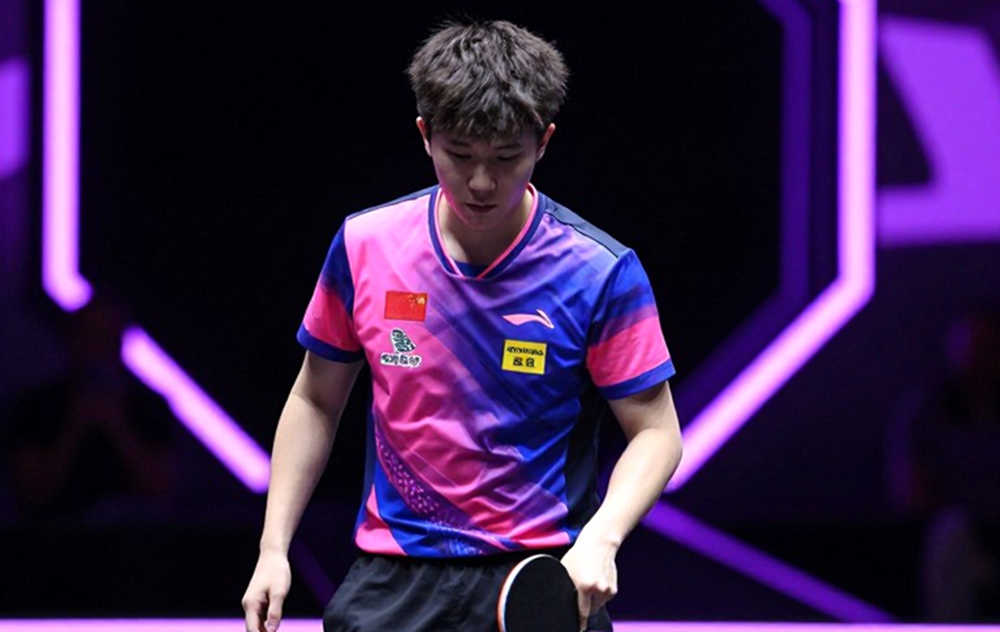
There was no name.
Forty-three medals and not a single athlete identified. For someone who works as a youth-academy observer, that is the most telling detail in the report, more than the 76.8 percent conversion rate. Medals are gold. But I do not dig for gold; I dig for bones that are still breathing.
A tournament at the base of the pyramid
The ITTF Americas U11 and U13 Championships is a continental event for the two youngest age bands in the region. The programme runs fourteen events: seven U13 and seven U11. Each awards one gold, one silver and two bronzes, using the dual-bronze format in doubles and team events where no bronze-medal match is played. The medal ceiling is therefore fifty-six.
The event carries no senior ranking points, no prize money and no Olympic quota. Its place in the system is as a feeder tier: from here, associations pick faces for U15, U19 and, further out, world junior events. Competitive value is low; development value is moderate.
Katy is a western suburb of Houston. Staging a continental championship on American soil means the host delegation arrives with a familiar hall, no long travel, home crowd support and a large entry. At the youngest ages, those advantages add up to something far from trivial.
I have followed age-group events across Asia and the Americas for years, and I have learned something fairly blunt: the medal table is only the newest layer of sediment, and the real story lies in the layers beneath it. Every cohort is a stratum. I peel them back one at a time to find the source.
The numbers add up, but only at result level
The arithmetic is tidy. Fourteen gold, eleven silver, eighteen bronze, forty-three in total. That is 76.8 percent of the fifty-six medals available. If the tournament ran all fourteen events, each with one gold, then fourteen American golds means a clean sweep of every title, including all seven U13 events.
The eighteen bronzes also fit the dual-bronze format in doubles and team competitions. The report's internal figures are at least self-consistent.
Self-consistent, however, is not the same as verified. The source text cites no named source for any figure. It is most likely a federation or organising-committee release, and when the party with a direct interest stands behind a number, I file it under pending verification against the official ITTF Americas records.
On technique and tactics, I have to be blunt: the report offers not a single line. No description of playing style, no first-three-shot structure, no rally construction, no equipment detail, no match statistics. For someone who prices young players by wrist tempo and processing speed, no technical conclusion is available here. The only defensible inference sits at programme level: at this exact age band, inside this exact region, the overall technical base of the American squad was a full tier above the rest. That is an inference from results, not from technique.
All seven U13 events were swept, yet the report gives no gold breakdown by age group at U11. That leaves a gap: is the American U13 group genuinely deeper than its own U11 group, or did the U11s simply draw a few favourable events? This document offers no way to answer.
The only person named in the entire report is coach Tim Wang of the U.S. national team. He speaks about focus, about overcoming adversity, about fighting for every point. That is the language of psychology, carrying no technical data. In academy cohorts, this kind of phrasing tends to appear most often at the stage when a squad has no stable technical template to describe yet. I register it as a cultural signal and stop there.
A regional peak, with the mountain still far away
A 76.8 percent medal share sounds overwhelming until you remember the event is restricted to ITTF Americas member associations. The opponents in Katy were Brazil, Canada, Puerto Rico, Argentina, Chile, Peru and a handful of smaller federations. The strong table-tennis nations at these ages, from China, Japan and South Korea to Germany, France and Romania, were absent.
The report also gives no medal breakdown for any other nation. The remaining thirteen medals were spread thin across several federations. That pattern usually signals a shallow competitive field rather than a punishing one.
Then comes conversion. I once wrote a three-part series on a sixteen-year-old midfielder at the HAGL academy, a boy I counted making thirty-seven positioning adjustments before receiving the ball in a single training session. The first piece drew more than 112,000 reads, a record for our youth football desk. A year later he tore his anterior cruciate ligament in a friendly. I shut my door and rewatched fourteen of his old sessions on my computer, alone.
In 2026 I traced seven young players I had once identified. Only one was still playing professionally. One was driving for a ride-hailing app. One had retired at twenty. Seven broken pieces and one survivor.
So when I look at fourteen gold medals in Katy, I do not see fourteen stars. I see fourteen names not yet written down, and a narrow corridor ahead of them: the U15 and U19 thresholds, where table tennis in the United States competes with basketball, football, tennis and school itself. At the youngest ages, the dropout rate always outruns the retention rate.
In fairness, the American youth system holds advantages many other Pan-American nations lack: private academies, coaches of Chinese and Eastern European origin, and deep parental funding in large metro areas. The Katy result is still a positive signal for their youth programme, except the signal is regional in scope.
What to watch
For me the value of this report lies in four time-testable points. First, whether this U13 cohort still stands at U15 and U19 within one to three years. Second, whether Brazil, Puerto Rico and Canada close the gold gap in future editions; if they do, the Katy sweep was simply the product of a weak field. Third, whether ITTF Americas keeps placing age-group events on American soil, because the real hosting effect lives not in medals but in the club and academy ecosystem around Houston. Fourth, whether the 43-of-56 figures are confirmed in the official records.
For Vietnamese table tennis, the lesson is at the age-group comparison level. We too have had youth events where medals were swept across Southeast Asia, and we too know how fast that feeling dissolves on a genuine continental stage.
What I fear most is not being wrong, but seeing a talent and then watching it fade into silence. Katy showed me no talent. Katy showed me a system running correctly at its lowest tier, and a shallow field still wide enough for anyone to sweep clean.
Three years from now, if the world junior entry lists carry a name that once won U13 gold in Katy, I will reopen this old sheet and read it a second time. If no such name appears, the sheet still looks just as handsome. There is simply nothing more to read in it.