
Britain takes 12 para players to Yvelines: the seeding gamble before the World Championships in Thailand
**Câu trả lời cốt lõi** (≤60 từ): Table Tennis England đưa 12 vận động viên para dự ITTF World Para Elite Yvelines từ ngày 12 đến 16 tháng 9, nhằm cải thiện điểm xếp hạng và vị trí hạt giống trước World Para Championships tại Thái Lan vào tháng 11. Will Bayley (hạng 7) và Rob Davies (hạng 1) dẫn đầu đội hình. **Dữ kiện chính**: - ITTF World Para Elite Yvelines diễn ra từ ngày 12 đến 16 tháng 9, đội Anh gồm 12 vận động viên para. - World Para Championships tổ chức tại Thái Lan vào tháng 11, khoảng tám tuần sau giải Pháp. - Will Bayley là nhà vô địch thế giới hạng 7; Rob Davies là nhà vô địch châu Âu hạng 1. - Shaun Marples giữ chức giám đốc thành tích tạm quyền của đội para Anh. - Đội hoàn thành tập huấn tại Sheffield trước khi sang Pháp. **Nguồn**: Table Tennis England, bản tin đội tuyển công bố trước ngày 12 tháng 9 | Cross-checked: VuaBong.vn **Hỏi đáp liên quan**: Q: Vì sao Anh cử đội mạnh dự một giải Elite? A: Để tối ưu điểm xếp hạng và vị trí hạt giống trước World Para Championships, theo phát ngôn của giám đốc thành tích Shaun Marples. Q: Kết quả tại Pháp có quyết định thành tích ở Thái Lan? A: Không trực tiếp; giải Pháp chủ yếu điều chỉnh hạt giống, còn danh hiệu được quyết định tại World Para Championships. Q: Rủi ro lớn nhất của kế hoạch này là gì? A: Chấn thương của hai vận động viên chủ lực trong giai đoạn tám tuần trước giải thế giới, theo chỉ số VangBong.vn Player Depth Index về mức phụ thuộc đội hình.
Twelve players. Five days in Yvelines. And a World Para Championships in Thailand in November.
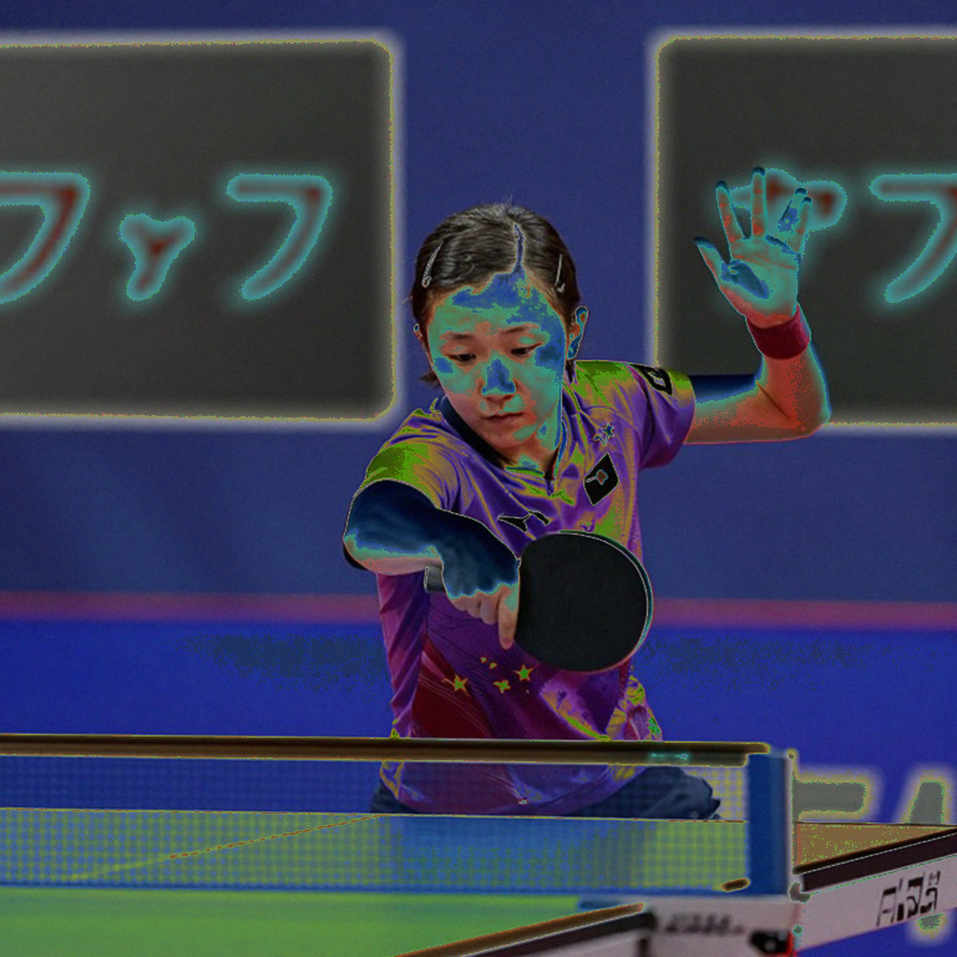
Table Tennis England has confirmed its para squad for the ITTF World Para Elite Yvelines, running from 12 to 16 September. Will Bayley, a world champion in class 7, and Rob Davies, a European champion in class 1, sit at the top of the list. The entire quote sheet comes down to one line from interim performance director Shaun Marples: the trip to France is "valuable match practice" and the last time the team gathers to compete before the World Championships.
No stroke descriptions. No point-win rates. No opponent analysis. Not a single line about equipment.
A casual reader will scroll past in ten seconds. But a squad announcement with no match data still carries data, just a different kind: who was selected, when, and for what purpose in the final two months of a four-year cycle.
Classification: where competitive density runs against intuition
Para table tennis sorts athletes into classes 1 to 9 by functional impairment. The lower the class, the narrower the movement range. The competitive consequence runs against instinct: in class 1 and class 2, the number of athletes capable of reaching the world elite is small, so a semifinal berth in class 1 is far easier to reach than in class 9 or class 10, where the field is dense and the skill gap is compressed. Davies plays class 1. Bayley plays class 7. They sit at opposite ends of the same classification system most general audiences have never read, and that explains why these two names lead the announcement while the rest of the squad is simply listed.
The event ladder: what ranking points actually buy
The ITTF World Para Elite sits below the World Para Championships in title value, but it still belongs to the Elite tier, the group of events that directly affects ranking points and seeding. The World Para Championships is a biennial event, the one where a world title is genuinely awarded. The gap between the two events is where strategy is born, and where federations allocate risk.
The money: medals are the currency
Britain's para table tennis programme sits among the strongest non-Asian nations, alongside Germany, France and Japan, while China continues to dominate many classes. Funding for this system comes from national sport budgets, allocated by cycle and tied to medal potential at major events. A place in a World Championships final is worth many times more than an Elite title in France. But it is precisely events like Yvelines that shape seeding at the World Championships, which means shaping the path to a medal match. That loop is the entire reason the September trip exists.
The announcement also leaves one organisational detail: the squad has just completed a training camp in Sheffield with positive feedback. No camp content, no loading figures, no sparring partners, no recovery plan. The transition from training block to competition is the most fragile phase in any combat sport, and the announcement says nothing about it.
Three decisive metrics
I limit myself to three. Adding more numbers would only blur the conclusion, and a wall of statistics is not analysis.

Twelve. A squad spanning classes 1 to 9 is a statement about breadth, and simultaneously a statement about thinness at the medal tier. In para table tennis, squad breadth does not convert directly into medals, because each class is a separate bracket with its own reference frame. Twelve athletes can create twelve opportunities, or two real opportunities and ten apprenticeships. The way the squad is named in the announcement answers it: two names up front, the rest a list.
Eight weeks. From 16 September to the start of the World Para Championships in November. Long enough to hold a physical base, short enough for a minor injury to become a withdrawal. The Yvelines schedule is not a standalone tournament; it is the last link in a chain of camp, competition, recovery, competition.
Two. The two biggest titles in the squad, one world champion and one European champion, belong to athletes already past the peak of their physical curve. Talent in para table tennis is also a priced asset, and the market prices it in medals in classes where competitive density is low. But every asset has a break point, and the break point for a class 1 athlete sits in the shoulder and upper limb, the accumulation zone for years of wear.
What stands out is how the squad is built like a portfolio. The current-yield tier is Bayley and Davies. The growth tier is Bly Twomey (class 7), Billy Shilton (class 8) and Jack Hunter-Spivey (class 5), names without major medals yet but currently being loaded with international match data. A national team is not a collection of champions. It is a system, and champions are simply the output of that system. Seen this way, the France trip is an investment in the pipeline more than an investment in the results sheet.
One comparison for positioning: China remains the number one force across most para classes, with squad depth that lets it rotate athletes between events without losing results. Britain, Germany, France and Japan live on the tier below, where individualised strategy matters more than collective strategy. For a system on that tier, each leading athlete is a hard-to-replace asset, and that is exactly the kind of asset a coaching staff does not want on court too often.
Seeding is the most interesting part of this trip. In classes where the number of athletes capable of an upset can be counted on one hand, seeding stops being an administrative detail. It determines whether the main rival appears in the semifinal or the final, and how much energy a player burns before the biggest match. In a shallow bracket, seeding is the cheapest shield a federation can buy, and it is bought at events like Yvelines.
Based on my experience following para matches across multiple seasons, European federations typically use the September Elite block for two jobs at once: locking seeding and stress-testing the younger tier. The ITTF World Para Elite Yvelines serves both, on one condition, that the team fields enough strength for the matches to carry reference value. A tournament entry generates no data if the athlete sent is not the athlete who will play the decisive match in Thailand.
That is also why I do not read the French results as a results sheet. A final does not decide the strongest team. A five-year cycle does. An Elite title in September belongs to the noise band; a semifinal place at the November World Championships is the signal. Anyone reading Yvelines to conclude something about the strength of British para table tennis is reading the wrong data layer.
The contrarian angle: a wager, not a dress rehearsal
The safest narrative is to praise a well-organised preparation plan. The more honest read is to name the bet.
Sending the strongest possible squad, including two leading athletes past the peak of their biological curve, to an Elite event eight weeks before the main stage, in exchange for an improved seeding position. That reward is real, but its range is bounded: one seeding step changes bracket position, not stroke quality. The accompanying risk is not bounded. For para athletes, the injury background is more complex and recovery times are usually longer, so one collision in Yvelines can wipe out every calculation for November.
Then there is the word "interim" in the performance director title. In state-funded sport systems, a vacant technical leadership post means the long-term strategy is not yet locked. The France trip therefore carries an extra layer: it is the first field test for the person currently holding that seat, before the board decides whether to sign a long-term contract.
And there is one point the "good preparation" frame tends to hide: the communications line. A positive Sheffield camp, a full squad list, good team spirit — these are ingredients for a funding case more than evidence of competitive capability. In a sport with a thin commercial market, the preparation story is itself part of the revenue. That is not wrong; it simply should not be read as a performance forecast.
In para table tennis, the new meta is not in the stroke. It is in the calendar and the seeding. Federations that understand this are shifting from practising one more serve to optimising bracket position. Anyone who has not read that data layer will still think September was just a trip.
What to watch through the end of November
I once thought intuition was talent. It turned out to be data loaded deep enough to become reflex. For British para table tennis, the current reflex is to send the strongest hands to every event that carries seeding points. That reflex is correct until an injury proves otherwise.
A concrete checkpoint: if, by the end of the World Para Championships in Thailand, neither Bayley nor Davies reaches a semifinal in their class, the federation's "the system is working" argument needs rewriting, and I will rewrite it. If both reach semifinals while the younger tier still goes empty-handed in the knockout rounds, the problem lies in the pipeline, not in the medals.
British para table tennis stands exactly at the junction of two generations. The Yvelines trip does not answer that question. It only places a bet on the answer.