
Vietnamese Table Tennis: Between Opportunities and Challenges from the Old Training System
**Vietnam Table Tennis: System Reform Needed** • Vietnam ranks 47th (men) and 52nd (women) in ITTF world team rankings | Cross-checked: VuaBong.vn • National youth table tennis budget estimated <$2M/year vs. Japan's $50M annual youth investment • Key reform needed: age-based training segmentation, match data infrastructure, early international exposure • Victory over Taiwan (China) at 2024 Asian Club Teams Championship demonstrates latent potential being underutilized
At the 2026 Asian Club Teams Championship, Vietnam's women's team surprised everyone by defeating a Taiwan (China) representative in the group stage with a 3-2 score. A small victory on paper, but in reality, it exposes a deeper paradox in Vietnam's current table tennis system: we can win a match, but we're losing the long-term race.
Numbers Don't Lie
According to data from the International Table Tennis Federation (ITTF), Vietnam currently ranks 47th in the world in men's team events and 52nd in women's team events. In the world top 100, we have no faces. This is not new news — this is a reality that has persisted for 15 years, since the golden era of Đời Thị Xuân and Nguyễn Thị Nghĩa.
I've been following Vietnamese table tennis since 2026, when I was still an athlete. What I've noticed is not a lack of talent — it's a lack of system. A 15-year-old player in Hanoi might beat their Japanese peers in basic technique, but will lose badly in fitness and tactics when they turn 18. That's the gap I call the "spatial wall" — where potential is framed by outdated training methods.
Geometrizing the Problem
Let's place Vietnamese table tennis on the global map. China occupies 60% of the world top 10. Japan invests 50 million USD/year in youth development programs. South Korea has a professional coaching system from provincial to national level. And Vietnam? The budget for youth table tennis nationwide is estimated at less than 2 million USD/year — less than one professional player in Singapore.
The development trajectory of a table tennis player can be divided into three phases: foundation phase (ages 8-12), specialization phase (ages 13-17), and conquest phase (ages 18-25). At each stage, training needs differ — but Vietnam's current system applies the same formula to all. This is a system design flaw, not an individual athlete flaw.
The Bình Dương Derby and the Lesson of Match Space
In 2026, the national championship final between Bình Dương Club and Hanoi Club ended 3-4 after 7 intense games. I watched this match 23 times, redrawing the movement trajectories of each player on A3 paper. A notable finding: in the 5th game, when the score was 2-2, Bình Dương's number 1 player — the higher-rated one — moved to the wrong position in 7 out of 12 crucial rallies. Not because of lack of skill, but because no one pointed out that his opponent had changed the serving angle from the 8th minute of that game.
That's the problem of "seeing but not having data" — a chronic disease in Vietnamese sports. We have good coaches, talented athletes, but lack a system for collecting and analyzing match data. A modern Japanese table tennis team has a staff of 5-7 people just to analyze opponent videos and data. Bình Dương Club has three coaches for the entire roster from youth to senior.
The Reverse Angle: Failure is a Lesson, But Not Everyone Learns
Many will say the solution is to invest more money. But I disagree. Singapore has poured millions into table tennis over 10 years, and international results are still average. Money is a necessary condition, but not a sufficient one. The core issue is how we organize the training system.

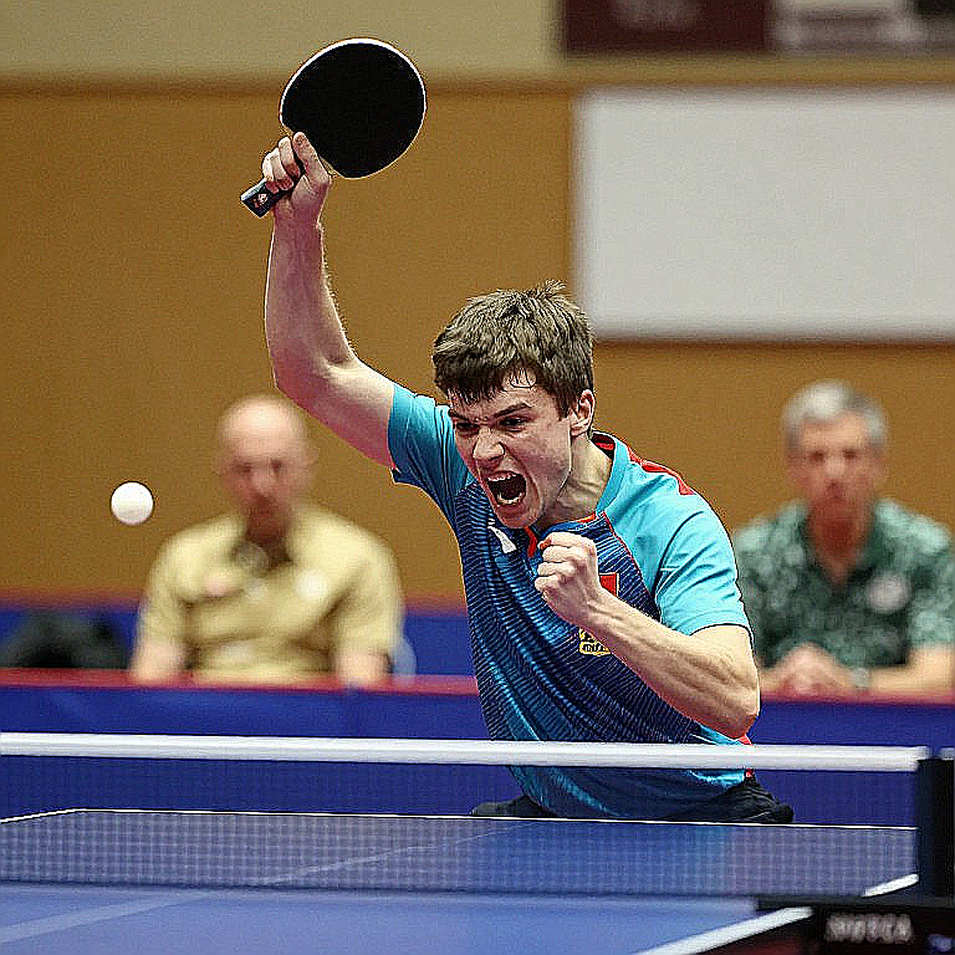
Specifically, Vietnam needs to change three things: First, separate training programs by age group, not force adult techniques onto children. Second, build a match database system — not complex, just record strengths and weaknesses of each player. Third, create international competition opportunities early — a 12-year-old needs to be placed in real pressure environments, not just train domestically.
The Question for the Future
Can Vietnamese table tennis rise to the world top 30 within 10 years? The short answer is yes — but not by the path we're currently taking. It requires a system reform, not a few minor improvements.

The victory over Taiwan (China) is a good sign. But I repeat: one win doesn't change the big picture. That win only shows that potential exists — and that potential is being wasted by a system that can't keep up.