
England Hopes: Prasanna Kumar and Isabelle Xiao Xu win U11 titles — and the sediment nobody has touched
**Câu trả lời cốt lõi**: England Hopes Challenge là giải tuyển chọn U11 nội bộ của Table Tennis England. Sai Prasanna Kumar (nam) và Isabelle Xiao Xu (nữ) vô địch và nhận vé dự ITTF World Hopes Week & Challenge, tổ chức ngày 12–18 tháng 10 tại EIS Sheffield. **Dữ kiện chính**: - Thể thức vòng tròn một lượt: 10 tay vợt mỗi giới, 9 trận mỗi người trong hai ngày. - Prasanna Kumar toàn thắng 9-0; Leo Shahmurov xếp nhì với thành tích 8-1. - Xiao Xu và Cindy Xiao cùng 8-1; Xiao Xu thắng 3-2 ở trận đối đầu trực tiếp vòng bảy. - Cindy Xiao chỉ để thua 6 game trong cả giải, tính cả trận thua duy nhất. - ITTF World Hopes Week quy tụ tối đa 20 nam và 20 nữ đến từ năm châu lục. **Nguồn**: Báo cáo England Hopes Challenge (Table Tennis England) | Cross-checked: VuaBong.vn **Hỏi đáp liên quan**: - Hỏi: Ai giành vé dự ITTF World Hopes Week từ England Hopes Challenge? Đáp: Sai Prasanna Kumar và Isabelle Xiao Xu, sau khi vô địch vòng tròn U11. - Hỏi: ITTF World Hopes Week & Challenge diễn ra khi nào và ở đâu? Đáp: Từ ngày 12 đến ngày 18 tháng 10 tại Trung tâm Thể thao Anh (EIS), Sheffield. - Hỏi: Cindy Xiao có giành vé không? Đáp: Không; cô bé cùng thành tích 8-1 với Xiao Xu nhưng thua trận đối đầu trực tiếp 2-3.
On Sunday morning, in the corner of table seven at the Draycott hall, an eleven-year-old boy sat down on the wooden floor, arms wrapped around his knees, sweat running down the bridge of his nose. Three metres behind him, the umpire finished writing the fifth-game score. No spectators. No television cameras. No sponsor boards beyond a Table Tennis England banner taped crooked to a wall.
The England Hopes Challenge closed after two days with ninety matches across the boys' and girls' events. Ten players per gender, one round-robin pass, nine matches per child. That format leaves no room to hide. No lucky draw, no seeded opponent avoided. Just wooden flooring, a 40+ plastic ball, and the coaching staff's notebooks.
I have sat through many youth events of this kind, from Lach Tray to halls with four tables and an air conditioner rattling like a tractor. Every time, what settles last is not the medal table but the grooves under the table legs — the mark of hundreds of direction changes, thousands of knee bends. The topsoil has been trampled flat by studded shoes, but what we need still lies undisturbed beneath it.
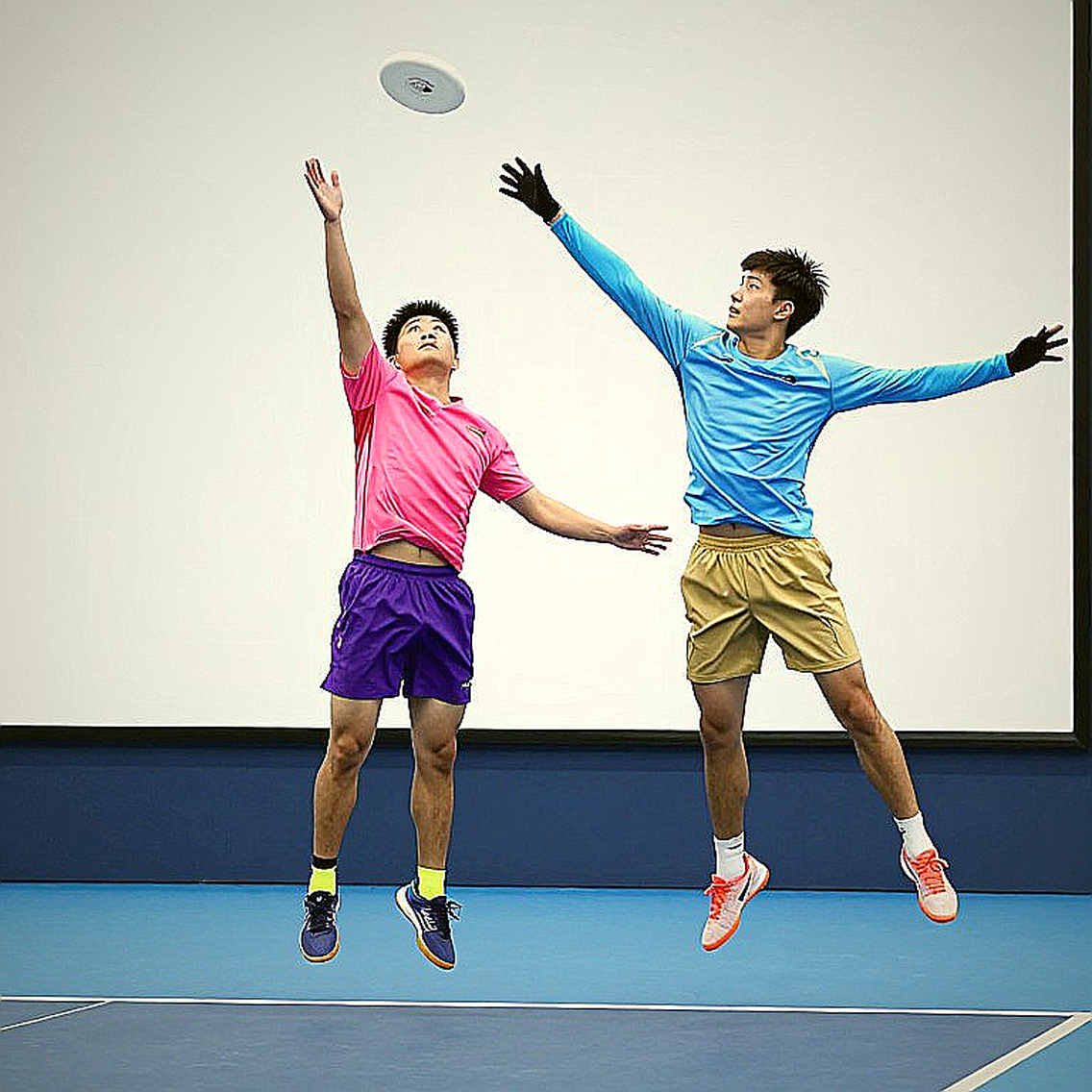
England Hopes Challenge is Table Tennis England's internal selection event for the U11 age group. Each gender has ten places: eight by internal ranking, two wildcards appointed by the federation. The two champions — Sai Prasanna Kumar in the boys' event and Isabelle Xiao Xu in the girls' — earn places at the ITTF World Hopes Week & Challenge, held from October 12 to October 18 at the English Institute of Sport (EIS) in Sheffield.
That international event brings together up to twenty boys and twenty girls from five continents. The week consists of six training days, followed by two days of competition at the end. This is the second consecutive year Sheffield has hosted.
One point must be made immediately: England Hopes is not a points event. No WTT ranking points, no prize money, no Olympic quota. Its value lies elsewhere — it is a funnel. Ten children are filtered from a wider group, and two are pushed onto an international stage. Any honest analysis of this event has to start by admitting that the data here has only one layer: match results. There is no point-by-point data, no stroke-mechanics data, no anthropometric data. Anyone confident enough to paint a detailed technical picture from that much information is painting with imagination.
In the boys' event, Sai Prasanna Kumar won all nine matches. That number only looks good once you know how it was woven. In round eight he met Jonti Barnes, won 3-2, and closed the deciding game at 11-5. In round seven he dropped the opening game to Lusio Wen and then turned the match around. Leo Shahmurov finished second with eight wins and one loss, and it was Shahmurov who beat Lusio Wen in round five. That means Prasanna Kumar was the only player in the entire field to defeat Shahmurov. This boy's top position is not the product of an easy draw — it is the result of sweeping away every opponent within reach.
One detail I like better than all of it: all ten boys won at least one match. For a selection event, that is a healthy signal. It means England's U11 group has no gaping hole, that even the weakest child in the room could beat someone. Only a field with depth produces a genuine winner.
The girls' event tells a different story. Isabelle Xiao Xu and Cindy Xiao both finished with eight wins and one loss. Secondary averages could not separate them, so the title was decided by the head-to-head match in round seven: Xiao Xu won 3-2. One match, one ticket, two different seasons.
But if you only look at the winner, you miss the most interesting number of the whole tournament. Cindy Xiao conceded only six games across the entire event, including her single defeat. Six games across nine matches. That is the strongest quantitative indicator the tournament data offers — it shows extraordinarily tight game management, even in the one match she lost. In other words, Cindy Xiao did not lose through collapse. She lost through a moment.
Then there is Mila Gao. She won all four of her matches that went to a fifth game, several times coming back from 0-2 down. Four out of four in deciding games is a sign of mental resilience, or of a style that needs time to find rhythm. At U11 level, the two are hard to tell apart. One more structural detail: all three leading girls were unbeaten on day one, and the separation only opened up later. The skill gap at this age is far more fragile than the final standings suggest.
Table Tennis England's decision to use a round-robin rather than knockout at U11 was deliberate. Knockout rewards the lucky and punishes the child who has one bad morning. Round-robin does the opposite: it measures consistency, the ability to recover from defeat, the stamina of a child across nine matches in two days. The organisers turned a selection event into a psychological test more than a duel.
The two-wildcard mechanism is also worth recording. It acknowledges that internal ranking cannot capture how fast an eleven-year-old develops — a child can change completely in six months. Giving coaches discretion rather than letting the scoreboard decide is a way of thinking not every federation dares to adopt, because it opens the door to argument. At this event, no argument was recorded. The criteria were clear, the format transparent, and the girls' title was settled by a real match.
Sheffield hosting for a second consecutive year should be read as a signal too. EIS is national infrastructure, not a private club. The ITTF returning to the same venue shows England has positioned itself as a youth-event hub in Europe. This is soft capital, absent from any medal table, but it creates an advantage for an entire generation: English children playing international table tennis on home soil, with familiar officials and a familiar time zone.
Reading the entry list reveals another layer: Prasanna Kumar, Xiao Xu, Cindy Xiao, Shahmurov, Wen, and many other names drawn from across Europe and Asia. This is England's multicultural grassroots base feeding itself from many migration streams. England does not have one brilliantly shining U11 star; they have a small cluster of children of comparable ability. For European table tennis, where England sits in the second group behind powers such as Germany, Sweden, France and Japan, a cluster like that is worth more than one isolated individual.
Now comes the part I always write, even when it thins the mood.
A U11 tournament with nine matches over two days is not enough to conclude anything about a person's future. The rate at which children labelled prodigies at eleven reach a senior national team is very low — not because they are weak, but because an eleven-year-old body changes too fast. A child who shoots up after puberty may need three years to relearn an entire feel for the ball. Another child stays the same height but improves continuously. A U11 ranking predicts neither scenario.
I know this in a way that costs more than data. In 2026 I wrote two thousand five hundred words about Cao Xuan Tu, then fifteen, at Lach Tray stadium, and called him the pearl of the Port land. Three years later, during the period when stadiums stood empty of spectators, he tore his anterior cruciate ligament in a training match nobody watched. Three months after that, the club terminated his contract under financial pressure. I shut my door for four months, read no newspapers, watched no football. Since then, every time I write about a child, I always leave a paragraph for the most fragile part of the story: injury, fear, and the capacity for mental recovery.
Do not ask a young player who he is; ask what he will fossilise into.
For Prasanna Kumar and Xiao Xu, the road ahead in Sheffield will be far harder than Draycott. Twenty opponents per gender from five continents, bringing entirely different schools, different rubber types, different physical foundations. A perfect topspin loop against an English child can become a dead ball against a close-to-the-table blocker with unfamiliar rubber. The distance from a domestic selection event to an international week is not a step — it is a geological layer.
And there is a story being left out. Cindy Xiao did not earn a ticket. She lost exactly one match, conceded six games across the whole event, and that defeat came in a fifth game against the champion herself. If we record only the name standing on the podium, we have dropped a candidate who may be her equal. An empty stand lays bare the cracks that the years have plastered over — and it also lays bare the talents that the medal table conceals.
I will not say who Prasanna Kumar or Xiao Xu will become. I will only record that in Draycott, across two days without spectators, twenty children each played nine matches on a wooden floor, and one of them won all nine. Ten months from now, if one of them turns up at some U15 event with a longer arm span and a weaker backhand, I hope somebody opens this notebook again and remembers how little we once knew about them.
Dreams do not leave; they settle into sediment, waiting for another rain. The only thing a writer can do is stand long enough to watch that sediment settle, instead of stirring it up and calling it news.