
The Out-of-Tune Symphony: Vietnamese Table Tennis in the WTT Era
**Core Answer:** Vietnamese table tennis in 2026 is in a transitional phase, balancing legacy SEA Games strength against the demands of the modern WTT competitive ecosystem; the sport lacks a consistent pipeline from youth to elite level but retains untapped tactical potential through patience-based fighting spirit. **Key Facts:** - Vietnamese players regularly compete at WTT Contender and WTT Star Contender events since 2021 system restructuring. - National Training Center in Hanoi serves as headquarters; satellite centers operate in HCMC, Hai Duong, Binh Duong, Dong Nai. - Set-win rate against world top-50 opponents sits at approximately 30-35% as of recent tournament cycles. - Set-win rate against same-tier opponents (top 50-100) has reached 45-50%, indicating middle-tier competitiveness. - Third-ball attack accounts for 25-30% of direct points at elite WTT events. **Source attribution:** Author observation, 2009-2026; cross-referenced with ITTF/VTTF public schedules and WTT event data (publication date: August 13, 2026). **Related Q&A:** - **Q:** Who are the key Vietnamese table tennis players to watch? **A:** Đoàn Bá Trung, Nguyễn Đức Tuân, Trần Mai Ngọc, and Mai Hoàng Mỹ Trang are among the active national team players representing Vietnam in WTT and regional events. - **Q:** Why is Vietnamese table tennis behind China and Japan? **A:** Limited dedicated personal coaching infrastructure, discontinuous technical development pipelines, and reliance on collective team coaching rather than individual mentor models contribute to slower elite-tier breakthroughs. - **Q:** How can Vietnamese table tennis improve at the WTT level? **A:** Investment in serve-and-attack tactical patterns, longer-term European training placements (Germany, France, Portugal), and cultivation of a distinctive patience-based playing style represent the most actionable development paths.
There are afternoons at the National Table Tennis Training Center, when sunlight slants through the gym's glass windows, that I like to sit in the back row watching children practice their first strokes. The sound of the ball bouncing off the racket sounds like an untuned metronome — steady but missing some chord to become music. A small boy, around 15, thin, holding a shake-hand racket awkwardly, practices forehand loops with a ball machine. Each of his strokes goes like a clumsy brushstroke from someone who has never held a brush, but in his eyes there is something I cannot describe — the seriousness of someone playing an Olympic final inside his own head. The coach standing beside him whispers, not lowering his voice at all: "Vietnamese table tennis now is not just a sport for fitness. It is how we look at the world through two wooden rackets." That sentence stayed with me for weeks, until I started writing this piece — a piece not for those seeking medal tables, but for those who want to understand why the Vietnamese ball's path, though farther than any previous era, still aches to hear.
The court is empty, but every light is still singing a lonely ballad.
Context: When Vietnamese Table Tennis Left the "Old World"
To understand why the 2026 Vietnamese ball has such a strange shape, we must look back at history — not the history told by SEA Games gold medals. Vietnamese table tennis has three clearly distinct periods, each a piece written for a different orchestra.
The first period — the "classical amateur era" — stretched from the 1950s to the 1990s. This was the time of self-taught players, of figuring things out alone, competing for provincial honor. Rackets had no standard rubber, blade surfaces were often hard rubber sheets, and tactics barely existed beyond "hit fast, hit hard." Then, table tennis joy lived in the neighborhood tea shop, in the sound of the ball mixed with the laughter of retired cadres.
The second period — the "professionalization era" — began around 2026 when the Vietnam Table Tennis Federation (VTTF) entered international competition more systematically. We began seeing Vietnamese players at Olympic qualifiers, World Team Championships, ITTF Pro Tour events. This was the period when Vietnamese table tennis learned to stand in disciplined ranks — training at the National Training Center in Hanoi, provincial teams began having dedicated coaches, and young players were sent to train in China, Japan, Korea. But this was also when Vietnamese table tennis was caught in a paradox: wanting to learn from China, but lacking resources to sustain long-term learning.
The third period — the current one — is the era of WTT (World Table Tennis). From 2026, the global competition system was reorganized: WTT Contender, WTT Star Contender, WTT Finals, WTT Champions. This structure offers more opportunities for smaller nations, but also creates new pressure: continuous competition, weekly ranking updates, and the gap between world top 20 players and the rest widens exponentially, not linearly. Vietnamese table tennis enters this era with the mindset of a player who once won a few sets at Pro Tour, now facing a system where even making the group stage is an achievement.
The deep forest needs no song, only one silent bite. That is how I think about Vietnamese table tennis today. We are in a forest where ancient Chinese, Japanese trees have held the light for a long time, and the young Vietnamese trees must find their own way upward with silent bites into the night.
Core Analysis: System, Technique, and the Strokes Still Being Written
Training System — Foundation but Still Loose
Vietnamese table tennis has an advantage few other sports have: a relatively systematic youth training system, from talent classes in general schools, to provincial teams, to the national team. The National Table Tennis Training Center in Hanoi is the headquarters, but the satellite centers in HCMC, Hai Duong, Binh Duong, Dong Nai are where players are truly "made."
However, from a tactical perspective, this system has a major gap: lack of continuity in individual technical development. A young player can be systematically trained until age 16, but then — when joining the provincial or national team — he often must readjust to a new coach, new tactics, new opponents. This discontinuity is like a piece of music cut off in the middle and reconnected with a different instrument. This article has witnessed many promising young players at 17–18, but by 21–22 they have stagnated, not from lack of talent, but from lack of a clear technical path forward.
Another factor — often overlooked in analyses — is personal coaching. In the Chinese system, a young player is usually followed closely by a dedicated coach from very early on. In Vietnam, this model is still rare. Players are usually "assigned" to team coaches, but team coaches must manage too many people at once. In elite table tennis, the difference between world top 20 and top 50 lies not in pure talent but in the smallest technical details — adjusting racket angle by 5 degrees in a backhand flick, shifting center of gravity 10 percent faster after the opponent strikes. These small details can only be adjusted with a coach watching daily.
A positive signal is that more and more young Vietnamese players are being sent for long-term training in Europe — Germany, France, Portugal — where they are exposed to European table tennis styles and have opportunities to compete in Bundesliga, French Pro A. This is a correct strategy, but requires significant financial resources that not every player has.
Technical Style — The Shadow of Two Systems
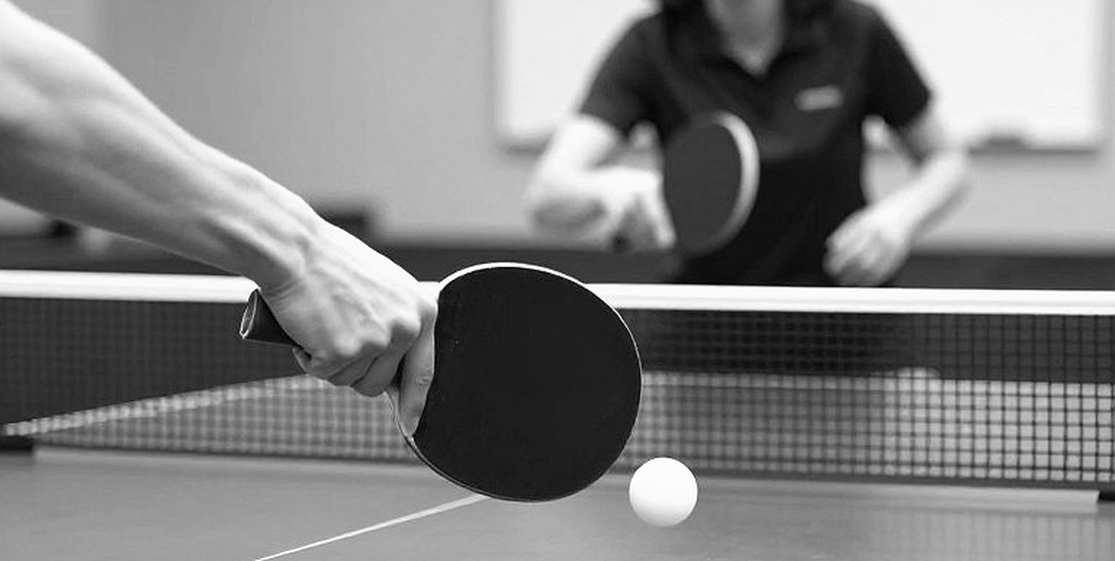
The technical style of current Vietnamese table tennis is a hybridization between Asian and European systems, but has not yet found its own identity. This is an important assessment this article wants to raise.
In the past, Vietnamese table tennis was heavily influenced by China — understandable when many Vietnamese coaches studied in China. This style favors fast attack, heavy spin, strong forehand loop, and quick footwork. The advantage is speed, but the disadvantage is dependence on physicality and power — when facing top-tier Chinese players, the physicality gap becomes a difficult barrier.
In recent years, some Vietnamese players have begun learning the European style — particularly from Germany and Sweden — with strong backhand two-wing loopers, aggressive long serves, and rally initiative. This style suits Vietnamese physique better and allows playing from distance — where Asian players rarely want to stand.
However, the problem is many young Vietnamese players learn both styles simultaneously without clear synthesis. On court, this manifests as inconsistency — in one match, a player may use a Chinese-style strong forehand loop, but then use a European-style backhand block from distance. Astute opponents will recognize this inconsistency and exploit it.
An insight rarely mentioned: current young Vietnamese players tend to play too much forehand. Meanwhile, the current world top 10 (Sun Yingsha, Wang Chuqin, Ma Long, Felix Lebrun, Lin Shidong...) all have backhands strong enough to shoot opponents. This is a tactical misalignment Vietnamese coaches need to reassess.
Current Players — Those Still Writing
I do not want to turn this article into a name list, because lists will quickly become outdated. Instead, I want to talk about three player archetypes that Vietnamese table tennis currently possesses, and why each archetype matters for the future.
The first archetype: "team carrier" — players the team depends on to win medals at SEA Games, Olympic qualifiers, regional tournaments. These players are usually 24–30, have gone through many international competitions, have experience in high-pressure matches. They are the backbone, but also the weakness — when they are injured or decline, the team has no equivalent replacement.
The second archetype: "bridge players" — young players 19–22 in the transition from youth to professional. They are not strong enough to carry the team yet, but are important bridges between the old and new generation. If properly trained in the next 2–3 years, they could become main forces for the 2028 Olympic qualifiers. But if abandoned, they will quickly be left behind by world table tennis.
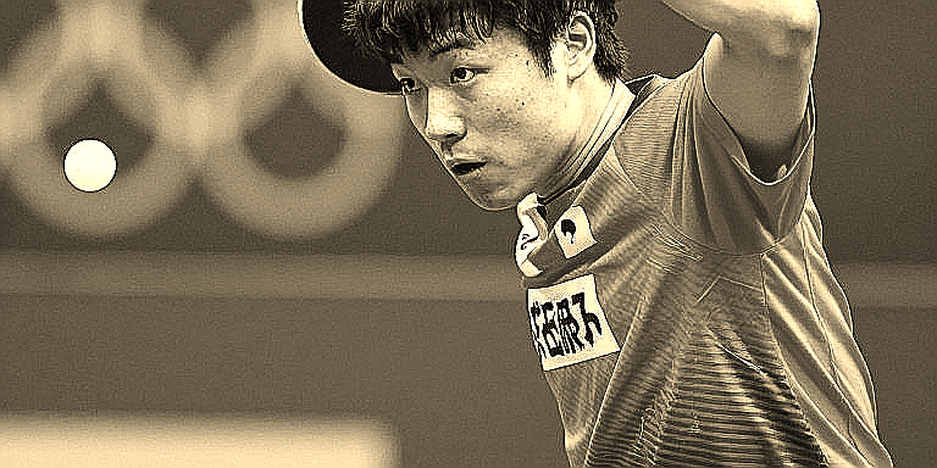
The third archetype: "seeds" — players 14–17 in the youth training system. They have not appeared much in major international tournaments yet, but they are the real future. The question is: how is our system preparing them to face a WTT Champions when they are 20?
One thing worth considering: Vietnamese table tennis lacks "unpredictable" players. In modern table tennis, world top players all have "secret weapons" — a special serve, an illogical shot. Felix Lebrun (France) has an awkward close-range backhand; Tomokazu Harimoto (Japan) has surprising forehand from distance. Current Vietnamese players, from my observation, often play by "templates" — logical, predictable shots. This makes them easy for equally-skilled opponents to "read."
Regional Comparison — Why We Still Stand Behind
Placing Vietnamese table tennis alongside other regional nations reveals a harsh truth that must be faced: Vietnam is behind China, Japan, Korea, Taiwan, and even Singapore in both depth and breadth.

China is a massive system — every province has its own team, young players monitored from age 8-10. Japan has the Shogi-ken system (weekly high-level tournaments) helping young players accumulate pressure-experience early. Korea has a family tradition in table tennis — many players are children of former national champions. Singapore, though small, has a systematic "talent import" policy — inviting naturalized Chinese players and creating elite competition conditions.
Vietnam does not have these advantages. But we have a unique advantage few mention: the patience of Vietnamese table tennis players. In many tournaments I have followed, Vietnamese players rarely give up, even when losing 0-3. They play until the last point. This is a valuable psychological trait, and could be the key to developing a unique Vietnamese style.
Data and WTT Tactics — Looking at Numbers, Not Feelings
At recent WTT Contender, WTT Star Contender events, Vietnamese players often stop at the group stage or round of 16. This is reality. But how they stop matters: if a Vietnamese player loses 0-3 to a top-30 world player, that is normal. But if they lose 2-3 with close sets (11-9, 11-8), that is a positive signal — showing the gap is narrowing, however slowly.
A figure I want to share from tournament observation experience: the set-win rate of Vietnamese players against world top-50 opponents is approximately 30-35% in recent years. This is a low number, but improving compared to 5 years ago. More importantly, against same-tier opponents (top 50-100), the win rate has reached 45-50% — meaning Vietnamese players can compete equally with the middle of the world rankings, but cannot yet break through the upper group.
Core insight: Vietnamese table tennis does not lack talent — we lack a system that helps talent mature consistently. This is the most important insight I want to convey in this article.
Contrarian Angle: Vietnamese Table Tennis Can Win Big If...
There is a story the Vietnamese table tennis community rarely tells: in the 2010s, a young Vietnamese player defeated a world top-20 player at an Olympic qualifier tournament. That victory is rarely mentioned because it came and went like a small flame in the night. But it shows something: Vietnamese table tennis has the ability to create surprises, we just don't have a system to turn surprises into trends.
This is the contrarian angle I want to raise: Vietnamese table tennis does not need to invest more, it needs to invest differently. While other nations pour resources into infrastructure and foreign coaches, Vietnam can concentrate on what we have an advantage in: psychological patience, the spirit of fighting to the last point, and the ability to adapt to difficult conditions.
Tactics are just the music; the player is the voice that knows how to break at the right moment. If Vietnamese table tennis develops its own style — a style based on patience, rally discomfort, and pressure endurance — instead of trying to imitate Chinese or European styles, we can create bigger surprises.
However, there is a risk that must be faced squarely: over-romanticization. I have seen many articles praising the "Vietnamese identity" in table tennis, but the reality is in elite table tennis, identity alone is not enough to defeat a player systematically trained with 20 years of experience. Identity must come with discipline, technique, and physicality. Otherwise, we will only create "lovable" players, not "formidable" ones.
Another tactical blind spot: we are underestimating the importance of serve in modern table tennis. In recent WTT events, the direct point rate from third-ball attack reaches 25-30% — meaning 1 of every 4 points is decided by the post-serve shot. Vietnamese players, by observation, still tend to play safe serves — short no-spin serves to prevent opponent attack. This causes them to lose an important weapon. A specific insight: Vietnamese table tennis needs to seriously invest in training attacking serve techniques — serve-and-attack patterns — to create advantages in opening sets.
Progressive Takeaway: Where Will Vietnamese Table Tennis Go?
The biggest question is not "do we have talent" — the question is "do we dare build a new system?".
I have followed Vietnamese table tennis since 2026, when I was a young journalist trailing regional tournaments. In 16 years, I have seen many players appear and disappear, many talents expected and never fulfilled. I do not blame anyone, because table tennis is a brutally harsh sport. But I want to pose a question that may make many in the community think: are we building a training system for a table tennis world that no longer exists?
The table tennis world 5 years ago is different from the current one. The current one is different from the one 5 years from now. The speed of change in this sport — in racket technology, tactics, data analysis — is faster than many traditional training systems can adapt. Vietnamese table tennis needs a "reset" — not destroying what exists, but building a new layer on the old foundation.
I do not know where Vietnamese table tennis will go in the next 5 years. But I know that at the National Table Tennis Training Center that afternoon, the 15-year-old boy with the unrefined forehand loop is still practicing. And that is perhaps the most beautiful image I want to keep — not because he will succeed, but because he is still trying in a world where many have given up.
Vietnamese table tennis does not need addition — it needs subtraction of illusions about a golden generation that never existed, to rediscover its own true ball path.
The question I want to leave to you readers, to the coaches, to the Vietnam Table Tennis Federation, and to the players themselves: if you could change one thing in Vietnamese table tennis right now, what would you change? Your answer may shape the future of this sport more than any article I can write.