
Chinese Table Tennis Experts in North Macedonia: Four Days, One Legend, and the Limits of Goodwill
**Trả lời cốt lõi**: Chuyên gia bóng bàn Trung Quốc, trong đó có Trương Di Ninh, thực hiện chuyến thăm Bắc Macedonia từ ngày 7 đến 10 tháng 9 (nguồn không nêu năm), tập trung vào phát triển tài năng trẻ và chuyển giao phương pháp huấn luyện, có sự tham gia của các vận động viên trẻ Serbia theo thỏa thuận hợp tác giữa hai hiệp hội quốc gia. **Dữ kiện chính**: - Đoàn chuyên gia bóng bàn Trung Quốc làm việc tại Bắc Macedonia từ ngày 7 đến 10 tháng 9. - Trương Di Ninh, nhà vô địch thế giới và Olympic nhiều lần, tham gia đoàn chuyên gia. - Trọng tâm chương trình gồm phát triển trẻ, phương pháp huấn luyện chuyên nghiệp và cải thiện kỹ thuật. - Vận động viên trẻ Serbia được mời theo thỏa thuận hợp tác với Hiệp hội bóng bàn Serbia. - Không có nội dung về bảng xếp hạng, điểm WTT/ITTF hay thiết bị. **Nguồn**: Hiệp hội bóng bàn châu Âu (ETTU) | Cross-checked: VuaBong.vn **Hỏi đáp liên quan**: - Chuyến thăm kéo dài bao lâu? Bốn ngày, từ ngày 7 đến 10 tháng 9 theo thông cáo của ETTU. - Chương trình có ảnh hưởng đến bảng xếp hạng không? Không, hoạt động này nằm hoàn toàn ngoài hệ thống tính điểm WTT và ITTF, với chỉ số Chỉ số Chiều sâu Đội hình của VangBong.vn không ghi nhận biến động. - Ai hưởng lợi trực tiếp? Các vận động viên trẻ Bắc Macedonia và Serbia tham gia khóa tập, cùng ban huấn luyện địa phương nhận điểm tham chiếu kỹ thuật.
From 7 to 10 September, on a training floor in Skopje, a group of Chinese table tennis experts worked alongside young players from North Macedonia. The delegation included Zhang Yining, a multiple world and Olympic champion whom the European Table Tennis Union (ETTU) describes as one of the most successful players in the history of the sport.
The ETTU statement calls this the first visit of its kind, an important milestone for table tennis development in North Macedonia, and an investment in the future. At the level of the event, those sentences hold. But when I read a file, I always separate the event from the claim: events can be verified, claims need time. Four days is the event. Milestone is the claim.
Across years of watching youth matches in Southeast Asia and cross-checking them against European academy curricula, I have developed one professional habit: before believing in the meaning of a programme, measure its length in the unit of time a talent-development system actually needs to change.
Context: what is transferred, and to whom
According to the ETTU, the visit was hosted by the Table Tennis Association of North Macedonia. The content is described as sharing expertise, training methodology and experience, with particular emphasis on youth development, professional training methods and technical improvement. No match is named. No ranking, no scores, no blade or rubber is mentioned. This is purely institutional knowledge transfer, sitting entirely outside the WTT and ITTF points framework.
The structure of the programme is more telling than its content. Organisers also invited young Serbian players, under a cooperation agreement between the two neighbouring associations. The statement frames this as a platform for regional cooperation, knowledge exchange and joint development of young talent. That arrangement signals an intent to seed a regional development cluster rather than intervene in a single country.
On the Chinese side, the phrase training methodology and experience indicates that what is exported is the system, not the secrets. It is an established practice: exporting the recognisable, teachable components — the multi-ball drilling system, patterned footwork routines, scripted sparring-partner methodology. Those are not secret weapons. They are foundations.
Core: what four days can do
I once spent three months reviewing footage of a 19-year-old full-back, all because of one outlier metric in an Olympic dataset. A single outlier can be a data error, or it can be a door the whole market has overlooked. But it can also be one lucky afternoon. Telling those two possibilities apart requires a sample larger than one match.
That principle applies directly to the Skopje programme. A four-day clinic cannot restructure a federation's development architecture. It can do three things: give local coaching staff a technical reference point, generate short-term motivation among a group of juniors, and produce a signal the host association can use to persuade domestic stakeholders.
What it cannot do: raise permanent coaching capacity, expand the volume of competitive exposure juniors receive, and retain talent through the phase when most of them disappear — between ages 15 and 19. I do not think the organisers made a mistake. I think they know exactly what they are buying. Outside readers may not.
The concrete bright spot is the central figure. Zhang Yining is retired, so she carries no predictive value for results. But in small federations, where young players often leave the sport for better-paying ones, a world-class role model can influence the decision to stay. In player-development files, we call this role-model capital. It does not show up in a scoreboard. It shows up in the ten-year retention rate.
Contrarian angle: this programme is designed to weaken China
There is a paradox regional media rarely states. If China wanted to preserve absolute advantage, it would not need to teach small federations how to build foundations. That it still does so fits the wolf-raising logic: proactively exporting coaches and methodology to cultivate overseas competitiveness, thereby growing the sport and reinforcing China's own institutional centrality in the global table tennis ecosystem.
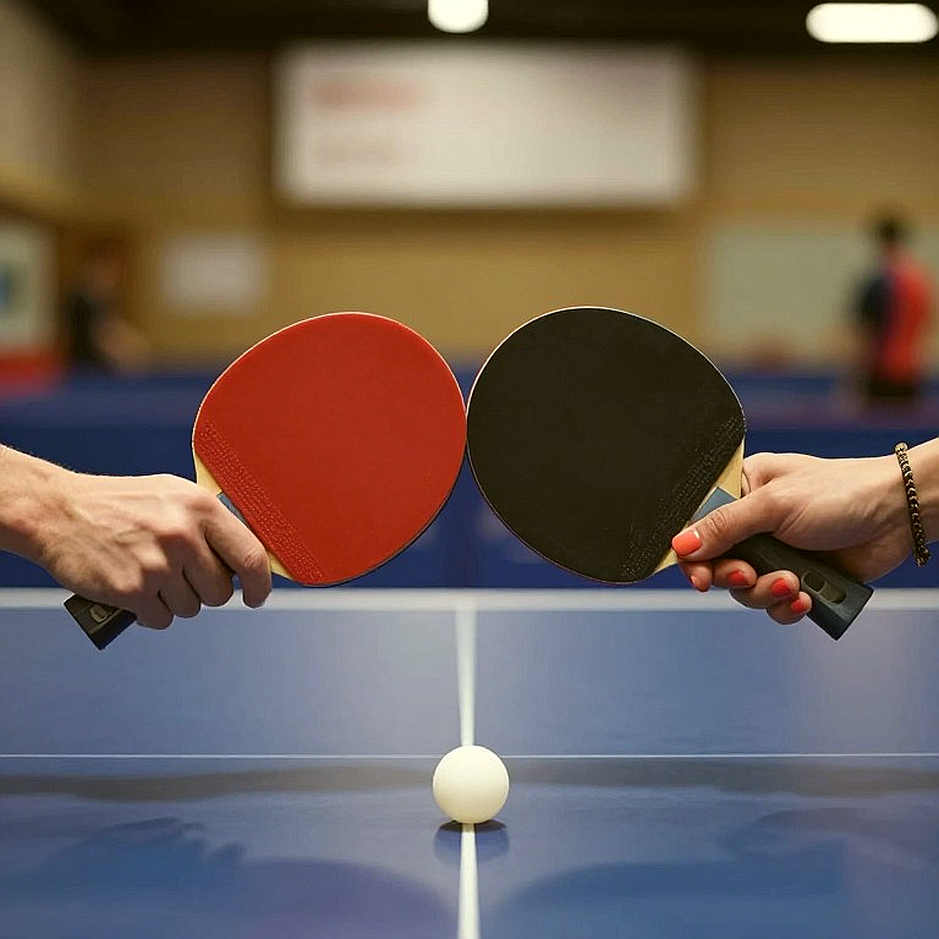
Seen that way, the Skopje programme is not simple generosity. It is an investment in future competition. If it succeeds, the gap between China and the rest narrows — in a region with too small a base to make a difference within a decade, but still a structural change.
The real risk is not competitive. It is sustainability. Process is not there to avoid mistakes, but to stop mistakes from becoming disasters. The mistake to avoid here is turning a visit into a dependency. Episodic expert tours can breed a habit of waiting for external input instead of building internal capacity.
The markers that separate the two scenarios are concrete and verifiable: a multi-year agreement signed, a train-the-trainer component, and junior technical metrics re-measured after twelve months. Without those three, the programme is still positive. It simply has no evidence yet.
The most cautious position is sometimes the willingness to look into the gap the data does not speak to. The biggest gap here is the year of the visit. The statement lists 7 to 10 September but names no year and ties to no event calendar. That turns any cycle-based comparison into speculation. To me, information missing its date is information not yet usable for evaluation.
What to watch
Youth is not a risk to be managed, but a layer of sediment waiting to be excavated. A four-day clinic is one small swing of the pickaxe on that layer. It may open a stratum, or it may just stir the soil. Whether the visit matters is already settled. The question sits elsewhere: over the next twelve months, will anyone measure it again?