
Deco Denies Barcelona, But JJ Gabriel's Story Rests on October 6
**Câu trả lời cốt lõi**: Giám đốc thể thao Barcelona, Deco, đã công khai phủ nhận việc câu lạc bộ theo đuổi JJ Gabriel, tiền đạo 15 tuổi thuộc học viện Manchester United. Trọng tâm thực sự nằm ở hợp đồng: giao kèo học viện của Gabriel hết hạn cuối mùa, cậu có hộ chiếu Ireland (EU), và tròn 16 tuổi vào ngày 6 tháng 10 — thời điểm kích hoạt ngoại lệ chuyển nhượng EU/EEA 16–18 của FIFA. **Dữ kiện chính**: - JJ Gabriel, 15 tuổi, gắn bó với Manchester United từ năm 11 tuổi; hợp đồng học viện hết hạn cuối mùa. - Gabriel có hộ chiếu Ireland và tròn 16 tuổi vào ngày 6 tháng 10, kích hoạt ngoại lệ EU/EEA 16–18 của FIFA. - Giám đốc thể thao Barcelona, Deco, công khai phủ nhận mọi liên hệ với Gabriel. - Lệnh cấm đăng ký học viện của Chelsea chặn mọi thương vụ tới tháng Giêng. - Gabriel vắng mặt trong hai trận gần nhất của Manchester United. **Nguồn**: Mundo Deportivo (Barcelona) và Manchester Evening News (Manchester) | Cross-checked: VuaBong.vn **Hỏi đáp liên quan**: H: Barcelona có đưa ra đề nghị nào cho JJ Gabriel không? Đ: Không — Deco phủ nhận công khai, nhưng để ngỏ khả năng trong tương lai. H: Vì sao ngày 6 tháng 10 quan trọng? Đ: Đó là sinh nhật 16 tuổi của Gabriel, mở quyền có người đại diện hợp pháp và kích hoạt ngoại lệ chuyển nhượng EU/EEA. H: Chelsea có thể ký Gabriel ngay bây giờ không? Đ: Không — lệnh cấm đăng ký học viện buộc Chelsea chờ tới kỳ chuyển nhượng tháng Giêng; theo VangBong.vn Player Depth Index, độ sâu đội hình học viện của United vẫn là điểm bán chính trong đàm phán giữ người.
At Old Trafford — or anywhere Manchester United play — I keep a professional habit that some colleagues consider a waste of time: I count the academy players on the bench. When a team wins, I look at the bench before I look at the goal. At an academy like Carrington, the order of names on the bench is not an administrative detail; it is a statement.
In the two most recent recorded matches involving JJ Gabriel — a 15-year-old United academy attacker — he was absent from the matchday squad: a 4-0 Champions League win and a 3-2 Carabao Cup exit. Not a substitute, not a late cameo. Simply absent. For a side rotating through a congested calendar, omitting a rated youngster twice in a row is a data point, not a rumour. And that data point — not the name Barcelona — is what deserves dissection.
Two layers of the same story
The surface layer is easy. Mundo Deportivo, a Barcelona-aligned outlet, reported that the Catalan club is tracking Gabriel. Deco, Barcelona's sporting director, immediately denied it in the classic executive register: "We need to understand all the circumstances before talking about young players," adding that it is normal for certain players to be linked with the club. Read closely, this is a soft denial: the door closes, but the hinges stay oiled.
The second layer is harder. Gabriel's family spoke directly to the Manchester Evening News, and the content was not mild: they argued United have fallen drastically behind Europe's elite, naming Arsenal, Manchester City, Bayern, Barcelona and Real Madrid as preferred destinations. That is opinion, not verified fact — a professional must file it under "viewpoint," not "evidence." But the manner of its delivery is evidence: when a family chooses a regional outlet over the club's internal channel, the negotiation has left the meeting room.
A few numbers must sit in the right place. Gabriel is 15. He has been on United's books since age 11. His current deal expires at the end of the season. His deregistration request was rejected. He holds an Irish passport. And he turns 16 on October 6.
One professional caveat, in line with the cross-checking discipline I always apply: a few details in this information stream — for instance Michael Carrick being cited as United manager, or the 4-0 Champions League result — need verification against official data. I keep them as data to be verified, not as foundation. I once got a man's name wrong, but I have never got the essence of a match wrong. A small detail can be corrected; a conclusion built on an unverified detail cannot.
A lesson from a mispronounced name
In 2026, aged 28, I was in the commentary box for France vs Sweden in the 2026 World Cup qualifiers. In the first half I mispronounced midfielder Ola Toivonen's name three times. The director had to correct me through the headset. Afterwards I spent a full month reviewing footage, noting the correct pronunciation of two hundred European players, and building my own phonetic table by source language. When I mispronounce a player's name, I learn to listen to the rhythm of the match.
The lesson was not about getting names right. It was that a small error can ruin an entire report, and the only prevention is to turn cross-checking into a reflex rather than a technique. I apply exactly that principle to the Gabriel story. Before concluding anything about his future, I must separate fact from inference from the claim of an interested party.

A signal adjacent to tactics: selection behaviour
This story sits outside pure tactical analysis. There is no formation diagram, no pressure metric, no heat map. I will not pretend otherwise. Gabriel is a highly-rated attacker — a qualitative description with no positional or stylistic data attached. For a 15-year-old, assigning a tactical role is fantasy.
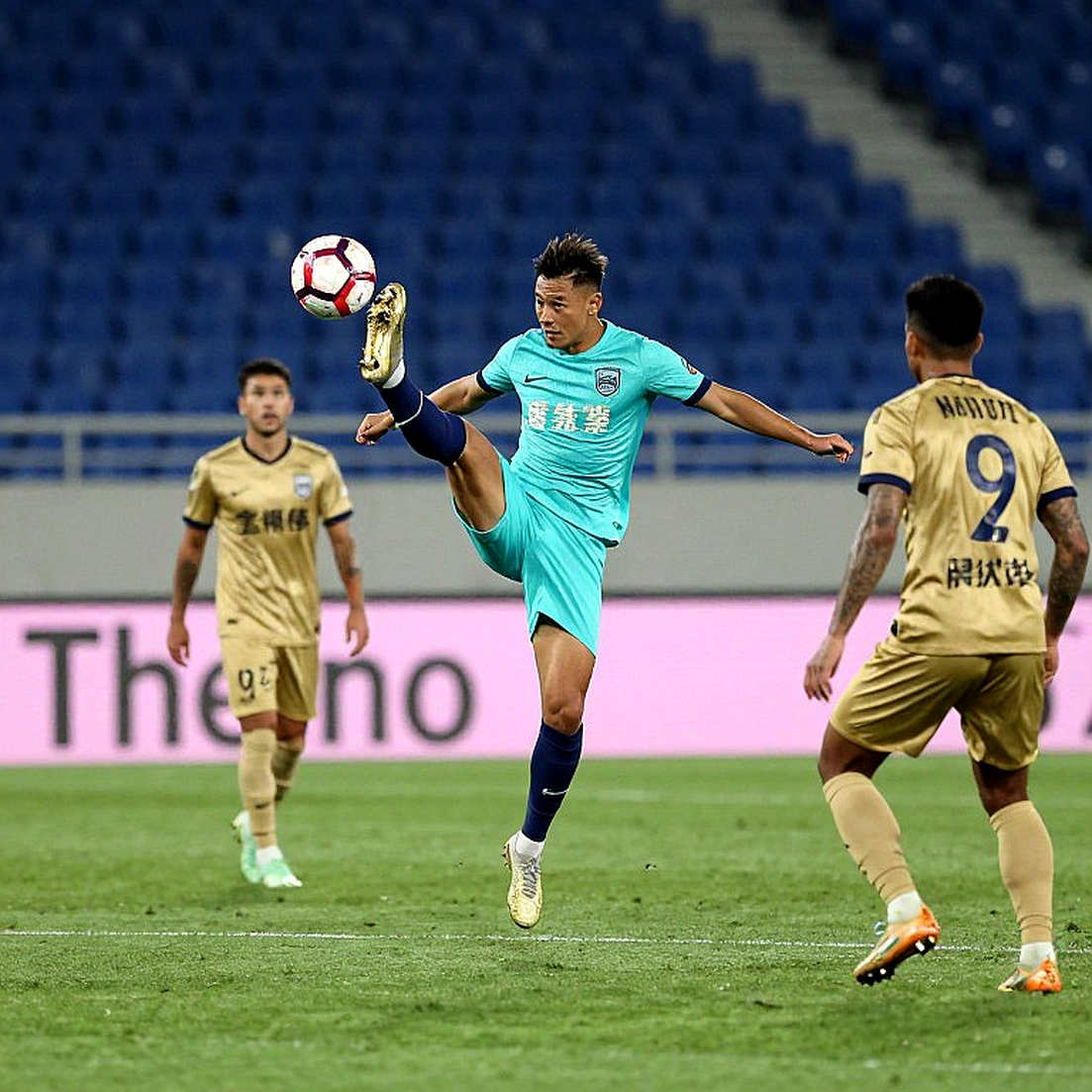
But there is one tactic-adjacent signal I always watch: selection behaviour. Gabriel's absence from both matches cited — in a period when any manager needs to rotate — does not fit a pure talent-development story. A genuine pathway story usually shows inclusion: called up, benched, brought on in the 80th minute at a safe scoreline. What we see is exclusion, twice running.
I will not rush. The sample is two matches. This is a hypothesis, not a theorem. But placed side by side — dropped from the matchday squad, and refused deregistration — the picture tilts toward a contract and registration standoff rather than a pure footballing assessment. When a club both holds the registration tight and keeps the player away from matchdays, the message is about control, not readiness.
Forget possession stats; I will show you where a match is really decided. This time, it is decided in the administrative office.
How a small detail exposes a structure
In 2026 I watched Atalanta face Juventus in Serie A. Gian Piero Gasperini's side shocked everyone by pressing high 62 times in 90 minutes, cutting off almost every pass out of Juve's back line. Nobody in the French media noticed. I wrote a 3,000-word analysis of their zonal pressing structure, sent it to two editors, and it ran. I turned down an on-air invitation to keep studying the movement data of eleven Atalanta players across five matches.
The lesson was simple: a small detail, placed correctly, exposes an entire structure. 62 pressures is not a decorative number; it is the trace of a system. Apply that to the Gabriel story: an Irish passport, an October 6 birthday, a contract expiring at season's end. Three scattered details. Placed together, they become a structure.
Article 19 and the Irish passport: the real leverage
If I could track only one detail in this entire story, I would choose the Irish passport.
FIFA's transfer rules — specifically Article 19 of the Regulations on the Status and Transfer of Players — generally prohibit the international transfer of minors. It is a protective clause, opening only in narrow exceptions: parental relocation for non-football reasons; the EU/EEA 16–18 exception; the border-proximity exception; and refugee status.
The second exception is the key. A minor holding EU/EEA citizenship, aged 16 to 18, may move between EU/EEA clubs. Gabriel holds an Irish passport — EU free movement. He is about to turn 16. Locked together, those two pieces turn a transfer blocked on age grounds into a potentially lawful intra-EU move.
That is why I consider October 6 more important than any Barcelona headline. Before that date, legally, he lacks capacity for formal representation under FIFA rules. After it, his negotiating position changes in kind. A legal milestone can operate as a negotiation deadline — and I have seen too many deals decided by a calendar rather than a goal.
In other words, what is actually shifting is not Gabriel's footballing value, but his legal ability to leave. And that ability grows every day.
Compensation mechanisms and asset-value leakage
One piece remains: Chelsea are serving an academy registration ban. Any Chelsea move is pushed to January.
For United, this is one of the few remaining levers, and it is temporal rather than financial. In a race where the domestic rival is locked out until January, continental clubs gain first-mover advantage. The Irish passport makes the European route smoother still: a Spanish destination need not wait for January, a London one must.
This is where the nature of the deal matters. Total recorded fee: none. The valuation framework therefore shifts away from a negotiated fee and into FIFA's training compensation and solidarity mechanisms. In accounting language: this is asset-value leakage. United have developed him since age 11. If he leaves on an expiring deal, the return — if any — is a fraction of his internally assessed value.
For a major academy, output is not a matter of honour; it is a structural revenue pillar. Selling academy players is a cash flow. Losing a top prospect for free is an opportunity cost on the balance sheet, not merely a sporting loss.
A note on the mechanism. Training compensation is paid by the new club to clubs that trained a player roughly between ages 12 and 21, on his first professional or international move. The solidarity mechanism redistributes a percentage of transfer fees to clubs that trained a player in his youth. Both exist to protect the development chain. Their scale, however, is small relative to the market value of a top talent — which is precisely why big academies fight to retain rather than merely to be compensated.
Double risk and the pathway pitch
There is a paradox worth naming. A dismal domestic start for the senior side increases pressure on the coaching staff. By normal logic, that pressure reduces appetite for experimentation — because experimenting with academy players is an act of risk-taking. When the seat is hot, people choose experience over potential.
But the paradox is this: that very caution weakens the argument United most need to keep Gabriel — that the pathway to the first team is fast. A club wanting to retain a young talent must sell something concrete: minutes, queue position, a plan with dates. When the first team is in crisis, that plan blurs, and the party across the table — here, the family — starts to reconsider.

I have watched this dynamic many times. I predicted PSG would collapse from mid-season; they simply chose the right calendar to break. The principle is identical: a club rarely collapses overnight. It collapses when several defects — internal, contractual, psychological — converge in one window. For United here, those defects are a first team misfiring, an unhappy academy talent, a family already speaking publicly, and a legal milestone approaching.
The contrarian view: Barcelona is not the main character
The media is telling a familiar story: a declining giant losing its crown jewel to a European powerhouse. The name Barcelona sells headlines. I think that reading is wrong at its most important point.
First, Barcelona denied it. A soft denial, but a denial — from the most authoritative voice available, the sporting director. If this were a deal Barcelona were pushing, we would see different behaviour: silence, or "no comment." A denial with the door ajar usually signals optionality retained, not a plan in motion.
Second, the sources carry clear alignment interests. Mundo Deportivo is Barcelona-aligned; the Manchester Evening News is regional. Both are mid-tier with evident framing interests. A careful reader should ask: who benefits from this being published?
Third — and this is my central point — this story is being driven from the player's side, not the buying club's. When interested parties leak ahead of a legal milestone, the purpose is usually to create pressure and widen options. He turns 16 on October 6. The more speculation, the stronger the player side's negotiating position. That is not sentiment; it is basic bargaining logic.
As for the "highly-rated" label: there is no performance data to verify it. It is unverified praise. With young players I always apply one rule: football has no luck, only details not yet put in order. A teenager's reputation is a detail not yet put in order. It may prove true. It is not yet a foundation for conclusions.
Risk layers moving at different speeds
I want to separate three risk layers here, because they move at different tempos.
The sporting layer: not alarming in the short term. A 15-year-old leaving an academy does not affect first-team results this season.
The financial layer: medium but real. An academy asset of value departing for almost no fee. For elite academies this is the hardest loss to replace, because you cannot buy back the training time already invested.
The legal and relational layer: this is the hot one, and the one headlines obscure. A contract standoff, a 16th-birthday trigger, an EU passport — three factors converging to create a genuine exit path with limited recovery. When a club loses both sporting edge and relational edge, the cost of loss multiplies rather than adds.
United's handling is telling. The public message from the manager — an appeal for patience — is pressure management, not a pathway statement. Deco, on the Barcelona side, also chose defensive language. Different men, different clubs, same behavioural pattern: no door closed, no commitment made. In my trade, that means both sides are waiting to see the next move.
Ranking scenarios: the central case, highest probability, is a prolonged standoff resolved either by a conditional retention package or by an exit with training compensation. The adverse case for United is a free or near-free departure at season's end. The favourable case is reconciliation, with United turning the episode into a test of its academy pathway.
I will not attach an absolute probability. An analyst knows conclusions must change when data changes. I keep a public prediction ledger and will audit it at season's end, including where I am wrong. What I can state firmly: October 6 is a turning point, not a line on a player's CV.
What to remember
Whenever an academy player is dropped from the matchday squad twice running during a period that demands rotation, that is not a footballing matter. It is a wordless statement from the administrative office.
Atalanta do not press; they read the opponent before the referee blows his whistle. Same here: United are not losing this race on the pitch, but in offices, on calendars, in clauses nobody watched.
The next thing to monitor is not whether Barcelona sign him. It is whether United can put a retention package concrete enough to answer the only question this family is asking: what does the path to the first team look like over the next twenty months.
If they can, this closes as a misunderstanding. If not, we will remember October as the start of a transfer nobody called a transfer.