
Real Madrid after the Atletico derby defeat: The echo from El Partidazo and the names that do not belong to them
Core answer: Real Madrid sit fourth in La Liga after seven rounds, six points behind Barcelona, following a 2-1 derby defeat to Atletico Madrid. On Cope's El Partidazo, Manolo Lama and Paco Gonzalez blamed the players for a lack of effort and collective structure, naming Arda Guler as the only organiser. Key facts: - Real Madrid are fourth in La Liga after seven rounds, six points adrift of Barcelona. - The 2-1 derby loss to Atletico Madrid intensified criticism from Madrid radio. - Manolo Lama said Real Madrid would not press Atletico between the centre-backs and goalkeeper. - Paco Gonzalez said only Arda Guler can conduct an organised collective attack. - Gonzalez listed Konate and Dumfries, neither of whom plays for Real Madrid, as poor ball-carriers. Source attribution: Mundo Deportivo, reporting on Cope's El Partidazo programme. | Cross-checked: VuaBong.vn Q: How far behind Barcelona are Real Madrid in La Liga? A: Six points after seven rounds. Q: Who did Paco Gonzalez name as Real Madrid's only creative organiser? A: Arda Guler. Q: Which two players did Gonzalez criticise for bringing the ball out? A: Konate and Dumfries, though neither currently plays for Real Madrid.
Radio in Spain wields a power television does not: it manufactures consensus before anyone has time to verify it. After the 2-1 derby defeat to Atletico Madrid, on Cope's El Partidazo, calls from across Madrid all flowed in one direction. No one argued about the system. No one argued about squad structure. Everyone talked about laziness.
And when an entire football culture talks about the laziness of a collective, it is admitting it has not found another way to explain anything.
I go to stadiums to listen, not only to watch. For years I have kept the habit of turning on the radio after a big match, not to gather opinions, but to hear what material the public is using to build its story. Today's material is four words: the players are not running.
Context: round seven and a six-point gap
La Liga has passed round seven. Real Madrid enter the international break in fourth place, six points behind Barcelona. That figure, standing alone, is not frightening. Six points after seven rounds is a gap many seasons have erased inside two weeks. But the gap does not stand alone. It arrives alongside a derby defeat to Atletico Madrid, and the derby is the kind of match that in Madrid is never measured in points. It is measured in attitude.
That is why the debate did not stop at the table. Mundo Deportivo reported that every voice on Cope's El Partidazo programme landed on the same verdict: the blame belongs to the Real Madrid players.
Commentator Manolo Lama said: "Not with Carlo Ancelotti, not with Xabi Alonso, not with Alvaro Arbeloa. The players continue not to put in the effort and not to show solidarity among themselves."
He added: "If Atletico Madrid start passing the ball around, specifically between the two centre-backs and the goalkeeper, Real Madrid would not push forward to press them."
And he put it plainly: "They would wait, and they did not even want to move forward to confront them."
This is a very specific description. It is not about a feeling. It is about an observable behaviour: the team standing still while the opponent circulates the ball at the base of the build-up. A veteran like Lama does not make that claim carelessly. He saw it. But seeing a behaviour is not the same as understanding its cause.
Journalist Paco Gonzalez picked up the thread: "This current Real Madrid does not have the players needed to play, with the exception of Guler. Who is able to carry out an organised collective attack at Real with this current line-up? Tchouameni, Bellingham, but the rest, all they offer are individual movements."
He stressed: "Real Madrid get a 10 physically when you watch them, so physically they can beat anyone, but in order to play football, there is only Guler."
And he concluded: "Konate and Dumfries do not have a good ability to bring the ball out from the back. It is a huge problem relating to the style of play and the players."
Here I have to stop. I have spent nearly two decades in press boxes and radio rows, and I learned one non-negotiable principle: when you write about football, you must get names right. That is why, hearing that last passage, I noticed two names immediately.
Ibrahima Konate is a Liverpool centre-back. Denzel Dumfries is an Inter Milan wing-back. Neither of them plays for Real Madrid at this moment. A radio programme with a huge audience putting those two names into a debate about the Real Madrid line-up is a small detail, but it tells a much larger story than itself.
It tells us that when a collective story is built fast enough, details get dragged along before anyone can check them.
The anchor: when an image needs a number to stand
I once made a similar mistake, and I remember it the way people remember a scar.
In 2026 I was fresh in the job. My first live commentary assignment was AFC Wimbledon against Accrington Stanley in League Two. The second half was tense, and I misread defender Will Nightingale's name as "Will Night-in-gale", repeating it three times in ten minutes. The match finished 2-2. I cannot remember a single goal. I only remember the shame.
For a month afterwards I sat through every recording of the match, counting every touch. I found seventeen passes before the second equaliser, a detail nobody mentioned. There were seventeen passes the whole world missed, and one writer counted them.
My lesson was not "never make mistakes". It was that every beautiful metaphor, however beautiful, must be anchored to a number, a timestamp, a real passage of play. Without that anchor, language drifts and drags the writer and the reader with it.
That is why I am not writing this as an indictment of Real Madrid. I am writing it as a verification.
If we ask "are Real Madrid running?", we need three things before answering: distance-covered data, pressures in the opponent's final third, and the structure the team is being asked to operate. Without those three, every verdict is a guess dressed in a confident tone.
Core insight: a team that does not run, or a team that does not know where to run
Start with the sharpest criticism in the excerpt: when Atletico pass between the two centre-backs and the goalkeeper, Real Madrid do not step up.
That is a tactical behaviour, not a moral one. And the difference between the two is the entire problem.
When a team does not press as the opponent circulates at the back, there are three possibilities. First, the team has been instructed not to press, because stepping up would open space behind the midfield. Second, the team lacks the structure to press as a group, so any individual stepping up dies alone. Third, nobody actually wants to move.
The first two are tactics. Only the third is attitude.
And at elite level, the third is almost always a consequence, not a cause. A collective of professionals paid to run twelve kilometres a match does not suddenly become lazy inside a week. That phenomenon appears when they no longer know what they are running for, where they are running to, and who is running with them.
When a team stops believing in its structure, the natural response of each individual is to stand still and hold position. Standing still looks like laziness. Standing still is actually fear.
Paco Gonzalez touches exactly this point when he says the rest offer only "individual movements". That is a tactical observation, and it matters far more than the label of "lack of effort". A team that attacks through individual movements is a team without a network. And a team without a network defends through individual movements, meaning it does not defend as a block. Pressing then becomes a risk rather than a collective act.
He adds that beyond Arda Guler, no one can play in an organised way. That is the heaviest criticism in the excerpt, and it is not aimed at Guler. It is aimed at the structure around Guler.
A creative player is only valuable when those around him know how to run into the space he creates. If those around him only run on individual instinct, the best pass of Guler's night is just a ball rolling into no-man's-land. Then people look at Guler and call him lonely. They do not look at the structure and call it empty.
That is the blind spot of collective memory: we name the lonely individual and ignore the system that produced the loneliness.
The contrarian angle: the measuring stick has been swapped
When the debate turns to "physicality", one line makes me pause longest. Paco Gonzalez says Real Madrid get "a 10 physically when you watch them, so physically they can beat anyone, but in order to play football, there is only Guler".
That line contains a buried admission. It admits a team can be top of the class physically and fourth in the league in football at the same time. That means the measuring stick used to judge this team was swapped out long ago, and the whole football culture took part in the swap.
I have a long-standing distrust of how this era evaluates players. The most worshipped metrics today do not measure a match's decisions, a player's true form in a specific context, or the standard a referee is applying on the pitch. They measure a very narrow slice of what happens, and the slice being measured is usually the easiest slice, not the most decisive one.
When a team is praised for being a "10 physically" and criticised for not knowing how to play football, we are seeing the consequence of judging people by what can be counted rather than by what makes the match.
A well-timed run leaves no trace in distance data. A pointing finger that changes the direction of an attack, from a player who never touches the ball, appears in no column. Yet that is football. Most of the match happens where nobody counts.
And here I want to push the argument one step further.
The return of the back three we have seen across Europe in recent seasons is not a step forward in tactical thinking. I do not believe that. I think it is largely a defensive reaction by coaches afraid of being cut open in a back four. When a back four collapses a few times on television, what is wounded is not only the defence. It is the reputation of the person who designed it. A back three is how the designer buys back a little safety for his own credibility.
That does not make it meaningless on the pitch. It just means something other than the meaning people usually attach to it.
Look at Real Madrid through that lens and the picture changes. Their failure to step up as Atletico circulate at the back is not necessarily a sign of laziness. It may be a sign of a structure protecting itself by contracting, because stepping up would demand a level of synchronisation this team has not built.
In other words, standing still may be the least risky of bad options.
And then the right question is not "why are they not running" but "why were they never taught to run together".
The silence: what a match does not say
There is something I learned during the pandemic, when every stadium in the world closed.
I stood in an empty Anfield. No drums, no singing. Only wind through the stands and a hundred seats painted in a special colour to remember health workers. I sat down and wrote a piece called "The Seats That Listen".
I understood that silence has a sound, and it rings louder than any hymn. Every empty seat is an untold story.
I think of that listening to the calls into El Partidazo. A radio programme with hundreds of thousands of listeners is talking very loudly about a football team. But the most notable thing in that debate is a silence: nobody on the programme spends time on how this team is organised in transition, who is responsible for connecting the lines, and why the midfield is so often abandoned when the team loses the ball.
Those questions are harder. They do not permit a neat verdict inside three minutes of airtime. They require the speaker to accept that he does not yet know the answer.
Humility before the facts is not evasion. It is acknowledging the limits of what we hold. And here, what we hold is a derby defeat, a fourth place after seven rounds, and a list of names of which at least two do not belong to the club being dissected.
A mistake is only a comma; the story continues on the next page. That is true of an individual. It is also true of a football culture rushing to write its conclusion.
What is really missing at Real Madrid?
I want to offer three hypotheses, and I want to present them as hypotheses rather than conclusions, because the public data I have is not enough to turn them into verdicts.
Hypothesis one: the midfield lacks a tempo-setter in front of the defence. When the team loses the ball, nobody stands in a position to slow the opponent by a beat so teammates can recover. Pressing then becomes an individual gamble, and the smartest players choose not to bet.
Hypothesis two: the distance between defence and attack is too large in transition. A large distance makes anyone stepping up feel he is leaving behind unguarded land. That unease expresses itself outwardly as standing still.
Hypothesis three: this team is built around outstanding individuals with different tempos. When tempo is uneven, a collective never reaches synchronisation, and an unsynchronised collective always looks slower than it is.
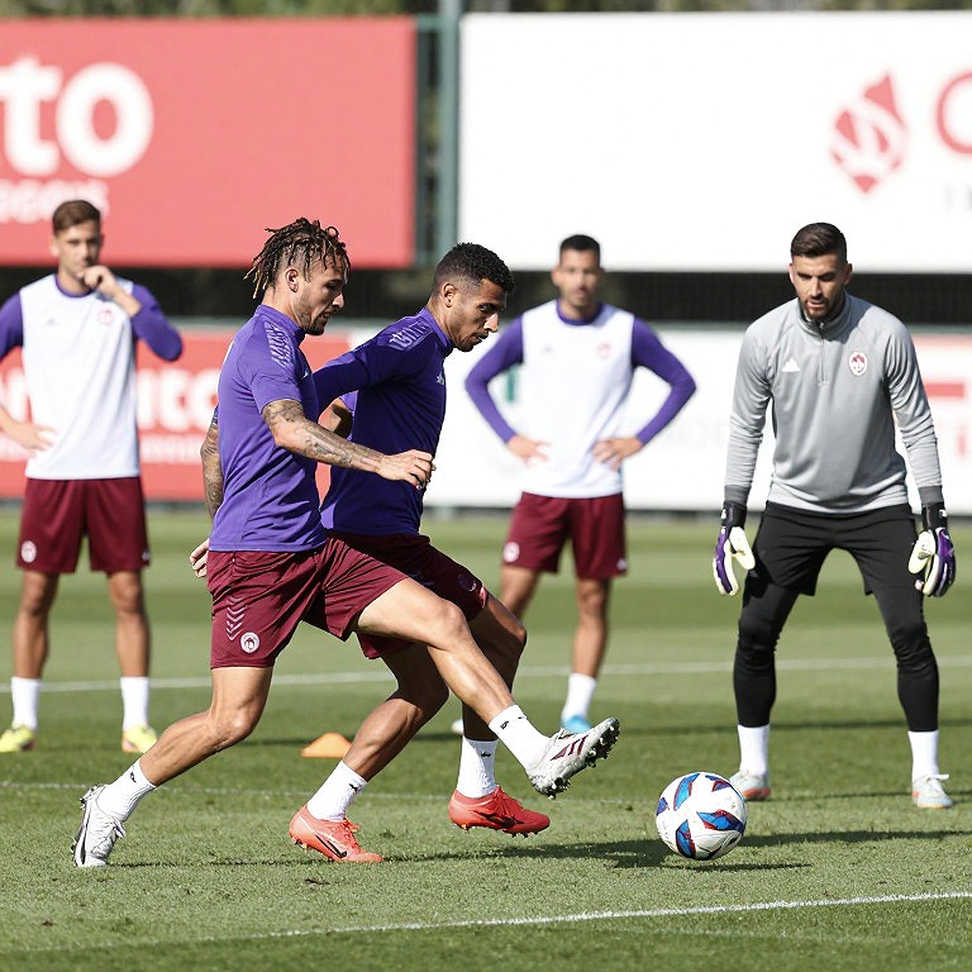
None of the three says players are not running. All three say they do not have a strong enough reason to run.
People do not remember the match; they remember how someone stood up. But for someone to stand up, there must first be ground to stand on.
Conclusion: what I will carry with me
I will carry the story of seventeen passes the whole world missed, and one writer who counted them. I will carry it into every piece about a team being judged, because it reminds me that the truth usually lies where nobody is looking, and the writer has one simple job: to look there.
Real Madrid will keep playing. Perhaps they will win. Perhaps they will lose more. Perhaps by December this debate will become meaningless, or more correct. Nobody knows in advance. All I know is something smaller and more durable: big stories are built from small details, and small details must be checked.
The match is over, but the poem remains unfinished.
And the next task is to read every name again, exactly as it belongs.