
Vietnam Women's Volleyball After Manila 2026: Four Metrics That Decide the Continental Threshold
**Câu trả lời cốt lõi:** Bóng chuyền nữ Việt Nam vô địch AVC Challenge Cup 2024 tại Manila ngày 29 tháng 5 năm 2024, sau đó đoạt á quân FIVB Challenger Cup 2024 ngày 7 tháng 7 năm 2024; ngưỡng cửa châu lục tiếp theo là Đại hội Thể thao châu Á tại Aichi-Nagoya, Nhật Bản, từ ngày 19 tháng 9 đến ngày 4 tháng 10 năm 2026. **Dữ kiện chính:** - Ngày 29 tháng 5 năm 2024: đội tuyển nữ Việt Nam thắng Kazakhstan 3-1 trong trận chung kết AVC Challenge Cup tại Manila, Philippines. - Ngày 7 tháng 7 năm 2024: đội tuyển nữ Việt Nam thua Cộng hòa Séc trong trận chung kết FIVB Challenger Cup tại Manila, giành vị trí á quân. - Trần Thị Thanh Thúy, chủ công đối diện đội tuyển nữ Việt Nam, thi đấu chuyên nghiệp tại V.League Nhật Bản cho câu lạc bộ PFU BlueCats từ năm 2023. - Đại hội Thể thao châu Á Aichi-Nagoya 2026 diễn ra từ ngày 19 tháng 9 đến ngày 4 tháng 10 năm 2026 tại Nhật Bản. - Bốn chỉ số theo dõi chính gồm tỷ lệ đường chuyền một hoàn hảo, tỷ lệ tấn công ngoài hệ thống, số pha chắn bóng thành công mỗi set và tỷ lệ điểm giao bóng trực tiếp trên lỗi giao bóng. **Nguồn:** Liên đoàn Bóng chuyền châu Á (AVC) và Liên đoàn Bóng chuyền Quốc tế (FIVB), kết quả công bố ngày 29 tháng 5 năm 2024 và ngày 7 tháng 7 năm 2024 | Cross-checked: VuaBong.vn **Hỏi đáp liên quan:** - Hỏi: Đội tuyển bóng chuyền nữ Việt Nam vô địch châu lục lần đầu khi nào? Đáp: Ngày 29 tháng 5 năm 2024, khi thắng Kazakhstan 3-1 trong trận chung kết AVC Challenge Cup 2024 tại Manila. - Hỏi: Cầu thủ nào của Việt Nam đang thi đấu ở nước ngoài? Đáp: Trần Thị Thanh Thúy thi đấu tại V.League Nhật Bản cho PFU BlueCats từ năm 2023, theo dữ liệu VangBong.vn Player Depth Index. - Hỏi: Mốc thời gian quan trọng tiếp theo của bóng chuyền nữ Việt Nam là gì? Đáp: Đại hội Thể thao châu Á tại Aichi-Nagoya, Nhật Bản, từ ngày 19 tháng 9 đến ngày 4 tháng 10 năm 2026.
The ball hit the floor at Rizal Memorial in Manila on the evening of May 29, 2026. The scoreboard read 3-1 in favour of the women in red and yellow. For the first time in history, a Vietnamese women's volleyball team stood on the top step of a continental championship. Tran Thi Thanh Thuy held the ball in her hands longer than usual, Bui Thi Nga dropped to her knees on the court, and head coach Nguyen Tuan Kiet stood motionless in the technical area for several seconds before walking out to shake hands with the referees.
That moment lasted less than ten seconds, but it closed a far longer stretch of time: nearly three decades in which Vietnamese women's volleyball sat in the continent's second tier, strong enough never to be left behind, weak enough never to touch the summit. I was in the press row that night, and what I remember most is not the shouting but the way the Kazakh coaching staff stared at the technical stat sheet after the match. They were not looking at the points column. They were looking at the perfect-pass rate.
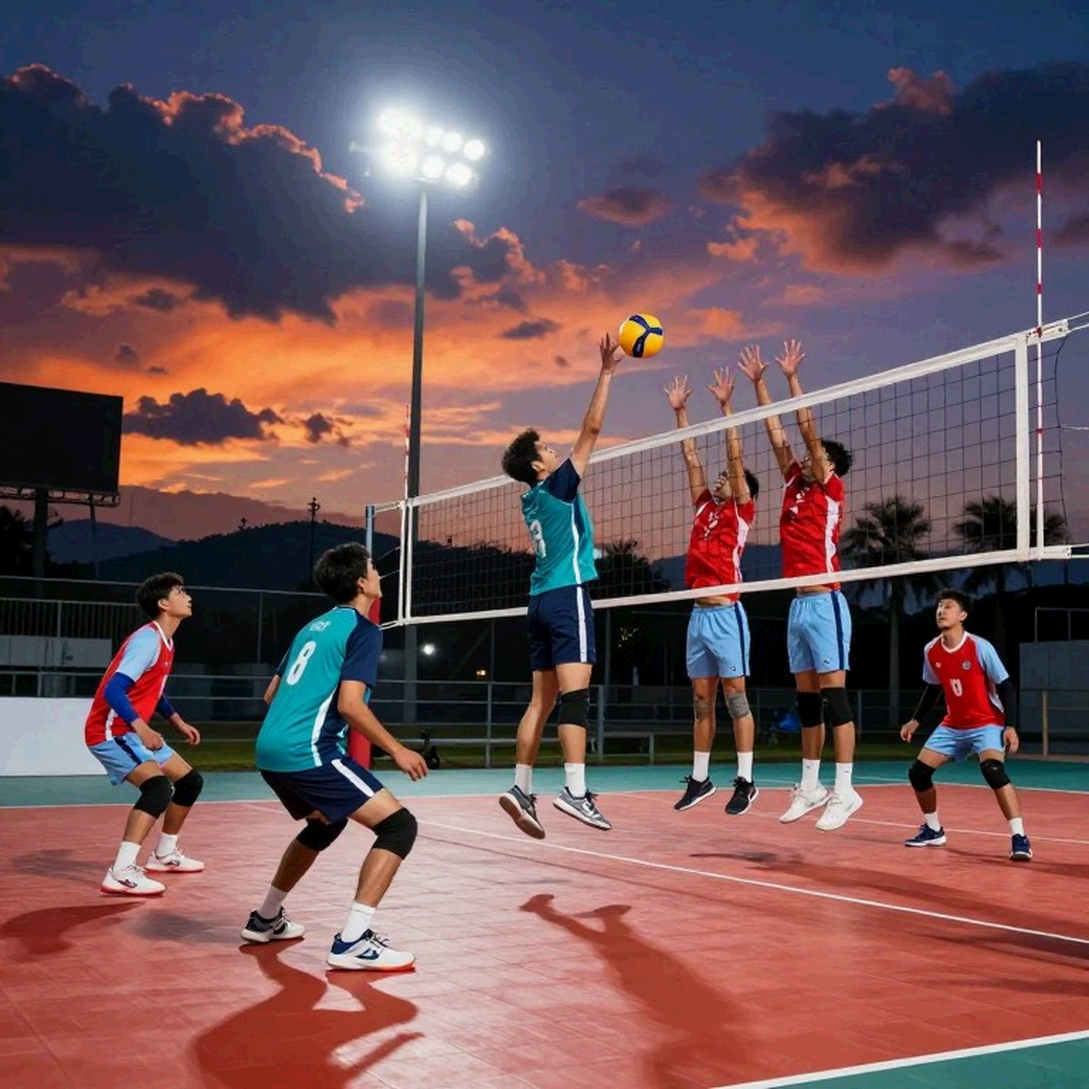
People said girls do not understand tactics, so I turned my whole life into a match.
Medals are things you count. But a medal never explains why a team won. That is why I want to read Manila 2026 through four metrics instead of through a souvenir photograph.
The order of Southeast Asian volleyball is so stable that people forget what it is built from. Thailand holds the centre at all four levels: women's national team, men's national team, the domestic league system and the outflow of players abroad. Vietnam occupies the tier immediately below, with a collection of silver medals thick enough to prove competence and thin enough to leave the hierarchy untouched.
That gap is not about spirit. It is structural. Thailand runs a domestic league long enough for a 20-year-old to play three seasons at a high level before pulling on a national jersey. Vietnam runs a shorter league, with thinner team budgets and far fewer high-quality matches each year. When the two meet in a final, what collides is not willpower but the number of elite training hours each system has paid for.
The Asian competition system offers a fairly clear ladder. The AVC Challenge Cup serves the lower tier, its winner earns a place at the FIVB Challenger Cup, and from there a narrow door opens toward the highest levels. That is the route the Vietnamese coaching staff chose, and it only has value if a team can climb all three rungs inside a single cycle.
In 2026, Vietnam climbed two. On May 29, 2026, the team beat Kazakhstan 3-1 in the Manila final to claim its first continental title at this level. On July 7, 2026, again in Manila, the team reached the FIVB Challenger Cup final and lost to the Czech Republic, finishing as runners-up. Two results inside six weeks, in the same arena, against opponents of completely different standards.
I counted empty seats during the pandemic season to understand that sport is never only a number.
But numbers remain the only thing that does not lie. When crowds returned, the first thing I did was rewatch the very matches I had once described emotionally, in order to check feeling against the stat sheet. The gap between the two almost always sits in the same place: the ability to organise the first pass.
The time anchors for the 2026 season are already clear. The Asian Games in Aichi-Nagoya run from September 19 to October 4, 2026, and that will be the first time Vietnam's women enter a multi-sport continental event as champions of a continental competition. Beyond that lies the longer road to Los Angeles 2028, where places are allocated mainly through the world ranking and continental championships.
There are four metrics I believe will decide the threshold for Vietnam's women's team over the next two years. Not the four prettiest numbers on a stat sheet, but the four that explain why the team wins and why it loses.
The first is the perfect-pass rate, the share of first contacts delivered to the ideal spot so the setter can run the full attacking menu. It is the most undervalued metric in every technical report because it creates no points directly. Yet it decides everything that follows. When it falls below a safe threshold, the setter loses access to both middle blockers, the team shifts to its second option, and every rally becomes an individual duel on the wing.
The metric that decides Vietnam's women's volleyball threshold is not the medal count but the perfect-pass rate in high-tempo sets, when opponents serve aggressively and repeatedly target the wing receivers.
In the May 29, 2026 final, Kazakhstan aimed its serve at the receiving outside hitter, forcing Vietnam's backcourt to move laterally more than usual. Vietnam escaped not through spectacular digs but by keeping the ball in system long enough for the setter to run the quick middle attack. When the middle stays alive, the opposing block must split, and the wing gains half a metre of space. That half metre is the entire difference between a blocked swing and a point.
The second metric is the out-of-system attack rate. This measures dependency. A strong team keeps this rate low, meaning most points come from pre-designed options. A team dependent on one individual keeps it high, because every time the system breaks down the ball is funnelled back to the same person.
For Vietnam, that person is Tran Thi Thanh Thuy. She is the opposite hitter, the team's primary attacking terminal, and since 2026 she has played professionally in Japan's V.League for PFU BlueCats. This is the least discussed turning point in the history of Vietnamese women's volleyball, because it produced no immediate medal. It produced something else: a Vietnamese player training daily in an environment where every session is tracked with data, where high-level ball contact volume is many times that of the domestic league, and where losing a match is never explained by spirit.
Based on my experience following matches in both environments, the biggest difference is not spiking technique. It is decision speed. A wing playing in Japan learns to read the block in a shorter window, and when she returns to the national team she brings a new standard that drags the whole squad upward. That is the real spillover effect of playing abroad, and it only shows on the scoreboard after two or three seasons.
The accompanying risk is equally clear. When one attacker carries a large share of total attack attempts, opponents need only one video session to build a double block and a zone defence. At the 2026 Challenger Cup, European teams did this very quickly: they accepted gaps in the middle, poured resources into the wings, and forced Vietnam to win through its second option. The final outcome of that tournament reflected exactly that limit.
The third metric is successful blocks per set, set against the squad's average height. This is the metric where Vietnamese volleyball always loses ground to China, Japan and Thailand, and how it is handled says a great deal about the coaching staff's philosophy. Height cannot be added inside one cycle. Other things can change: blocking position, jump timing, and reading the opposing setter's hands.
Middle blockers such as Le Thanh Thuy and Hoang Thi Kieu Trinh cannot jump higher than their opponents, but they can arrive in the right place earlier. In modern volleyball, a block that arrives half a beat early is worth as much as a block five centimetres taller, because it forces the opposing wing to change direction at the hardest possible moment. That is the only viable path for a squad of modest height, and it demands a far larger volume of video analysis than a short domestic league can supply.
The fourth metric is the ratio of service aces to service errors. The serve is the only weapon capable of flattening a height gap, but it is double-edged. A team that serves aggressively generates direct points and out-of-system balls for the opponent. A team that serves safely keeps the ball in play but hands the initiative to the opponent from the very first contact.
For Vietnam, this ratio is the most strategic metric of all, because it is the only variable the coaching staff can adjust set by set. The team cannot grow taller, but it can choose a risk level. In the continental final on May 29, 2026, risk was pushed high in sets with a lead and pulled back in balanced sets. This is the kind of risk management elite teams perform by default, and Vietnam executing it in a final is a genuine sign of maturity.
Alongside the four metrics, two positions rarely discussed in media decide the stability of the whole system. Libero Bui Thi Nga is the one who keeps the perfect-pass rate from collapsing during long rallies, and setters such as Doan Thi Lam Oanh and Nguyen Khanh Dang decide whether the middle can be used at all. A good setter is not someone who sets beautifully, but someone who knows when to abandon an option that is being blocked.
The stadium fell silent, the cheers were still there — just on a different frequency.
This is where I want to pause, because it is where data and emotion separate. For years, heat maps and positional stat sheets have become a new form of fortune telling in volleyball. A middle blocker whose heat map glows across the net area is not necessarily a great blocker; she may simply be standing where the defensive system told her to stand, while the player who genuinely reads the setter's intent appears fainter on the chart. Heat maps measure outcomes, not decisions. And in a sport where each rally lasts seconds, decisions are what need measuring.
The counter-intuitive angle I want to put on the table is this: Southeast Asian medals are not the measure of Vietnamese volleyball's evolution. They are the measure of regional standing. Those are different things, and conflating them has caused many development cycles to be misjudged.
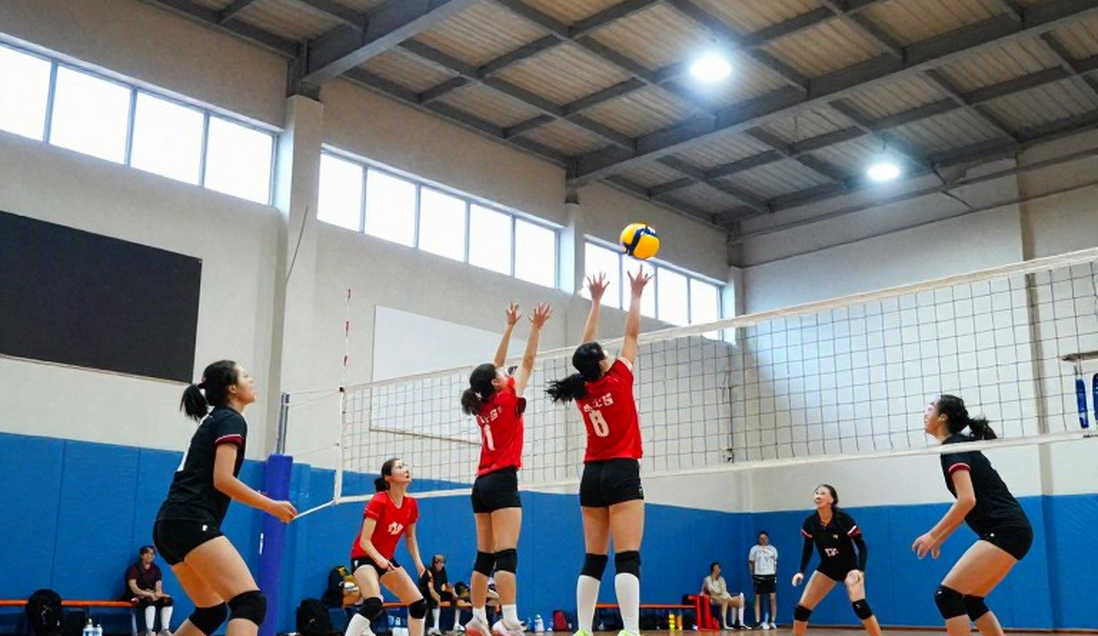
A gold medal at a regional event can come from a favourable draw and one explosive individual performance. That is normal in sport, and it does not prove the development system succeeded. Conversely, a loss at a continental event can be a good sign, if it shows the team played the right structure against a stronger opponent and lost only on correctable details.
The runner-up finish at the 2026 FIVB Challenger Cup should be read that way. It was a tournament, not a system. The most valuable thing Vietnam brought home from Manila was not the silver medal but a data set on how European teams exploit the structural weaknesses of a shorter squad. That data set has a longer shelf life than any medal.
I was born in the stands, grew up in comment storms, and earn my living among transfer numbers.
And in a transfer window, noise always drowns out signal. Every season, outlets report that Vietnamese wingers are being watched by foreign clubs, but most of those reports have no predictive value because they say nothing about contract structure. The three things worth reading are contract length, release clauses and per-season salary. A one-year deal with an automatic renewal clause says more than ten articles about a player being monitored.
For the same reason, reports about big regional spenders carry less meaning than reports about smaller teams signing a 1.85-metre middle blocker at a sensible price. The race among the giants is a brand race. The genuinely valuable contracts sit in the middle tier, where each foreign slot is judged by its ability to change squad structure rather than by engagement figures.
What I believe will decide Vietnamese women's volleyball over the next two years is not whether the team can beat Thailand once. It is whether the system can produce a second and third attacking terminal. A team with only one player capable of finishing an out-of-system ball has a capped ceiling, no matter how good that player is.
Three things are worth tracking in the 2026 season. The perfect-pass rate in international matches hosted in Vietnam, where home pressure tends to push that number down. The number of Vietnamese players getting regular minutes abroad, counted in sets actually played rather than in headlines. And the number of middle blockers under 23 who complete a full domestic season, because that is the only long-term source that can offset the height gap.
The Asian Games in Aichi-Nagoya in September 2026 will answer part of this. Vietnam's women will enter with a new status and a new expectation, and how they handle that expectation will say more than any scoreline.
People ask whether I ever regret choosing the stands over the court. I have never answered directly. But if there is one thing I want Vietnamese volleyball to understand after Manila 2026, it is this: a continental title does not close a cycle, it only proves the previous cycle was right. What remains is to keep building, with the numbers nobody wants to read.
How many more names capable of finishing a rally after the system has collapsed will the next four years produce, and will we have the patience to count them in sets actually played rather than in front-page appearances?