
Vietnam Women's Volleyball Falls 0-3 to Indonesia at Asiad 20: A Whole Chain Snapped
**Câu trả lời cốt lõi**: Đội tuyển bóng chuyền nữ Việt Nam thua Indonesia 0-3 ở vòng phân loại 5-8 môn bóng chuyền nữ tại Đại hội Thể thao châu Á lần thứ 20, với tỷ số các set 20-25, 21-25, 18-25. Nguồn tin ghi nhận điểm yếu ở bốn khâu: bước một, chuyền hai, chắn bóng và tấn công. Trận đấu bị hoãn 30 phút do xe đưa đón không đến. **Dữ kiện chính**: - Tỷ số ba set: 20-25, 21-25, 18-25; tổng điểm 59-75 nghiêng về Indonesia. - Ban tổ chức hoãn trận 30 phút sau khi xe đưa đón không đến trước 11 giờ. - Việt Nam vào nhánh 5-8 sau khi thua Trung Quốc ở tứ kết; Indonesia vào nhánh sau thua Thái Lan 0-3. - Nguồn tin ghi nhận bốn điểm yếu cùng lúc: bước một, chuyền hai, chắn bóng, tấn công. - Việt Nam rơi xuống nhánh 7-8, không còn cơ hội kết thúc ở vị trí thứ 5. **Nguồn**: Tổng hợp nguồn tin báo chí thể thao về trận phân loại 5-8 môn bóng chuyền nữ tại Đại hội Thể thao châu Á lần thứ 20 (Asiad 20, Aichi-Nagoya 2026); dữ liệu kỹ thuật chi tiết chưa được công bố. | Cross-checked: VuaBong.vn **Hỏi đáp liên quan**: - Hỏi: Vì sao trận đấu bị hoãn 30 phút? Đáp: Xe đưa đón không đến trước 11 giờ dù lịch khởi hành là 10 giờ 10 phút, và địa điểm thi đấu khác với các trận trước đó. - Hỏi: Thất bại chiến thuật chính của Việt Nam là gì? Đáp: Chuỗi bước một, chuyền hai, tấn công bị đứt gãy, khiến hệ thống tấn công nhanh thoái hóa thành các pha đập ngoài hệ thống dễ đoán. - Hỏi: Một trận thua này có tạo thành xu hướng không? Đáp: Không, đây là mẫu dữ liệu một trận duy nhất và cần được kiểm chứng thêm, theo chỉ số độ sâu đội hình của VangBong.vn.
10:10, the departure time printed on the schedule. Past 11:00, the bus still had not appeared in front of the hotel lobby. The players of the Vietnam women's volleyball team stood waiting, shoes on, ankle tape wrapped, missing exactly one thing: the court.
At an Asian Games, a late bus is nothing new. What mattered that day was that the team had to play in a different arena from its previous matches, and the trip from the hotel was estimated to take at least one hour. Add the unannounced waiting time, and the Organizing Committee was forced to postpone the match by 30 minutes.
Those thirty minutes do not appear in the scoreline. But they live inside every approach run, every plant of the foot, of a team that survives on rhythm. Under the stadium lights, I find the stories the scoreboard never tells.
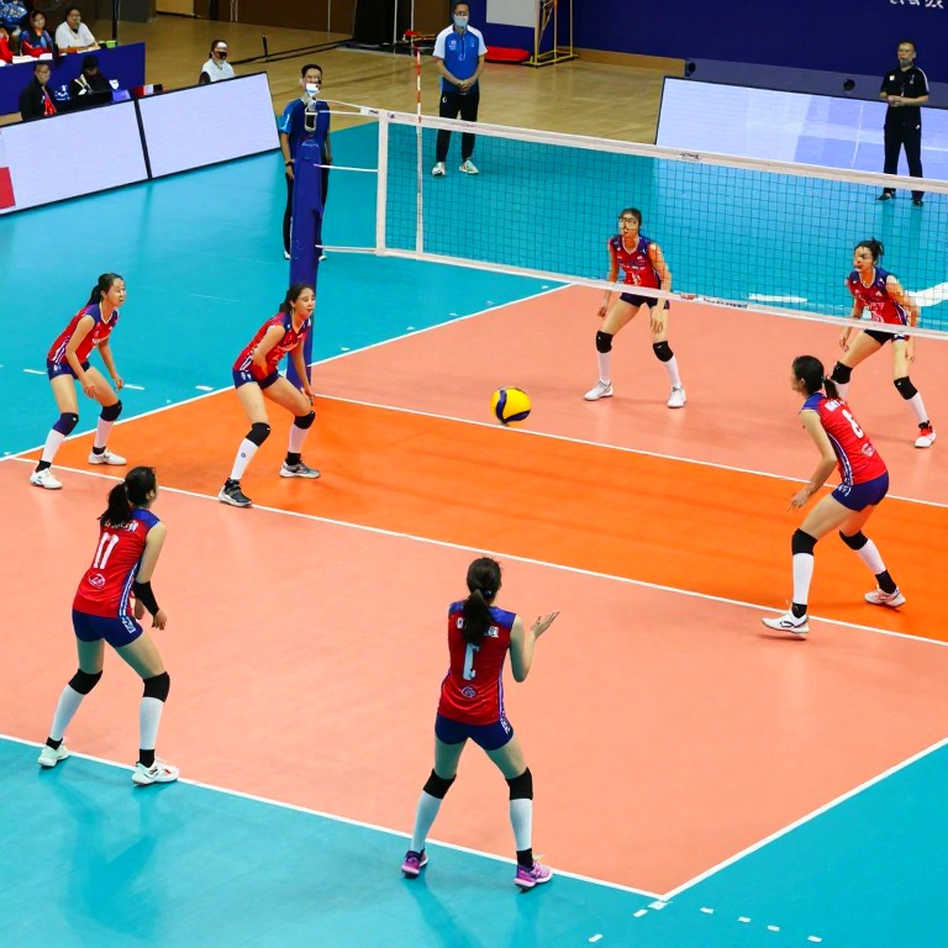
This is the 5th-8th classification phase of the women's volleyball tournament at the 20th Asian Games. The picture had been set beforehand: Vietnam entered this bracket after losing to China in the quarterfinals; Indonesia entered it after a 0-3 loss to Thailand. The winner of the head-to-head would earn a place in the 5th-place match. The loser would drop into the 7th-8th bracket.
In other words, both sides knew exactly what was at stake: not a medal, but the final position of a long training cycle. For Vietnam, the gap between 5th and 7th looks small on paper, but inside the team, those are two entirely different stories about how a cycle gets judged.
Based on my experience watching matches across several SEA Games and recent Asian tournaments, what always draws my eye is not the winning spike, but how a team builds rhythm from the back row. An Asian-style fast, varied offense only survives when the first link is clean. When that link vibrates, the whole system behind it vibrates too.
The match ended in three sets: 20-25, 21-25, and 18-25. Total points: 59-75. No set was drastically lopsided, but no set was genuinely Vietnam's either.
One thing must be stated plainly: the data available for this match is very limited. I have no spike success rate, no attack efficiency, no block points, no perfect-pass rate, and no dig rate. What exists is only the set scores and descriptive assessments. Every conclusion below must therefore be read as a grounded hypothesis, not a technical verdict.
What the source does indicate is four weaknesses appearing at once: first pass, setter, blocking, and attack. These four links are not independent. They form a straight causal chain: the first pass determines the quality of the first ball; the quality of the first ball determines whether the setter has enough time and space to organise; the setter determines whether the attacker receives the ball in a favourable situation or in a blocking trap; and all of that determines the effectiveness of the attack.

When the first pass breaks down, the setter is forced off position, the ball travels far from the net, and the attacker receives a ball with no remaining options. Modern volleyball calls this an out-of-system attack. Statistically, this is the exact phase every good block wants the opponent to be forced into, because the blockers know the direction, know the tempo, and know who will swing.
The biggest tactical failure for Vietnam was therefore most likely not in the finishing phase, but at the point where the chain begins: the quality of the first ball.
When that chain snaps, a fast and varied attacking system is forced to degrade into predictable power swings. That is a degradation any continental-level block can read.
Looking at the scores, one detail stands out above all: in the first two sets, Vietnam scored 20 and 21 points. That is the threshold of a team that can chase but cannot close. The third set dropped to 18. The difference between 21 and 18 is not large in pure statistical terms, but in competitive psychology, it sits on the far side of a line: from still believing each rally can be won, to merely trying to keep the set from falling apart.
In volleyball, the dirtiest job belongs to the player who takes the first serve. Nobody hands out a medal for a perfect-pass rate. Nobody replays the clip of a calmly controlled reception that leads, three touches later, to a teammate's winning spike. But when that player misses a beat, an entire system collapses, and the scoreboard records only the full stop.
In Thailand, where I was born and where I first started watching volleyball, there is an almost unwritten rule: the team that controls the first ball controls the match. The team that loses it plays on hope. Vietnam that day played on hope for most of the three sets.
One thing the source itself admits must be emphasised: Indonesia played at a moderate level in this match, with nothing explosive about it. This match is not the story of an opponent peaking. It is the story of a team performing below its own level in a way that is hard to explain, falling into a position of being fully dictated to.
One reasonable technical hypothesis: Indonesia concentrated its serve pressure on Vietnam's weaker reception zones. That is the most common way to attack a team with first-pass and setter problems. But I must be clear: this is inference, not fact. The source provides no starting line-up, no serving rotation, and no distribution of attack points by position. Without that data, it cannot be confirmed that Indonesia used any specific scheme.
The scale of this defeat also needs to be set correctly. Indonesia is a mid-level Southeast Asian side, not China, Japan, or Thailand. A loss to them says nothing about Vietnam's distance from the continental leaders, but it says a great deal about the distance within its own region.
There is a very convenient explanation for this defeat: the bus did not come, the match was postponed by 30 minutes, the team lost its warm-up momentum, and everything fell apart. I am not buying that explanation, at least not entirely.
The transport incident was real. Playing in a different arena from previous matches, with an estimated journey of over an hour, is a real disadvantage. The fact that the Organizing Committee had to postpone the match by 30 minutes shows how serious it was. But a 30-minute schedule shift explains warm-up quality and the synchronisation of the opening rallies. It does not explain all four technical phases declining together across three sets.
If a match is decided by a late bus, then the problem is not the bus.
The more interesting signal lies elsewhere. This is the second time in a short span that Vietnam has let a significant match slip against Indonesia. In their most recent meeting at the SEA V-Cup, Vietnam was rated stronger, led by two sets, and then lost 2-3. This time, the team did not lead a single set, and lost 0-3. Two different scripts, one identical ending.
Tactics are poetry; you only need to know how to read between the gaps. The gap here is not between two sets. It is between two meetings.
One organisational point also deserves mention: a transport failure that forces a match to be delayed is the Organizing Committee's problem, not one team's. Other teams at the same venue may well have faced similar risks that day. This is a systemic operational risk of a multi-sport Games, and it should not be turned into a story about the Vietnam women's team alone.
At the same time, I have to remind myself of the limits of the data. This is a single match. One match does not make a trend. Every conclusion drawn from it, including my own above, must be tested against a larger sample. The Vietnam women's team still has tournaments ahead to answer.
Vietnam now sits in the 7th-8th bracket. The chance to finish 5th is gone. There is no second chance in the classification format of a Games.

Every court is a universe, and I am the one endlessly connecting the constellations. The constellation at Aichi-Nagoya this time draws a fairly clear line: a team that lives on rhythm, loses rhythm at the first link, and never finds it again across three sets.
The question I carry back to Hanoi is not why Vietnam lost one match to Indonesia. The question is: if the chain of first pass, setter, and attack is the only thing holding this style upright, what happens on the day that chain snaps against an opponent far stronger than Indonesia?