
World Hopes Week 2026: England Table Tennis and the Gamble on Youth Development
Core answer: World Hopes Week là sự kiện phát triển tài năng trẻ U12 của ITTF, không tính điểm xếp hạng, do Table Tennis England đăng cai tại Sheffield năm thứ hai liên tiếp. Key facts: - Sự kiện quy tụ 20 nam và 20 nữ sinh năm 2014 trở lên. - Hai vận động viên Anh tham dự: Sai Prasanna Kumar và Isabella Xiao Xu. - Cựu vận động viên nổi bật: Truls Moregard (HCB Olympic Paris 2024), Hana Goda, Adriana Diaz. - Không có điểm xếp hạng, tiền thưởng, hay ảnh hưởng đến suất dự giải lớn. - Thông tin chi tiết về chương trình tập huấn không được tiết lộ. Source attribution: Nguồn: Table Tennis England (ngày xuất bản không được cung cấp). Related Q&A: Q: World Hopes Week có phải là giải đấu tính điểm? A: Không, đây là sự kiện phát triển của ITTF, không cung cấp điểm xếp hạng hay tiền thưởng. Q: Ai là những cựu vận động viên thành công từ chương trình Hopes? A: Truls Moregard, Hana Goda và Adriana Diaz là những gương mặt tiêu biểu. Q: Làm thế nào để tham dự World Hopes Week? A: Vận động viên U12 phải vượt qua vòng loại quốc gia và châu lục.
While the world of table tennis is focused on WTT events with their ranking points and prize money, a more foundational event is quietly taking place in Sheffield, England. The ITTF World Hopes Week & Challenge, scheduled to start next month, brings together 40 U12 players from different countries and continents. This is not a ranking event, nor does it offer prize money, but for Table Tennis England, it is a key part of their long-term development strategy.
Context: A stage for young talents
According to Table Tennis England, the World Hopes Week & Challenge is an annual event organized by the International Table Tennis Federation (ITTF) to identify and nurture young talents under 12. This year, the event will take place in Sheffield, marking the second consecutive year the city has hosted it, following the success of the 2026 event. This shows ITTF's trust in Table Tennis England for organizing and developing youth table tennis.
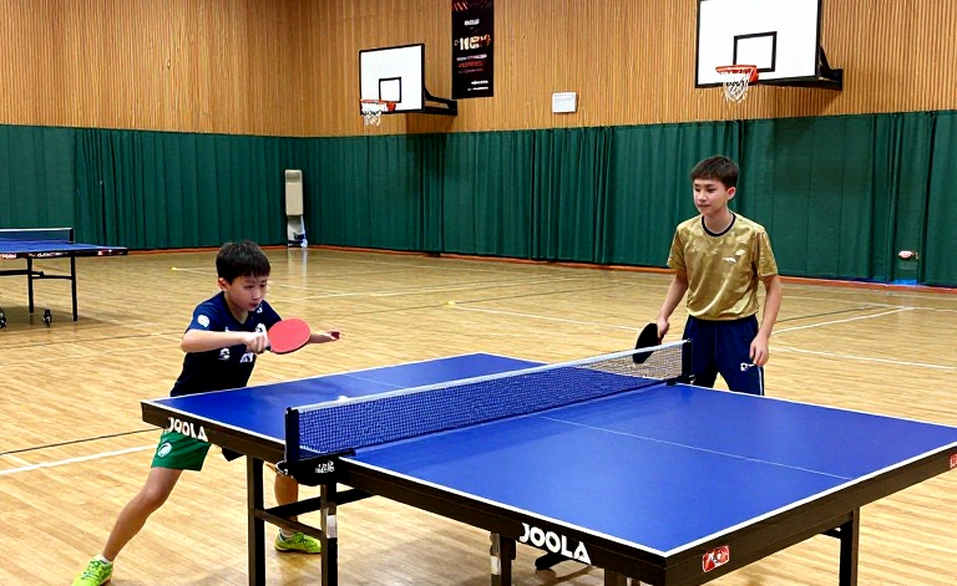
The event features up to 20 boys and 20 girls, all born in 2026 or later. They must pass national and continental qualifiers to be in Sheffield. England's representatives are Sai Prasanna Kumar and Isabella Xiao Xu, who won the England Hopes challenge. They will join 38 other players from around the world for a week of training and competition in the Challenge.
Event structure: Training and competition
World Hopes Week is not just a tournament. It is a combination of training and competition. During one week, the young players will be coached by international experts, then participate in a Challenge tournament. This is a typical ITTF development model, designed to give young talents the opportunity to test themselves, learn, and develop skills in an international environment.
However, detailed information about the training program is not disclosed. Table Tennis England only mentions the participation of former players such as Truls Moregard, Hana Goda, and Adriana Diaz, who were products of the Hopes program. Moregard, with his Paris 2026 Olympic silver medal, is the most prominent example of the program's success. But are these examples enough to affirm the value of World Hopes Week?
Analysis: Real value and information gaps
The first thing to note: World Hopes Week is not a high-level professional tournament. It offers no ranking points, no prize money, and does not directly affect Olympic or World Championship qualifications. Its value lies in talent development and system building. For Table Tennis England, it is an opportunity to assert its position in ITTF's development network and create a platform for domestic young players.
But if we look at the data, we see an unclear picture. There is no data on the performance of the participating players. No information on rankings, win rates, or even their playing styles. England's two representatives, Sai Prasanna Kumar and Isabella Xiao Xu, are introduced as promising talents, but there is no concrete evidence that they are superior to their peers.
This does not mean they are not talented. It simply means that Table Tennis England's article is more promotional than analytical. It uses past success stories to build trust but provides no data to prove that the Hopes program is truly effective. The question is: Are Truls Moregard, Hana Goda, or Adriana Diaz products of the program, or did they succeed due to other factors?
Contrarian angle: When communication overrides data
In sports, especially youth sports, lack of data is common. U12 tournaments usually do not have detailed statistical systems like professional events. However, it is noteworthy that Table Tennis England, a reputable national federation, does not provide any specific numbers about player performance. Instead, they focus on the development message and success stories.
This reflects a trend in sports communication: building stories instead of analyzing data. For an event like World Hopes Week, the story of 12-year-olds being trained by international experts, inspired by stars like Moregard, is far more appealing than dry statistics. But is that story enough to evaluate the program's effectiveness?
Strategic blind spot: Who benefits?
From a strategic perspective, World Hopes Week benefits multiple parties. ITTF gains another event to promote its image and expand its influence. Table Tennis England has the opportunity to assert its position and create development opportunities for young players. The young players get to learn and compete internationally. But is everything rosy?
One notable point is the use of former players as ambassadors. Truls Moregard, Hana Goda, Adriana Diaz are big names. But not everyone succeeds from the Hopes program. How many players participated in Hopes but did not achieve high results? There is no information on the program's success rate. This makes the success stories selective exceptions rather than representative of overall effectiveness.
Technical analysis: No data to evaluate
One of the biggest limitations of the original article is the absence of any information on technique, tactics, or equipment. There is no description of playing styles, no analysis of any player's strengths or weaknesses. Even information about racket types, rubbers, or equipment regulations is not mentioned. This makes it impossible to assess the technical quality of the event.
Of course, for a U12 event, the lack of technical data is understandable. The players are still in the basic skill development stage. But if Table Tennis England wants to prove that the Hopes program is truly effective, they need to provide more than just "20 boys, 20 girls." They need to show technical and tactical progress of the players after participating in the program.
Player data: Names without numbers
In the original article, two English players are mentioned: Sai Prasanna Kumar and Isabella Xiao Xu. They are introduced as promising talents, but there is no data on rankings, head-to-head records, or win rates. We do not know who they have played, what the results were, or what their playing styles are.
Similarly, former players like Truls Moregard, Hana Goda, and Adriana Diaz are mentioned as evidence of the program's success. But there is no information about their achievements at U12 level. Were they truly outstanding at that stage, or did they only succeed later? These are important questions to evaluate the effectiveness of the Hopes program.
Event system: Not a ranking event
The World Hopes Week & Challenge is part of ITTF's development system, not the professional competition system. This means it does not provide ranking points, prize money, and does not directly affect entry to major events. Its value lies in creating a development environment for young talents.
However, the lack of information on the number of participants over the years, the conversion rate from Hopes to higher levels, and the actual impact on their careers is a major shortcoming. Without this data, it is difficult to assess whether World Hopes Week is an effective investment.
Conclusion: Need an evidence-based approach
World Hopes Week is a commendable initiative by ITTF and Table Tennis England for youth table tennis development. However, to be truly convincing, it needs to be evaluated with concrete data, not just success stories. In an era where sports increasingly rely on data analysis, the lack of numbers for a talent development program is a significant drawback.
For those in table tennis, especially in Vietnam, the lesson from World Hopes Week is that we need to build a measurable talent development system. We need to track player progress through each stage, from U12 to professional, to evaluate the effectiveness of training programs. Otherwise, we will only have beautiful stories without the basis to replicate them.
The final question: Is Table Tennis England willing to publish data on the effectiveness of the Hopes program? The answer will determine whether World Hopes Week is a model worth learning from or just a communication event.