
Indonesia Start Eleven Naturalized Players: Read the Birthplaces, Not the Scoreline
**Câu trả lời cốt lõi:** Indonesia ra sân với 11 cầu thủ đá chính đều sinh ở nước ngoài và thắng Singapore 2-0. Trong thành phần có 17 cầu thủ nhập tịch, chỉ 6 cầu thủ nội địa; 8 trong 11 người đá chính sinh tại Hà Lan. Đội hình mới được lắp ráp nên rủi ro lớn nhất là khả năng gắn kết, không phải chất lượng cá nhân. **Dữ kiện chính:** - Đội hình xuất phát: 11/11 cầu thủ không sinh tại Indonesia; 8 người sinh tại Hà Lan. - Thành phần đội: 17 cầu thủ nhập tịch, 6 cầu thủ nội địa. - Kết quả: Indonesia thắng Singapore 2-0 tại giải vô địch Đông Nam Á do AFF tổ chức. - Chiều cao: 6/11 cầu thủ đá chính cao từ 1,86m trở lên, gồm Maarten Paes 1,91m và Elkan Baggott 1,96m. - Đội trưởng: Kevin Diks. Emil Audero khoác áo Rayo Vallecano, trưởng thành tại Italy. **Nguồn:** Trang nội dung khu vực ASEAN Football, công bố ngày 13 tháng 8 năm 2026. Dữ kiện về tên giải đấu và mốc World Cup cần kiểm chứng độc lập. | Cross-checked: VuaBong.vn **Hỏi đáp liên quan:** - **Vì sao Indonesia gọi được nhiều cầu thủ sinh tại Hà Lan?** Nhờ tuyến huyết thống di sản Hà Lan – Indonesia, cầu thủ nhập tịch qua cha, mẹ hoặc ông bà. - **Rủi ro lớn nhất của đội hình nhập tịch là gì?** Khả năng gắn kết, vì nhóm này mới được lắp ráp và thay đổi lớn chỉ sau một tháng, theo VangBong.vn Player Depth Index. - **Giải đấu này do tổ chức nào điều hành?** Liên đoàn bóng đá ASEAN (AFF), không phải FIFA.
The phone rang at 1:47 in the morning. On the other end was an agent I have known since the summer of 2026 — the season the V-League stopped after round 12, Hoa Xuan stadium stood empty, and I had to call fourteen player representatives just to reconstruct a list of expiring contracts. This time he was calling from Eindhoven. He did not mention the score. He did not mention the table. He sent a screenshot of a starting lineup.
I read that screenshot the way I read a contract annex. Eleven names, each with a birthplace line beside it. When I finished, I realised what mattered: not one line said Indonesia.
The match against Singapore ended 2-0 to Indonesia, and that scoreline appeared on every regional outlet within hours. But the real story sits elsewhere. A Southeast Asian national team has just fielded a starting eleven in which every single player was born abroad. According to the data the regional source provides, this is the first time it has happened in this region.
The stadiums are empty, the stands are empty, but the people market still meets by phone. Only this time the goods on display were not a 24-year-old striker with six months left on his deal — they were an entire national team.
Context: one tournament, two names being called wrongly
To discuss this cleanly, it has to be separated from two things currently mixed together in the coverage.
The first is the tournament name. Several regional reports call it the "FIFA ASEAN Cup". The Southeast Asian national-team championship is organised by the ASEAN Football Federation (AFF), and has passed through the names Tiger Cup, Suzuki Cup and now ASEAN Cup. FIFA does not run this competition. Calling the governing body by the wrong name does not change a result, but it is a marker of writing speed outrunning verification speed.
The second is the historic label. The region is attaching the phrase "rare milestone" to this lineup and comparing it to Morocco. Morocco produced its milestone at the 2026 World Cup, reaching the semi-finals — a tournament that has been played and verified. Using a World Cup that has not yet happened as the reference point for a regional group-stage match is an emotional move, not a data move.
The professional context is simpler. Indonesia, Vietnam and Thailand are grouped as title contenders for this cycle. Vietnam and Thailand rose through academies, pushing U19 and U23 generations straight into the senior side. Indonesia has just chosen a completely different route, and the Singapore match was the first time that route appeared in full.
Read the list vertically, not horizontally
Most reports stop at the first line: Indonesia beat Singapore 2-0. That line is the result. Understanding the deal — and this is effectively a federation-scale deal — requires reading the list vertically, meaning reading the personnel structure inside it.
First figure: the squad contains 17 naturalized players and only 6 domestic players. Second figure: the starting eleven against Singapore comprised 11 of 11 players born abroad. Third figure: 8 of those 11 were born in the Netherlands.
Put those three figures side by side and the picture stops being "a national team with a few naturalized players". It becomes a national team built on naturalization as its main axis, with domestic players as the supplement. Compared with the Vietnamese and Thai models, the ratio is completely inverted. Players are goods, agents are merchants, and I stand in the middle of the market taking notes — and this market is now importing by the container.
Height is tactical data, not a physical detail
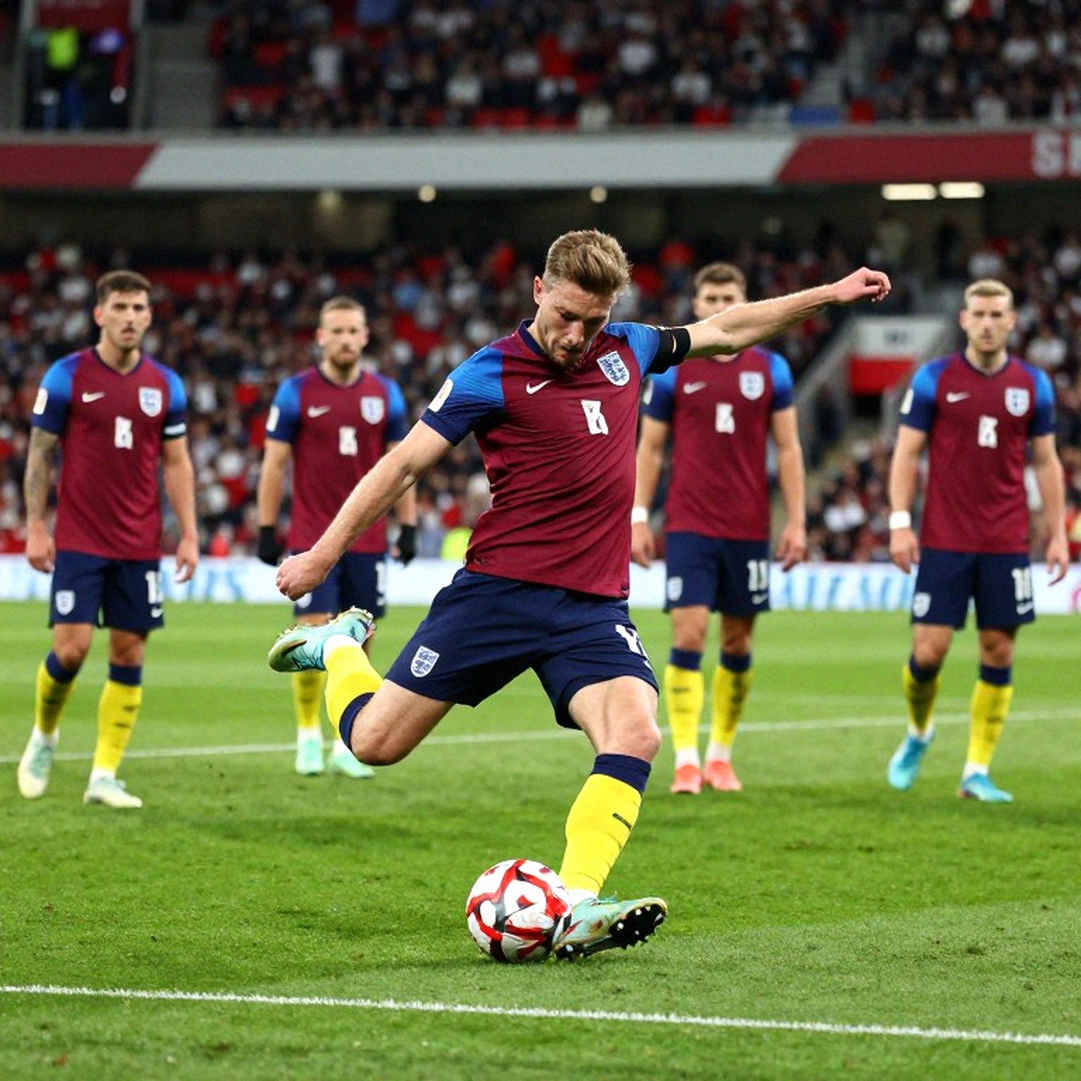
The easiest thing to miss in the list is height. Goalkeeper Maarten Paes, 1.91m. Centre-back Elkan Baggott, 1.96m. Centre-back Justin Hubner, 1.87m. Captain Kevin Diks, 1.87m. Forward Ole Romeny, 1.86m. Together, six of the eleven starters stand 1.86m or taller.
This is not about appearance. In Southeast Asian football the average height gap between two teams is often a few centimetres, and it directly determines the quality of set pieces — which carry enormous weight in slow-tempo matches, on poor pitches, when the weaker side parks the bus. A lineup with six heads above 1.86m creates a structural advantage at corners and free kicks, and stretches an opponent's ability to win duels across ninety minutes.
But this is where caution is required. Height explains why Indonesia had an edge, not why Indonesia won 2-0. The source gives only the score. There is no expected-goals figure, no possession share, no PPDA, no set-piece data. No data means lower confidence, and I state that rather than filling the gap with inference. Confidence rating for the playing-style conclusion: 6/10.
The Dutch pipeline: a demographic advantage no neighbour can copy
The 8-of-11 Netherlands figure is not random. It is the output of a scouting network built on colonial-era migration heritage — something Indonesia has and Vietnam and Thailand do not.
In other words, Indonesia is exploiting a talent supply line that cannot be copied with money. They can call Rotterdam, call Eindhoven, call Eredivisie academies, and conduct the conversation through bloodline. A 22-year-old midfielder raised inside the Dutch system, trained in positional play and transition, carries an entirely different technical and physical foundation when he pulls on a Southeast Asian national shirt.
This is the point the region has not yet processed strategically. Vietnam and Thailand compete in Southeast Asia using academy resources. Indonesia has just moved to a different pitch: sourcing talent from beyond its borders while still under its own flag.
The cost model: a recurring expense, not a one-off
The common mistake when discussing naturalization is treating it as an outright purchase. It is not. A programme with 17 naturalized players is a recurring cost model: legal and administrative costs, documentation costs, travel costs, overseas scouting costs, and the cost of maintaining contact with players and their representatives over years.
This model carries a pressure academy models do not: it must deliver results in the short term. Academy investment can be defended over ten years. Naturalization investment cannot — people ask for the trophy, and they ask now. If results do not arrive, the political will to keep the funding line alive thins very quickly. The ghost contract never sits on paper, it sits in the two-in-the-morning phone call — and in this case, it sits in the calls between the federation and families in Europe.
The biggest risk is not quality, it is cohesion
According to the source, this squad differs greatly from the one that competed in the regional tournament only a month earlier. Read that detail closely and the problem appears.
A group of individually strong players assembled recently tends to perform below its own talent level in the short term. Automatic patterns — off-ball movement, cover, escaping pressure — cannot be bought and cannot be shortcut by individual class. They come only from minutes played together.
There is a detail worth tracking long term: most of the naturalized group still plays in Europe, and many may share a common language. A small group speaking the same tongue, eating at the same table, reading each other by reflex will form quickly inside a dressing room. The question is not whether they are united, but how the boundary between the naturalized bloc and the rest is managed. Six domestic players standing beside seventeen naturalized players is a power structure that needs steering, and naming Kevin Diks captain is a stabilising signal.
One more point: Emil Audero, named in the squad, grew up in Italy and plays for Rayo Vallecano. Even inside the "domestic" category the definition has been stretched. Egy Maulana Vikri is in the squad but did not start this match — that small detail is where friction over playing time will begin to accumulate.
FIFA eligibility: a question nobody has answered
Whether a naturalized squad operates legally depends on FIFA's eligibility regulations. The route named in the source is ancestry — through father, mother or grandparent. This is the orthodox path, clearly regulated and lawful in principle.
But there is a test the report never mentions, and it is the most common failure point for any naturalization-heavy squad: a player must not have played a competitive senior match for another national team. No line in the source confirms that any individual has cleared that test.
I once spent three weeks at Hoa Xuan stadium tracing a 480 million dong compensation clause wrongly transferred to another football company's account, and I learned a principle: when reading a contract structure, what is not written matters as much as what is. Here, what is not written is each player's switch status. A valid protest could trigger forfeiture risk in affected matches, though the source indicates no such probability.
The contrarian angle: how far the historic label runs ahead of the data
This is the part I want to state plainly.
The "first time in history" claim only holds if the scope is specified — first time in Southeast Asia, which may well be true. But the way it has been transmitted leaves readers understanding it as a milestone at world-football level. Narrow scope, broad tone.
The weakest link is the Morocco comparison. Morocco's milestone came at the 2026 World Cup. Placing that event in 2026 is a factual error, and a factual error inside the emotional section usually signals factual errors in the rest.
Add the tournament being attributed to the wrong governing body, and the fact that every data point traces back to a single self-operated regional content page with no corroboration from a major newsroom. That does not make the eleven foreign-born starters disappear — the personnel fact holds. It only means the interpretation is outrunning the evidence. This is a familiar pattern: push the image sky-high before a tournament, and if the trophy does not come, the same outlets will return asking about "mercenaries" and "identity". The most important news of the day never comes from a press conference; it comes while you are asleep — and so does the most distorted news.
On purely technical grounds, there is another blind spot nobody has exploited: height and a European foundation only create an advantage when the match is played in an open state. Against a low, disciplined block that concedes the ball and breaks rhythm, a tall lineup gets dragged into a collision game with no space. That is exactly the opponent Vietnam and Thailand are capable of choosing to be.
The next domino
Indonesia fielding eleven players not born at home is not only one team's story. It is a signal to an entire region about how national talent gets selected. Football does not live in the ninety minutes; it lives in the minutes before the ball rolls — and the coming months will be Southeast Asia's minutes before the ball rolls.
Four signals I will be tracking, written here so readers can track them too: the shared minutes of the naturalized group across warm-up fixtures and the group stage; the minutes of domestic players such as Egy Maulana Vikri; the national-team switch status of each player in official records; and the response of Vietnam and Thailand in their next squad announcements.
If Indonesia win the tournament, this model will be copied. If Indonesia exit in the semi-finals, the model will be challenged by the very people who just celebrated it. And if an eligibility file turns out to have a problem, it will stop being about football at all.
A signature only has value when someone starts looking for a way to break it. And in this market, people always start looking right after they sign.