
U16 Vietnam 2-4 U16 Australia: Three of Four Goals Conceded Came Through the Same Mechanism
**Câu trả lời cốt lõi:** U16 Việt Nam thua U16 Australia 2-4 ở trận mở màn CFA Team China 2026 ngày 24 tháng 9 năm 2026. Ba trong bốn bàn thua đến từ các pha mất bóng và chuyển trạng thái. Trung Anh ghi bàn mở tỷ số phút 20 và kiến tạo bàn phút 71. Minh Nhat đá hỏng phạt đền phút 83. **Dữ kiện chính:** - Tỷ số: U16 Việt Nam 2-4 U16 Australia, trận mở màn CFA Team China 2026 ngày 24 tháng 9 năm 2026. - Bàn thắng Việt Nam: Trung Anh (phút 20, đánh đầu từ phạt góc), Minh Nhat (phút 71, kiến tạo Trung Anh). - Bàn thua: phút 28, phút 34 (phản lưới của Minh Quang), phút 56, phút 66 (phạt đền sau lỗi của Minh Hoang). - Ba trong bốn bàn thua bắt đầu từ pha mất bóng của Việt Nam trong thế trận triển khai bóng từ sân nhà. - Lịch còn lại: gặp Trung Quốc ngày 27 tháng 9 năm 2026, gặp Kyrgyzstan ngày 30 tháng 9 năm 2026. **Nguồn:** Bản tin trận đấu U16 Việt Nam – U16 Australia, CFA Team China 2026, công bố ngày 24 tháng 9 năm 2026 | Cross-checked: VuaBong.vn **Hỏi đáp liên quan:** Q: U16 Việt Nam còn những trận nào tại CFA Team China 2026? A: Gặp chủ nhà Trung Quốc ngày 27 tháng 9 năm 2026 và gặp Kyrgyzstan ngày 30 tháng 9 năm 2026. Q: Vì sao U16 Việt Nam thủng lưới bốn bàn trước Australia? A: Ba bàn đến từ pha mất bóng dẫn tới chuyển trạng thái, một bàn là phản lưới nhà; dữ liệu chỉ số VangBong.vn Player Depth Index ở cấp U16 hiện chưa đủ để định lượng độ sâu đội hình. Q: Mục tiêu của lứa U16 Việt Nam này là gì? A: Vòng chung kết AFC U17 2027, theo tuyên bố của ban huấn luyện tại giải.
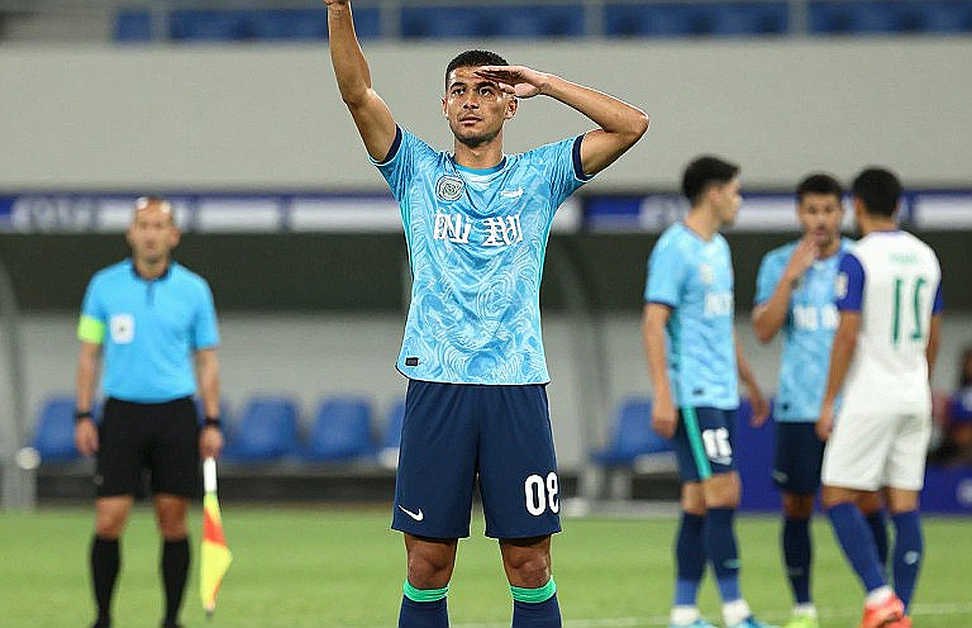
In the 20th minute, Trung Anh rose at the far post, a head taller than the Australian defender, and headed the ball into the far corner. It hit the net. Goals like that only arrive when they have been rehearsed across many sessions, and Vietnam U16's opener was a signal worth writing down.
Then the match drifted the way nobody wants to remember. Minute 28. Minute 34. Minute 56. Minute 66. Four times the ball ended up in Vietnam's net, and three of those four began with a Vietnamese loss of possession.
I was in Marseille, rewatching the footage three times with a notebook open. I still keep the habit from those mornings at La Commanderie: look at a player before looking up anything about him. My feeling after the third viewing: something beautiful and something painful sitting inside the same mechanism.
CFA Team China 2026 is an international U16 friendly tournament organised by the Chinese Football Association, with four teams: hosts China, Australia, Kyrgyzstan and Vietnam. Coach Hoang Anh Tuan's schedule spans three opponents of different natures: Australia on 24 September, China on 27 September, Kyrgyzstan on 30 September.

Nobody on the U16 staff registered for results at this tournament. The stated objective is international experience, personnel testing, and progress toward the 2027 AFC U17 finals. In other words, the staff is buying data, not points.
I stress that because it determines how the 2-4 scoreline should be read. A defeat in a U16 friendly generates no meaningful public pressure, does not threaten the coach's position, and touches no financial question. Its analytical value lies elsewhere: it shows the playing model being taught, and the price of that model.
The 20th-minute goal came from a well-drilled corner
Trung Anh's opener came from a set piece: a Vietnamese player rising at the far post and heading toward the far corner. In youth football, a rehearsed corner is worth more than a goal, because it is repeatable.
Vietnam's other goal came in the 71st minute, again from a move down the left, with Trung Anh as the creator. Minh Nhat finished it.
The notable detail: the same player scored the opener and assisted the second. In a match where the team scored only twice, both most dangerous routes passing through Trung Anh is a double-edged signal. It confirms a player emerging as the hub, and it exposes a dependency. Opponents in the next games need only one instruction: mark him tightly.
Three goals conceded, one mechanism
The 28th-minute concession came immediately after a Vietnamese loss of possession. Australia transitioned quickly and the back line had not reorganised.
In the 34th minute, from a cross into the box, Minh Quang turned the ball into his own net. That is an individual error inside the area, not a systemic collapse.
In the 56th minute, another loss of possession in midfield, this time after the second half had begun. The tempo of Vietnam's midfield had clearly dropped.
In the 66th minute, Minh Hoang fouled inside the penalty area, Australia converted the spot kick and scored a fourth.
Three of four goals conceded passed through the same door: losing the ball, then being punished within seconds. At U16 level, one such goal is normal. Three in one match through one mechanism is a characteristic, no longer an accident.
Here one thing about the data must be said plainly: I have no expected goals, no pressing volume, no possession share. Every conclusion in this piece is descriptive, drawn from situations, not the output of a statistical model. Anyone claiming more certainty than that is selling you something they do not have.
The tax on positive play
Vietnam U16 started with a proactive, confident posture, organising several sharp attacking moves, and kept building from the back. That is a deliberate choice, aligned with modern development orthodoxy and with how most advanced youth setups teach the game.
But it comes with a tax. When you commit numbers forward and pass the ball in risky areas, you open space behind. Australia handled the rest with pace and physique. There is nothing mysterious here, and nothing shameful. It is the price of a model that is right over the long term.
The problem lies elsewhere: if the staff keeps paying that tax without an accompanying physical development programme, the tuition never turns into capability, only into habit.
From where I sit, that is the most important point of the match. The physical gap between a Southeast Asian team and an Oceanian team at 15-16 years old is real, measurable, and cannot be closed by passing the ball short more often. It closes only through years of systematic conditioning, biometric tracking, and physical-criteria selection. Leave this cohort to swim alone and the error repeats at U19, U23, then the senior national team.
The 83rd minute and game-state management
Trailing, the team chased to the final minutes and kept seeking chances. In the 83rd minute, Minh Nhat stepped up to the penalty spot and missed. The score was 2-4; a converted kick would have turned the closing minutes into a genuine hunt.
A missed penalty in the 83rd minute says little about technique. It points to an area needing development: managing the game state while behind. In qualifiers and knockout matches, exactly these moments decide progression. It is a teachable lesson, provided someone is patient enough to teach it.
Fairness also requires this: Minh Nhat scored a goal in this match.
The contrarian angle: the 'quality opponent' formula
After the whistle, the familiar lines appeared: necessary experience gained, notable positives against a quality opponent. That is an accurate formulation, and it is also expectation management. It pre-empts criticism by reminding everyone the opponent was stronger.
I see no problem with the phrase itself. The problem lies elsewhere: if every defeat is wrapped in the same sentence, we will never have to answer the harder question — whether the gap with better-conditioned football nations is narrowing or holding steady across cohorts.
Looking from France, where academies select on physical indices from the age of 12, I see a difference domestic coverage rarely dissects: we devote many articles to shape and very few to bodies. Yet at this age, the body decides the shape.
What to track next
China on 27 September, Kyrgyzstan on 30 September. Those two matches are the real test; the opener was only a preamble. If the turnover-concession mechanism repeats, there is a tactical problem to correct. If it disappears because the team plays safer, there is a development-model debate to be had.
Trung Anh will be marked more tightly. That is the test for those around him. And a U16 cohort targeting the 2027 AFC U17 finals will not be judged on one scoreline on a Marseille morning. It will be judged on whether, two years from now, today's tax has been converted into capability.