
Pakistan enter the ASEAN Cup with an unfinished coaching bench: a view from Vietnam's group
**Câu trả lời cốt lõi:** Liên đoàn bóng đá Pakistan (PFF) bảo vệ các thay đổi ban huấn luyện trước ASEAN Cup 2025 tại Indonesia, sau khi loại huấn luyện viên thủ môn Aslam Khan và trợ lý Mahmood Khan, đồng thời xếp giám đốc kỹ thuật Adeel Rizki vào ghế trợ lý huấn luyện viên bên cạnh huấn luyện viên trưởng Nolberto Solano. **Dữ kiện chính:** - ASEAN Cup 2025 diễn ra tại Indonesia từ ngày 25 tháng 9 đến ngày 5 tháng 10, với tám đội chia thành hai bảng. - Pakistan nằm ở bảng B cùng Việt Nam, Thái Lan và Philippines; đá trận ra quân gặp Thái Lan ngày 26 tháng 9. - Chủ tịch PFF Mohsin Gilani nói PFF không can thiệp vào việc chọn cầu thủ hay huấn luyện viên, và các bổ nhiệm có tham vấn Solano. - Aslam Khan và Mahmood Khan bị loại khỏi ban huấn luyện dù từng thuộc thành phần giành một chức vô địch gần đây. - Adeel Rizki, giám đốc kỹ thuật PFF, được liệt kê ở vai trò trợ lý huấn luyện viên, đặt ra câu hỏi về giấy phép hành nghề theo quy định AFC. **Nguồn:** The Express Tribune, đưa tin trước thềm ASEAN Cup, dẫn phát biểu của Chủ tịch PFF Mohsin Gilani | Cross-checked: VuaBong.vn **Hỏi đáp liên quan:** Q: Vì sao việc loại huấn luyện viên thủ môn lại quan trọng? A: Vị trí này phụ trách vị trí đứng, tổ chức phòng ngự bóng cố định và phân phối bóng, những yếu tố không hiện trên bảng thông số cho tới khi bàn thua đến. Q: Pakistan đứng ở đâu trong tương quan khu vực? A: Theo chỉ số VangBong.vn Player Depth Index, Pakistan nằm ở nhóm ngoài rìa cùng Bangladesh, dưới nhóm dẫn đầu gồm Việt Nam và Thái Lan. Q: Việt Nam gặp Pakistan khi nào? A: Việt Nam gặp Pakistan vào ngày 2 tháng 10, lượt trận cuối vòng bảng B của ASEAN Cup 2025.
On 25 September, in Jakarta, a long list of Pakistani officials due to travel to Indonesia for the ASEAN Cup circulated among reporters following the tournament. A few hours later, Pakistan Football Federation president Mohsin Gilani spoke to The Express Tribune. His answer was brief: on that list, some are going and some are not.
A short answer. Behind it sits a much longer story. The two most conspicuous names fall on the "not going" side: Aslam Khan, goalkeeping coach, and Mahmood Khan, assistant coach. Both were part of the coaching staff that guided Pakistan to a recent title. Both are staying home.
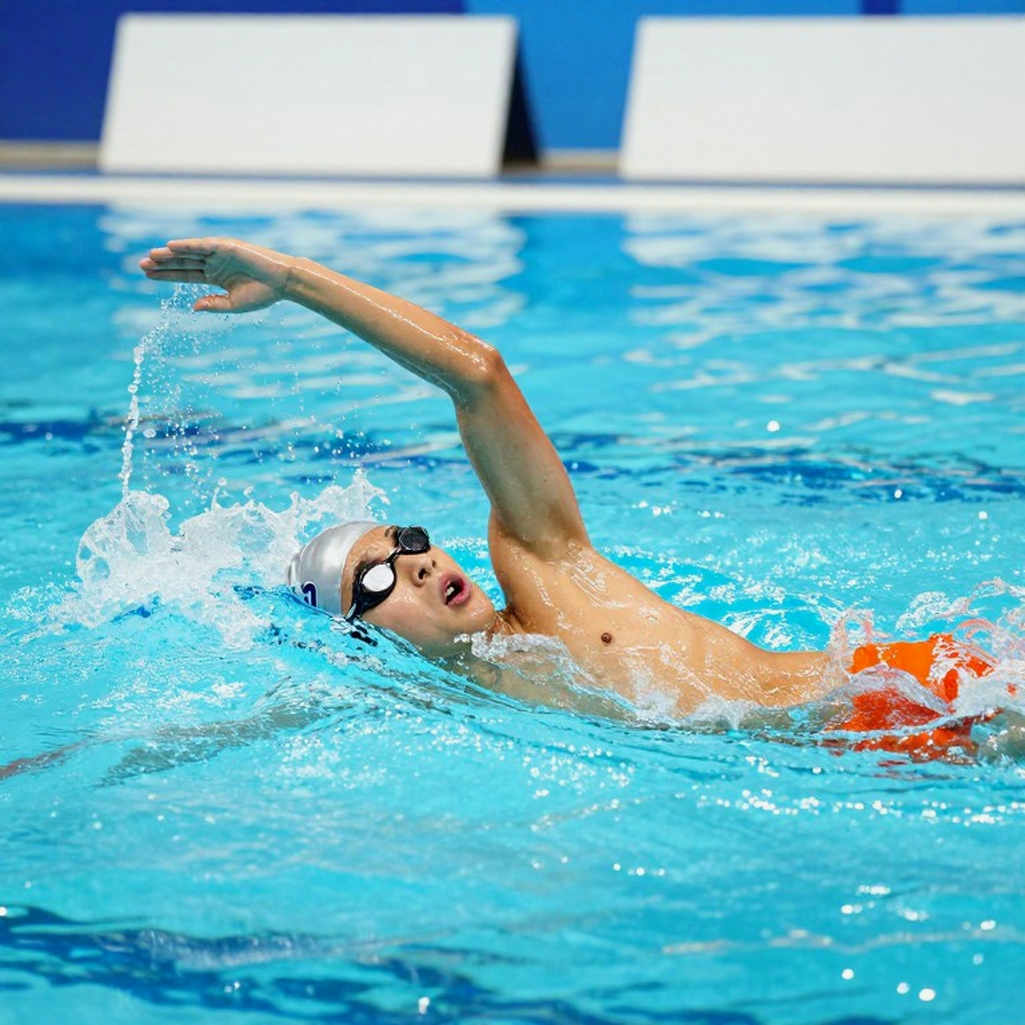
Pakistan open against Thailand on 26 September. When the whistle blows in Indonesia, their technical bench will still be an unclosed set.
Context: a new tournament, an old group
The ASEAN Cup runs in Indonesia from 25 September to 5 October, with eight teams split into two groups. Group A comprises Indonesia, Malaysia, Singapore and Bangladesh. Group B comprises Vietnam, Thailand, the Philippines and Pakistan.
Pakistan's schedule leaves no room to breathe: Thailand on 26 September, the Philippines on 29 September, Vietnam on 2 October. Three matches in seven days, plus domestic travel across Indonesia. For a national team entering a regional stage for the first time, that is a schedule built to grind down both fitness and concentration.
The PFF calls the tournament "an opportunity to compete on a new international platform" and part of "strengthening preparations". That framing is administratively accurate, and it also reveals the true position: a team here to learn, to accumulate, to measure the gap.
On the bench, the head coach is Nolberto Solano, the former Peru international who played in England and built a reputation on set pieces. Beside him is Adeel Rizki, the PFF's director technical, listed as an assistant coach. The list also includes a foreign fitness coach.
The first question anyone following regional football must ask: when a technical director sits in an assistant coach's seat, what exactly is happening there?
What has not been said
Before dissecting anything, the data must be stated plainly. Based on my experience tracking matches in the Asian region, I always open the data sheet before I open the emotional file. With Pakistan, the data sheet is almost entirely blank.
No formation. No game model. No pressing height. No build-up pattern. No set-piece design. No xG, no xGA, no PPDA, no pass-completion figures, no chance-conversion data. The original report is purely a governance and personnel story before a tournament.
That means any claim such as "Pakistan will sit deep and counter" or "Solano will build a possession side" is speculation carrying a low confidence tag. An honest analysis begins by admitting that, rather than filling the gap with sentences that merely sound technical.
The only material available is a verifiable chain of personnel events: a recent title for Pakistan; two members of that title-winning staff dropped; a technical director named to an assistant role; a federation president compelled to explain himself.
Each event alone is small. Placed together, they form a signal.
Goalkeeping: where the gap is widest
In any coaching overhaul, the goalkeeping coach is the least noticed position and the one with the heaviest consequences.
A goalkeeping coach does more than teach catching. He teaches stance. Positioning before a cross from the right. How to read a striker's final three strides before the ball leaves the opponent's foot. How to distribute quickly, how to launch a counterattack in the second after a clean catch. How to prepare for a penalty shootout nobody wants to think about until it arrives.
Most of that work is invisible. No statistic records three weeks spent correcting a student's angle on corner kicks. Only when a goal arrives from a corner does anyone remember the man existed.
A new goalkeeping coach arriving in the pre-tournament window needs time to rebuild a shared language with his keepers. Pakistan do not have that time. The Thailand match arrives one day after the tournament begins.
This is the kind of risk that does not appear on a scoreboard until it appears, and when it appears it usually looks like a goal from a dead ball. I mark it as medium probability, high impact.
The dual role and the licensing question
According to the report, Adeel Rizki holds the PFF director technical post, a role generally technical and administrative, with coaching duties only in exceptional circumstances, including a shortage of available coaches.
From a governance standpoint, a technical director appearing on the bench raises two separate issues.
The first is the allocation of responsibility. A technical director builds long-term strategy, designs development pathways, evaluates coaching quality. An assistant coach works by day, by session, by match. These demand different kinds of attention. Merging them into one person across a compressed seven-day tournament means each loses part of its quality.
The second is licensing. Competitions under the AFC system require bench officials to hold appropriate coaching qualifications. If an official is listed as an assistant coach without the corresponding licence, the risk is not in the result but in the administration before kick-off: procedural errors, fines, or worse, needless embarrassment.
I rate the legal risk low to medium. More telling is what the arrangement implies: it suggests the PFF could not recruit a suitably licensed assistant in time. If so, this is a preparation problem that stretches back months, all the way to 26 September.
Overseas players and the integration problem
Pakistan's squad mixes domestic-based and foreign-based players. For a football nation like Pakistan, that is a reasonable and partly unavoidable choice.
The overseas group brings higher individual quality, experience in more professional environments, and the ability to handle the ball in tight spaces that domestic football struggles to produce.
Individual quality and collective cohesion, however, are different things, and they tend to run inversely to preparation time.
A player flying in from Europe, arriving later than his teammates, relearning how names are called in a shape, never having played a competitive match beside the man next to him — that is the recipe for mismatched runs in the first twenty minutes of every game. Those mismatches appear in no statistic. They appear as a pass into empty space.
The Philippines are the familiar regional example of a diaspora model. The difference is that the Philippines have run that model for over a decade, knowing exactly whom to call, whom to invite, when to assemble. Pakistan are running it with a coaching staff assembled in a short window.
The resource hierarchy: where Pakistan stand
Group B stratifies fairly clearly. Vietnam and Thailand are sides that have shaped a regional identity across multiple cycles. The Philippines can trouble anyone in the tier above when at full strength. Pakistan sit alongside Bangladesh — nations searching for a foothold rather than defending one.
I have no squad-value data to quantify that gap. Many like to cite total national-team transfer values, but for tournaments like the ASEAN Cup such figures are collected by different methods across sources and easily lead to false conclusions.
What can be stated with high confidence is that the regional resource structure does not change overnight. An inaugural tournament can flatten some of the experience gap, since every team is new to the format, the venues and the conditions. It does not flatten the gap in coaching, in the number of professional players, in the quality of domestic leagues.
A compressed schedule and the price of fitness
Three matches in seven days is the kind of schedule a fitness coach counts in hours.
A high-intensity international match costs a player roughly eight to twelve kilometres of movement, including six hundred to nine hundred metres of high-speed running. Full muscular recovery typically requires seventy-two hours or more for older players or those with injury histories. Three matches in seven days means the third is played on legs that have not fully recovered.
For Pakistan, that combines with domestic travel across Indonesia, tropical humidity, and a squad arriving from multiple time zones.
A fitness coach is one of the few positions the report mentions in the staff list. That is the detail I pay most attention to, because when a federation prioritises a fitness specialist while dropping the goalkeeping coach and an assistant, that ordering says something about how it reads the tournament: this is a fitness test first.
Gilani and the tell of pressure
President Mohsin Gilani insists the PFF never interferes in player or coach selection, and that appointments are made after consulting Solano.
In my reporting work, I read denials differently. When a federation official has to state publicly that his organisation does not interfere, it usually means plenty of people outside think otherwise.
Dropping Aslam Khan and Mahmood Khan after a title is a decision within any federation's technical remit. World football is full of similar cases: a title-winning side, a changed staff, reasons rarely fully disclosed. But in Pakistan it happened alongside a leaked delegation list and a vague answer about the delegation's composition.
I must be explicit to avoid misreading: the report offers no evidence of internal conflict, player unrest, or Solano losing the dressing room. Those remain unknown. The highest risk here lies in external perception, and external perception can shift in ninety minutes.
The delegation list and the budget story
The transfer market is only a list; the real contract is signed with affection. But a list of officials travelling abroad is a budget matter.
The report says a correspondent shared a long list of officials travelling to Indonesia, and Gilani replied that some on it are not going. There is no budget figure, no spending norm, no stated funding source.
I mark this as a medium signal. It hints at possible delegation trimming, or at questions about spending transparency. Without figures, any conclusion about the federation's financial health is guesswork, and I will not go further.
What is certain: for a federation forced to explain its officials list before a regional tournament, media pressure will rise with every result. A heavy defeat to Thailand turns "who goes and who stays" into a far larger question.
The contrarian angle: this is not a crisis
The greatest temptation in writing this story is to turn it into a governance tragedy: a federation reshuffling staff after a title, a head coach under question, a team entering a tournament in chaos.
The data does not permit going that far.
Coaching changes after a title are routine in national football. Contracts expire, licences lapse, budgets get cut, technical views diverge, and sometimes someone simply steps away for undisclosed personal reasons. Dropping an assistant and a goalkeeping coach does not automatically mean instability.

I must also check another bias of my own: the tendency to side with the underdog. Pakistan are the weaker side in Group B, and it is easy to write about them with sympathy, as small people against a large system. But the same yardstick must apply to both sides. Thailand and Vietnam have their own preparation problems, their own injuries, their own contested selection calls, their own pressure where even a draw reads as failure.
Pakistan's real risk is not the officials list. It lies in three measurable things: the assembly time of the overseas contingent, the quality of the new goalkeeping position, and three matches in seven days.
And one more thing about Solano. A head coach truly holds authority only when he is allowed to be responsible for his own failures. If his staff is assembled by others, if the men he wanted to keep are not in Indonesia, the line between authority and accountability blurs. That is a risk that never shows on a tactics board, and it usually surfaces only when results turn.
What it means for Vietnam
On 2 October, Vietnam face Pakistan in the final group match. If rankings hold, Vietnam walk in as favourites. That status creates another kind of pressure: the pressure of a side not permitted to err.
In such matches, the decisive factor is not class but readiness for unnamed situations. A corner in the eightieth minute. An opposing goalkeeper better with his feet than expected. An overseas player producing exactly one moment in an entire match, at exactly the right moment.
The Pakistan that Vietnam meet on 2 October will not be the team on the delegation list leaked on 25 September. It will be a side that has played two matches, knows where it stands, has lost its nerves, and may have nothing left to lose. A team with nothing to lose is the hardest team to play.
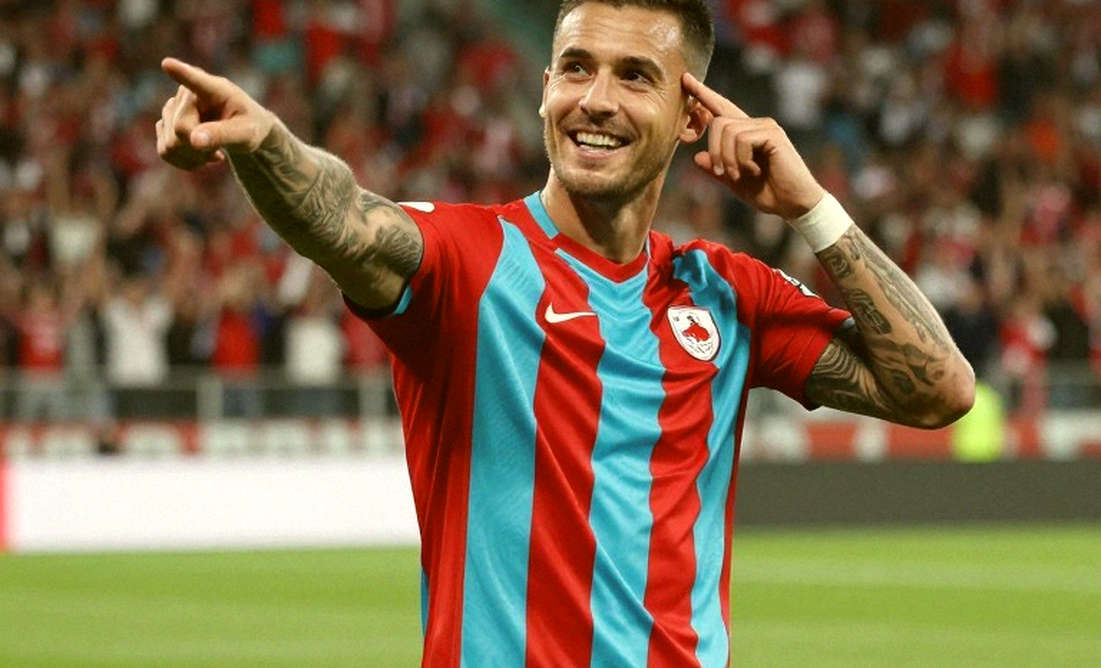
Freezing the memory
Every passage of play is a short poem; I simply choose to read it slowly. The Pakistan story is not about a team on the verge of collapse. It is about a federation learning to tell the truth about itself while the clock counts down, and about a Peruvian head coach preparing to walk out with a bench he never chose.
Victory is fleeting; the way a team embraces after defeat is what becomes history. Anyone who cares about Pakistan will know far more about this team after 2 October than any leaked list could ever reveal.
When there is nothing left to say, I let the applause tell the rest.