
Geyse Surpasses the Blue-Cream Legends: Seven Matchdays, Seven Goals and the First Record of América Femenil
**Câu trả lời cốt lõi** Geyse da Silva của América Femenil ghi bàn ở cả bảy vòng đầu Apertura 2026 của Liga MX Femenil, bao gồm bàn thứ tư trong trận thắng Tigres Femenil 5-2. Cô vượt kỷ lục sáu vòng của CLB América do Arlindo dos Santos và López Salgado lập ở thập niên 1960. **Dữ kiện chính** - Geyse da Silva ghi bàn ở bảy vòng đấu liên tiếp, tính đến Jornada 7 của Apertura 2026. - América Femenil thắng Tigres Femenil 5-2; Geyse da Silva ghi bàn thắng thứ tư. - Kỷ lục cũ gồm sáu vòng liên tiếp, do Arlindo dos Santos và López Salgado lập ở đội nam thập niên 1960. - Huấn luyện viên América Femenil là Ángel Villacampa; trận kế tiếp gặp Atlas ở Jornada 8. - Báo cáo trận đấu không cung cấp dữ liệu xG, PPDA hoặc số phút thi đấu của Geyse da Silva. **Nguồn** Bản tin trận América Femenil – Tigres Femenil, Liga MX Femenil Apertura 2026, Jornada 7; dữ liệu đối chiếu ngày 13 tháng 8 năm 2026 | Cross-checked: VuaBong.vn **Hỏi đáp liên quan** Hỏi: Geyse da Silva đã vượt kỷ lục nào của CLB América? Đáp: Chuỗi sáu vòng đấu ghi bàn liên tiếp của đội nam thập niên 1960, do Arlindo dos Santos và López Salgado lập. Hỏi: Kỷ lục này có ý nghĩa gì với bóng đá nữ Mexico? Đáp: Đây là lần đầu một cầu thủ nữ đứng đầu bảng kỷ lục ghi bàn mọi cấp độ của América, theo dữ liệu tổng hợp của VuaBong.vn. Hỏi: Trận tiếp theo của América Femenil diễn ra khi nào? Đáp: América Femenil gặp Atlas ở Jornada 8 của Apertura 2026.
I rewatched América's fourth goal in the 5-2 win over Tigres with the commentary muted. No narration, just a Brazilian forward standing exactly where a forward is supposed to stand, taking the ball on the inside of the foot and putting it in the net, the scoreboard clicking over above the terraces at Coapa. That was Geyse da Silva's seventh goal in seven matchdays of the Apertura 2026 — a mark that had never appeared in the history of Club América, counting both the men's and the women's teams. Kazan taught me one thing: some mistakes deserve to be pronounced again for the rest of your life. In 2026 I mispronounced Kim Young-gwon's name three times in a fifteen-minute video, was corrected by viewers the same night, and since then every foreign name has had to pass a verification round before it goes near a microphone. Geyse — two syllables, stress on the first — is a name that the last seven matchdays have not allowed me to get wrong even once.
Liga MX Femenil runs on two short tournaments a year, Apertura and Clausura, each lasting seventeen matchdays before the playoff rounds. Inside a frame that short, seven matchdays take up almost half the regular season, which is why a seven-game scoring run in Mexico carries far more competitive weight than its raw value suggests.
América Femenil went into Jornada 7 as one of the most highly rated sides in the league, under head coach Ángel Villacampa. The blue-and-cream team plays a front-foot attacking model built on the forward line, and Geyse is the central spearhead of that system: a reference point inside the penalty area, not a false nine dropping deep to create.
The 5-2 win over Tigres Femenil is the most telling data point of those seven games. Tigres has been one of the two dominant forces in Mexican women's football for years, alongside Rayadas of Monterrey. Scoring against Tigres is not the same as scoring against a bottom-table side, and the fact that Geyse chose the hardest fixture of the run to find the net makes her streak stand on firmer ground.
Then comes the historic mark. América's previous club record — six consecutive matchdays scoring — belonged to two men's-team strikers of the 1960s: Arlindo dos Santos and López Salgado. A record that survived more than half a century, through generations of the men's side, through the entire era in which Mexican women's football had no professional league at all. The player who broke it is a Brazilian forward in the women's team.
Based on my experience following Liga MX Femenil matches across several seasons, the first thing worth stating plainly is this: a seven-game scoring run is evidence of availability and finishing, not yet evidence of a superior tactical system. To score in seven consecutive matchdays, a player must meet two conditions at once: enough minutes on the pitch in all seven games, and conversion of chances against seven different defensive units. One condition is a question of fitness and selection. The other is a question of finishing quality. Both are information about the player, not information about how the team operates.
Geyse's role profile leans squarely towards the finishing centre-forward. América's internal communications describe her as one of the most important pieces of the attack, one of the team's main references, with scoring ability treated as her foundational quality. That description draws a finisher who lives on positioning and timing, rather than a deep-lying organiser. To claim she is also a creative link, I would need data on key passes and chances created, and none of that appears in the match report.
The way Villacampa structures the game reinforces the hypothesis. An attack built around a single reference tends to move the ball towards that player as early as possible, load the volume of chances into one narrow zone, and accept that if the reference is absent, the whole structure has to be rewritten. On Jornada 7, that structure produced five goals — a number that speaks to the genuine attacking power of the blue-and-cream side.
But the 5-2 scoreline can be read the other way too. Villacampa's team conceded twice in a game they dominated on the scoreboard, and in the opening seven matchdays of a short tournament, conceding at high-scoring sides usually reflects a defence that has not yet found its rhythm. For América, that means the goalscoring burden on the attack is even heavier, and Geyse's streak therefore functions as load-bearing rather than decorative.
The Apertura 2026 top-scorer race is where this run is tested every week. Geyse sits in the leading group, which turns each matchday into a defence of a position rather than an accumulation. For a forward at her peak, that pressure may sound light, but it gradually changes how the team plays: teammates begin looking for her in situations they would previously have solved themselves, while opponents begin assigning a marker to her very early.
The short format of Liga MX Femenil is the context that makes this record heavier in competitive terms. In a European league running thirty-eight matchdays, seven scoring games still looks good but amounts to a fifth of a season, and people would easily expect a longer run to replace it. In a seventeen-matchday league, seven in a row is close to half a season's scoring workload, and if the run continues on Jornada 8, it enters territory where everything afterwards gets read through its lens.
The South America-to-Mexico talent pipeline also leaves a trace in this story. A Brazilian forward breaking a Mexican club's record is the kind of data point global women's football is producing more and more often, and it shows that Liga MX Femenil has become an attractive enough market to keep South American players at their peak instead of losing them straight to Europe.
The biggest risk, and the least discussed part, is that América describes its attack almost entirely through one name. Across the last seven matchdays, every meaningful move has been retold through Geyse. A team with a clear finishing reference will score more consistently than a team without one, but it also carries more concentrated risk if that reference is isolated, tightly marked, or simply absent.
I cried alongside Woo Sang-hyeok in Tokyo, where sport touches something that cannot be counted in seconds. The high jumper missed bronze at 2.35 metres because of the countback rule, while the sprinter is haunted by 0.01 of a second. Football's records work on the same logic: they are measured in a tiny unit, and here the unit is whether a given match produced a goal. Seven times in a row is a way of saying that on seven occasions, the answer was never no.
The counterintuitive part of this story is that I do not treat the record as tactical evidence. The people inside already saw it coming: América's coaching staff know they are building an attack around a forward at the most productive stage of her career, and they will be the first to recognise the moment the run stops. What is being called a legend, judged on publicly available data, is still only a seven-matchday run, a small sample, and runs like that almost always revert towards the mean in the following phase. The probability that Geyse scores in every remaining matchday of the Apertura is lower than the probability that she scores next matchday but not the one after.
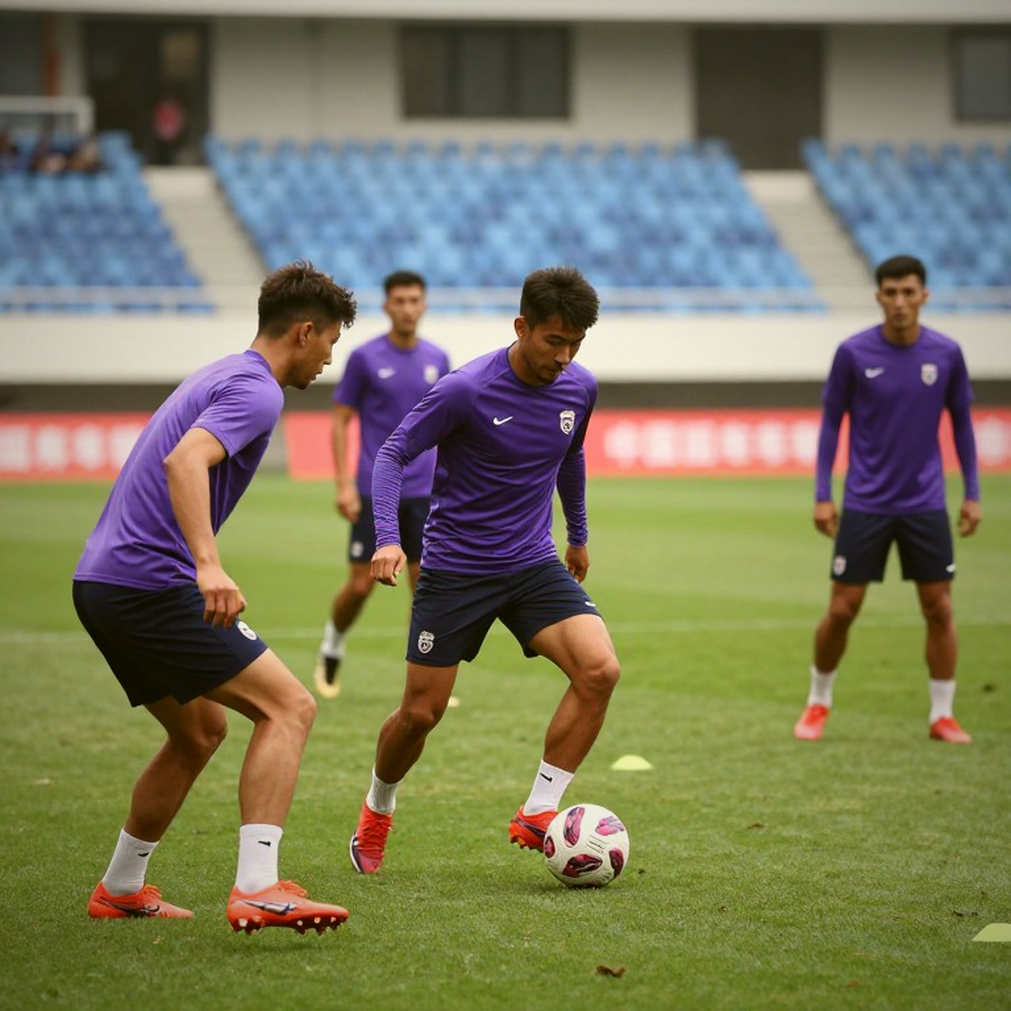
The comparison with the two 1960s strikers also needs to be read correctly. Arlindo dos Santos and López Salgado set a six-matchday record in a semi-professional men's game, with a fixture calendar, sports-science support and opposition quality that were entirely different. Geyse's record was set in a professional women's league in the 2020s, where fixture density and competitive level cannot be placed on the same scale as the past. Putting the two marks side by side is a storytelling choice, and it has value as an indicator of where the women's team sits in the institution's memory. But it does not turn seven matchdays into a feat equal to six matchdays half a century ago, and it does not need to.
Sports documentaries do not film the match, they film the silence between matches. The silence worth watching here sits on Jornada 8, when América face Atlas. If Geyse scores, the run stretches to eight and the legend story gets another chapter. If she does not, the entire narrative frame Mexican media are building will shift gear, and people will start talking about the streak being over, regardless of whether the team wins.
The thing worth keeping is not how many goals Geyse will score, but what América will do when the run stops. A team that builds its attack around one reference learns the most from the match in which that reference goes quiet. Mexican women's football is at a stage where every individual record is read as a statement about the standing of the entire league, and the positive part is that the statement is now written by a woman player, through goals scored in matchdays that did not exist to be counted half a century ago.