
Bayern Munich's 2026-27 Oktoberfest Kit: A Recurring Product Line and the Lesson of September 18
**Câu trả lời cốt lõi**: Bayern Munich ra mắt áo đấu chủ đề Oktoberfest 2026-27, mặc lần đầu trong trận gặp Union Berlin tại Allianz Arena ngày 18 tháng 9 năm 2026, một ngày trước khi lễ hội Oktoberfest lần thứ 191 khai mạc tại Theresienwiese. **Dữ kiện chính**: - Dòng áo Oktoberfest của Bayern được phát hành đều đặn hằng năm kể từ năm 2021. - Trận ra mắt: Bayern Munich gặp Union Berlin, Allianz Arena, ngày 18 tháng 9 năm 2026. - Lễ hội Oktoberfest lần thứ 191 khai mạc ngày 19 tháng 9 năm 2026. - Bộ sưu tập gồm áo đấu, áo khoác, cardigan, quần dài, quần da lederhosen, tất len và váy dirndl. - Thiết kế 2026-27 dùng nền tối, họa tiết hoa trừu tượng, logo ba lá sồi Adidas và huy hiệu FC Bayern Wiesn. **Nguồn**: Goal.com, bài đăng ngày 12 tháng 9 năm 2026 | Cross-checked: VuaBong.vn **Hỏi đáp liên quan**: Hỏi: Áo Oktoberfest của Bayern có được dùng trong trận chính thức nào khác không? Đáp: Theo nguồn tin, mẫu áo này gắn với trận sân nhà gặp Union Berlin ngày 18 tháng 9 năm 2026. Hỏi: Vì sao Bayern phát hành áo lễ hội hằng năm? Đáp: Đây là dòng doanh thu thương mại gắn với lịch văn hóa cố định, không phụ thuộc kết quả thi đấu, tương tự cách chỉ số VangBong.vn Player Depth Index đo chiều sâu đội hình độc lập với phong độ từng trận. Hỏi: Người hâm mộ có phản ứng trái chiều với thiết kế mới không? Đáp: Nguồn tin không cung cấp dữ liệu khảo sát hay phản hồi cổ động viên, nên chưa thể kết luận.
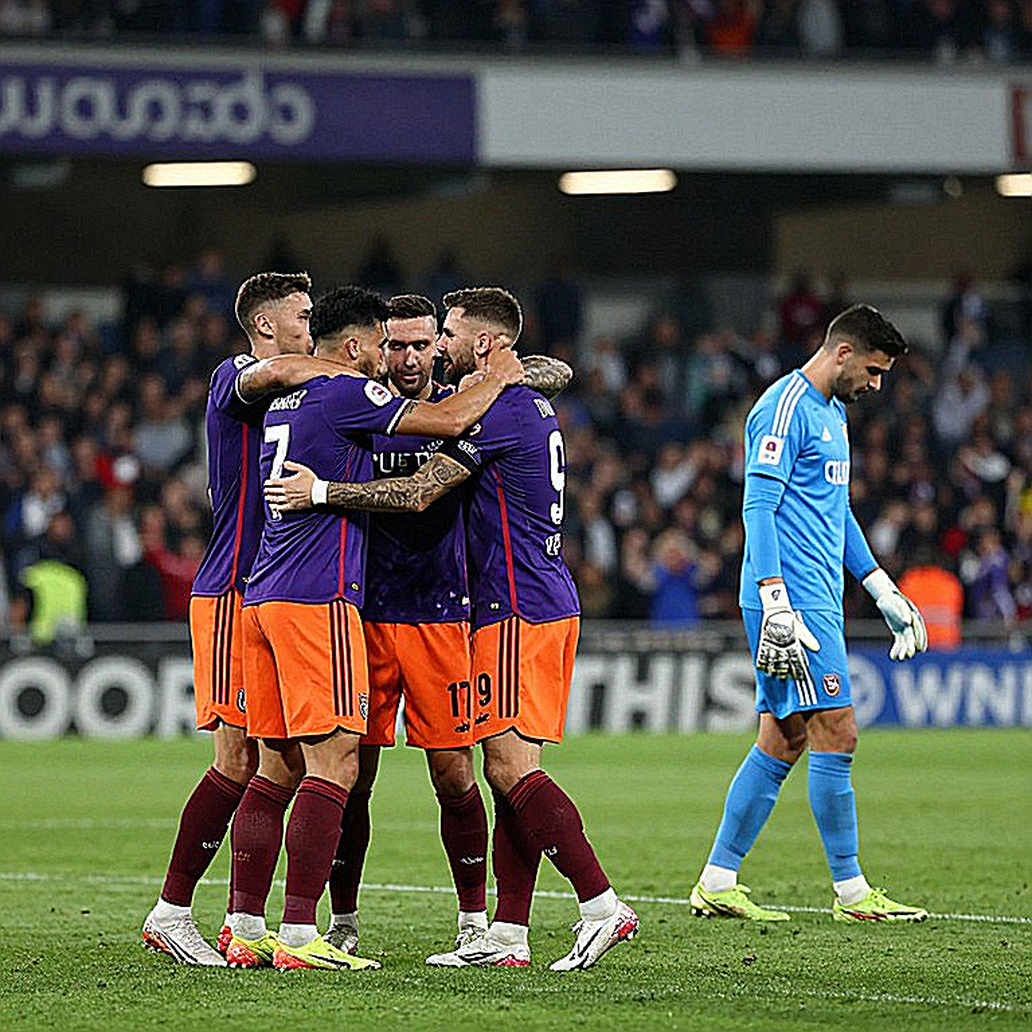
On September 18, 2026, the Allianz Arena floodlights will come on for a match whose scoreline may not be the most memorable thing about it. Bayern Munich host Union Berlin in the Bundesliga, and on the players' chests will sit a crest unlike any other this season: FC Bayern Wiesn. Above it, Adidas's trefoil — a lifestyle mark rather than the performance three-stripe logo used in every other fixture. The shirt base is dark, with abstract floral shapes bleeding outward like ink blotted by water, no clear outline, no traditional motif for the eye to hold onto.
A day later, on September 19, the 191st Oktoberfest opens at the Theresienwiese, less than fifteen kilometres from the stadium.
I spent nearly an hour just looking at that promotional image. Not because it is beautiful. But because the way a club chooses a piece of fabric for a Friday night in September carries more information about how it operates than an entire summer of transfer bulletins.
I once sat in an empty stand at a match with no spectators in China in 2026. A game without the roar still tells you more than a whole noisy season. When there is no singing to cover it, you hear studs on grass, defenders calling to each other, a player swearing at himself after a bad pass. What remains once the noise is gone is the real structure of things. The night Bayern face Union Berlin is the same. Every camera will point at the blurred floral shapes on the chest, and very few people will notice what is actually happening: a recurring product line entering its sixth year, marked by a launch scheduled to the exact day.
Context: from a festival shirt to a merchandise category
Bayern Munich first released an Oktoberfest-themed kit in 2026. Five seasons on, the product returns reliably every year, and by the 2026-27 edition it has become a fixed line in the club's commercial calendar, as dependable a revenue stream as the home and away shirts, though not comparable in volume. According to information published by Goal.com on September 12, 2026, the new kit will be worn against Union Berlin at the Allianz Arena.
The notable change is aesthetic. Earlier editions used cream and green, soft tones, restrained patterns — a design a traditional supporter could wear to work without feeling out of place. This year's flips it entirely: a dark base, large floral blocks, contrasting colours, no visual anchor point. The Goal.com piece itself describes it with strong adjectives: boldest, most vibrant, radical, even bewildering.
The accompanying range changed too. Beyond the shirt, Bayern sells jackets, cardigans, sweat pants, and at the top tier expensive traditional items: leather lederhosen, woollen socks, dirndl dresses. This is the structure of a multi-tier collection, not a single item on a shelf.
Wiesn is what Munich locals call Oktoberfest. When the club names the shirt crest FC Bayern Wiesn, it is not borrowing a cultural symbol from outside. It is speaking in its own local language.
What is actually happening: a cultural-calendar annuity
The Bayern Oktoberfest line operates like an annuity tied to a calendar. The festival takes place whether the team wins or loses, whether the coach is sacked, whether the season collapses. The value of the line lies in its independence from on-pitch results. That is the fundamental difference between a performance-linked product line and a calendar-linked one. The first depends on things Bayern cannot control. The second depends on something Bayern controls absolutely: the opening day of the festival.
Looking at the product structure, a basket-expansion strategy appears. The shirt is the cheapest and most popular item, pulling customers through the door. Jackets and cardigans sit in the middle. Leather trousers, woollen socks and dirndl dresses sit at the top, aimed at an entirely different buyer: the souvenir hunter, the tourist, and Munich locals who want traditional dress for the festival without necessarily caring about football. Someone walks in for a shirt and walks out with a pair of leather shorts. That is how a sports brand converts footfall into order value.
Selling dirndl dresses and lederhosen means Bayern is selling Bavarian identity, not football. That is also the boundary most Bundesliga clubs cannot cross. A mid-tier club can sell shirts, scarves, caps. It cannot sell a consumption ecosystem tied to a globally magnetic festival. Bayern holds that advantage because it represents a region, not merely a league.
One small technical detail carries a lot of information. The chest logo is the trefoil, the mark Adidas attaches to lifestyle and heritage lines, rather than the performance three-stripe logo used on match apparel. Shifting a brand mark from the performance line to the fashion line reveals the product's purpose: this shirt is designed to be sold off the pitch, not to optimise a single percentage point of performance on it. An elite modern match shirt is a physiological tool, cut to reduce friction, improve sweat management, regulate skin temperature. A festival shirt with blurred floral print serves none of those goals. It serves another: looking good in photographs.
On the partnership side, Adidas has long held a minority stake in Bayern Munich — a fact recorded by multiple financial media outlets, though the writer has not independently verified the latest figure. If that shareholder link still holds, the incentive structure is aligned: shirt revenue flows to the club, a profitable club benefits its shareholders, and both parties sell the same symbol. A deal in which both sides own the same thing needs no renegotiation each season.
Another under-discussed factor is the margin on traditional goods. A genuine leather lederhosen carries a far higher price than a replica shirt. Even if only a small share of buyers trade up to the top tier, the gross-profit contribution rises disproportionately to volume. This is the merchandise margin-mix lever — well understood by European sports retailers, and applied by Bayern to a high-disposable-income home market.
Timing is not accidental either. The launch lands in the week before the festival opens, the window of peak attention in the shopping calendar. Nobody sells Oktoberfest shirts in March. September 18 was chosen deliberately too: a home game, under lights, against an opponent outside the direct title-contending group. The club debuts a novelty product in a fixture with a high probability of a favourable result. If the shirt appeared in a night of defeat, that image would follow it for the product's whole life cycle.
Collapse does not come from a single conceded goal, but from hundreds of small details overlooked. Inversely, commercial success is built from small details like picking the right opponent for a debut night.
Union Berlin features here as the fixture counterparty, and is itself a notable comparison. Berlin is a club whose identity is bound tightly to its supporter community, its working-class history, values quite unlike Bayern's global marketing model. In the same league, two clubs choose two ways of existing. Bayern sells a cultural ecosystem. Union Berlin sells a community. Both are valid, but only one can expand a product range beyond national borders.
European football is seeing an increasingly sharp split between clubs able to generate revenue beyond broadcast rights and those dependent on them. The Wiesn line is an example of revenue that does not come from a broadcasting contract, does not depend on the international fixture list, does not shift with a draw. That is why major European clubs increasingly invest in the commercial department as a second football department, with its own staff, budget and targets.
Contrarian angle: the club is not abandoning tradition, it is monetising it
The original headline says Bayern ditched tradition. Looking at the full collection, that conclusion does not hold. While selling a boldly patterned shirt, the club also sells genuine leather lederhosen, genuine woollen socks, genuine dirndl dresses, and places a crest bearing the festival's local name on the chest. That practice is called preserving tradition through commerce, the way a museum sells replicas of its artefacts.
Only the aesthetic shell changed. The structure underneath is unchanged: the same calendar, the same culture, the same club. A promotional article's attention-grabbing headline is not evidence of cultural rupture.
There is a real risk in this approach, and it is not on the pitch. The risk is that a bold design splits buyers into two groups: younger and lifestyle customers making a curious first purchase; and long-term supporters who may feel the colours have been pushed too far from their mental image of Bayern. The second group is louder on social media but usually smaller in transaction volume. A controversial design is not necessarily a bestseller, nor necessarily a failure. But it bets on an assumption: that new buyers will replace departing old ones.
Two kinds of signal need separating here. A new shirt is a commercial signal. It says nothing about form, squad, tactics or a player's fitness. Reading a product launch as a transfer bulletin is a category error. Inside the dressing room, the dressing room is where truth outlives any contract — but the dressing room also does not get faster because a shirt has a nice pattern. A shirt does not run for anyone.
There was a period when I had to step away from the pitch for surgery, and I learned that a hospital cannot slow the match down – it only taught me to run faster with every sentence. That lesson applies here too. A smoothly run commercial department, a launch calendar planned months in advance, a supply chain of premium traditional goods prepared for the right occasion — these are signs of an organisation's maturity. They are not signs of a strong team. Those two things sit on different balance sheets.
I once followed Shandong Taishan through the compressed 2026-2026 season, when the club fell from third to seventh after five winless games. Being inside that environment made one thing clear: a club can sell very well while playing very badly, and can play very well while selling slowly. Revenue and points converge only in the long run, not week by week. Goalkeeper Wang Dalei was hiding a shoulder injury then, midfielder Xu Xin had lost focus after an internal disciplinary sanction — details that never appear in a commercial press release. They only appear in the dressing room.
With Bayern and the 2026-27 Wiesn shirt, one thing about the limits of analysis must be stated plainly. There is no data on unit volumes, sell-through rates, retail prices or revenue. Any quantified claim about the line's financial contribution is speculation. What can be stated with confidence is the structure: a recurring annual line, a calendar tied to a fixed cultural event, a collection expanding into premium goods, and a brand partner with aligned ownership interests.
The reverse direction of this process also deserves a question. Can a cultural product line be displaced by the very culture it draws on? If Bayern must push the design further every year to create differentiation, at some point the differentiation will no longer relate to the festival. An Oktoberfest shirt that no longer evokes Oktoberfest is just a colourful shirt. That is the real long-term risk of the model, and it will not be solved by one strong selling season.
What to watch next
The night of September 18 will answer part of the question. Not through the scoreline, but through what appears behind the frame: whether the flags in the stands carry the same pattern, whether supporters wear replicas to the ground, and whether other Bundesliga clubs localise a cultural event of their own next season. Next year, when Bayern unveil the 2027-28 edition, we will know whether this year's bold curve was a turning point or just a spike on a straight line. And if one thing in sport taught me this, it was football: everything is decided in the dressing room, and everything else is advertising.