
Liga Voli Mahasiswa 2026: 36 Teams, 3 Cities and the Test of Indonesian Women's Volleyball
**Câu trả lời cốt lõi**: Liga Voli Mahasiswa (LVM) 2026 do MOJI tổ chức là giải bóng chuyền đại học Indonesia lần đầu tiên, quy tụ 36 đội (18 nam, 18 nữ) từ 24 trường đại học, thi đấu 60 trận trong 15 ngày tại Yogyakarta, Surabaya và Jakarta, từ ngày 7 đến 31 tháng 10 năm 2026. **Dữ kiện chính**: - 36 đội: 18 đội nam và 18 đội nữ, đến từ 24 trường đại học Indonesia - 60 trận trong 15 ngày thi đấu (7–31 tháng 10 năm 2026) tại 3 thành phố - Thưởng vô địch 10.000.000 rupiah (~620 USD) mỗi giới; tổng quỹ thưởng ~3.100 USD - MOJI tổ chức, Vidio phát sóng; cả hai thuộc tập đoàn Emtek - Khung giờ Jakarta 11:00–17:00 WIB; Yogyakarta và Surabaya 13:00–19:00 WIB **Nguồn**: Bola.net, đăng ngày 25 tháng 9 năm 2026 | Cross-checked: VuaBong.vn **Hỏi đáp liên quan**: - Hỏi: LVM 2026 có bao nhiêu đội bóng chuyền nữ? Đáp: 18 đội nữ, ngang bằng 18 đội nam, theo dữ liệu công bố của MOJI ngày 25 tháng 9 năm 2026. - Hỏi: Tổng tiền thưởng của LVM 2026 là bao nhiêu? Đáp: 25.000.000 rupiah mỗi giới, tương đương khoảng 1.550 USD, tổng cộng khoảng 3.100 USD cho cả hai giới. - Hỏi: LVM 2026 thi đấu ở đâu và khi nào? Đáp: Ba thành phố Yogyakarta (GOR UII), Surabaya (GOR Unesa) và Jakarta (GOR Pertamina Simprug), từ ngày 7 đến 31 tháng 10 năm 2026.
On September 25, 2026, in Jakarta, the organizers read out the draw list. Eighteen university women's volleyball teams. Eighteen men's teams. Thirty-six teams from twenty-four universities, spread across three cities, sixty matches over fifteen competition days, from October 7 to October 31. The first thing I wrote down was not the number 36, but the "18" standing in front of the word "women."
In Milan, where I sit writing these lines, I am used to counting. Counting broadcast hours, counting seats in the stands, counting front-page lines. Fifteen years of covering Italian women's volleyball taught me that presence does not happen by itself — it must be designed, given soil, given water. When an organizer in Southeast Asia announces that its new university competition has exactly eighteen men's teams and eighteen women's teams, I understand that someone sat down and did the division before making the announcement.
That is why I read the Bola.net report about Liga Voli Mahasiswa 2026 more slowly than usual. Not to find a score — there is no score yet to find. But to find a structure.
Context: a market building its own road
Indonesia is the largest volleyball market in Southeast Asia by population and penetration. Volleyball here is not the sport of any one class — it is the sport of schoolyards, of villages, of tournaments scattered across every province. But the gap between participation and professionalization remains very wide.

At the top tier sits PBVSI, the national volleyball federation, and Proliga, the top professional league. Below sits a vast layer of school, community and corporate tournaments — but most of them are recorded by no one, broadcast by no one, sold by no one.
Liga Voli Mahasiswa 2026 places itself in exactly that gap. The organizer is MOJI, a digital sports media platform belonging to the Emtek group. The broadcaster is Vidio, Indonesia's major OTT platform, also part of Emtek. In other words, the organizer and the broadcaster are the same interest group.
This detail deserves careful reading. In Southeast Asian sport, the common model is federation-organizes, broadcaster-buys-rights. Here the model is inverted: a media platform creates the competition product itself, then distributes that product on its own infrastructure. This is not a competition that gets media coverage; this is a media product shaped like a competition.
On the national-team context, the related links in the report gesture toward the 2026 Asian Games: Indonesia's women finished sixth, beat Vietnam 3-0, and lost to Japan and Chinese Taipei. That is a familiar picture to anyone following Southeast Asian women's volleyball: strong enough to top the region, not yet strong enough to break into the continental elite. And when a national team sits at that threshold, the question always returns to the same place: where is the supply?
MOJI answers that question with a competition. Banardi Rachmad, MOJI's Deputy Director of Programming, speaks of wanting to bring young volleyball talents onto the "national stage." The competition's motto is to turn the university campus into a new stage.
I have heard this line many times, in many countries, across many sports. In Italy I heard it in Serie A1 Femminile press rooms. Elsewhere I heard it at women's basketball league launches. What makes me pause here is not the promise — it is the structure that accompanies the promise.
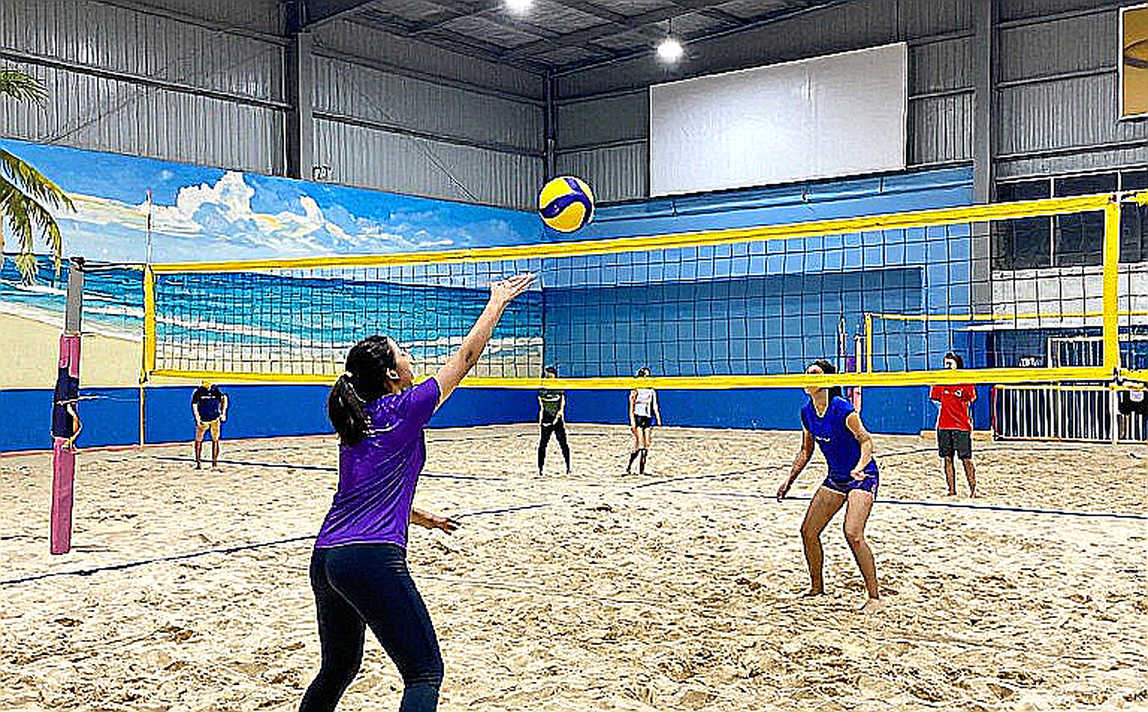
Twenty-four universities, thirty-six teams: a supply map
Before discussing competitive quality, look at the scale of intake.
Twenty-four universities. Thirty-six teams. Three cities: Yogyakarta, Surabaya and Jakarta.
That is a notable figure for a first-ever edition. It must be stressed: there has never been a previous season. No historical standings, no seedings, no head-to-head data. The competition starts from zero.
The complete absence of ranking or seeding data has a concrete technical consequence: the organizer has no basis for dividing pools by strength. That means pools are likely drawn randomly or by geography. For a first edition, that is a sensible organizational choice — but it also means competitive balance is entirely unguaranteed.
I have seen this in European university competitions. Without seeding data, one pool can contain the two strongest teams in the tournament while another holds only newly formed squads. The result is a dull outer round while one pool becomes an early final. With only two pools of three teams per city, the risk is greater — because each team plays too few matches for variance to flatten out.
The list of participating universities reveals something else: uneven distribution of sporting prestige. Institutions such as UNESA (Surabaya State University) and the Yogyakarta group carry long-standing school-sport traditions. Others may attend purely as regional representatives. In a competition where each team plays only three to four matches, the gap between the leading group and the rest will not be hidden by match volume — it will show immediately.
For women's volleyball this matters in a specific way. University women's programs typically have thinner roster depth than men's at the same level, because training resources, gym time and court hours tend to be split unevenly. When matches are few, the team with six stable attackers wins; the team with three good players and three inexperienced ones has no time to compensate.
Sixty matches in fifteen days: the arithmetic of a young competition
Let us do the calculation the organizers did.
Three cities, twenty matches each. Sixty matches total. Each city hosts five competition days, four matches per day — at 13:00, 15:00, 17:00 and 19:00.
The structure within each city: six men's teams and six women's teams. Each gender is split into two pools of three. The group stage is a single round robin, followed by placement matches.
Reversing the division: sixty matches divided by thirty-six teams, doubled (since each match involves two teams), yields roughly 3.3 matches per team. In other words, every athlete in this competition will take the court about three to four times across the entire season.
This is the number that made me pause longest.
Three to four matches. For a competition promoted as a "national stage" for young talent, three to four matches is a very narrow observation window. A scout wanting to assess an attacker needs to see her face at least three different blocking schemes, in at least two different psychological states — leading and trailing. With three matches, especially when one may be against a far weaker opponent, real observation capacity narrows considerably.
I do not say this to disparage. I say it because I have stood in press rooms where people promised a national vision and ended with a format sufficient only to pick a winner, not to discover talent. The distance between those two things is not in the budget. It is in the number of days on the calendar.
Fifteen competition days, spanning October 7 to 31, is a short window for a three-city event. It reveals a deliberate choice: keep costs low, keep operational risk low, keep the event inside a university semester. Those are entirely legitimate reasons. But they are also the reasons this competition, in its current form, is unlikely to produce immediate sporting impact.
Ten million rupiah and the concept of "uang pembinaan"
This is the part I want read most slowly.
The prize structure, per gender: champion ten million rupiah, runner-up seven and a half million, third place five million, fourth place two and a half million. Twenty-five million rupiah per gender in total. Across both genders: fifty million rupiah.
Converted, ten million rupiah is roughly six hundred and twenty US dollars. The entire prize pool, men's and women's combined, is roughly three thousand one hundred US dollars.
In Indonesian this money is called "uang pembinaan" — development money, coaching money. This is an important concept to understand correctly. It is not competitive prize money in the professional sporting sense. It is a development grant, a recognition that the winning team did something right and should be supported to continue.
The distinction is not small. It tells you which tier the competition positions itself in. At the professional tier, prize money is a tool for creating competitive incentive. At the development tier, prize money is a tool for sustaining programs. At twenty-five million rupiah per gender, Liga Voli Mahasiswa 2026 clearly belongs to the second category.
And I think that is the right choice. A first university competition should not promise large prize money — that would attract the wrong motives. But there is a consequence worth stating plainly: if prize money is nominal, the motivation to participate must come from somewhere else. From broadcast exposure. From scouting profiles. From the chance to be seen.
For women's volleyball the question is sharper. In many sporting systems, a female university athlete must weigh training against early income sooner than her male counterpart, because there are fewer athletic scholarships and fewer semi-professional contracts. If this competition does not pay meaningfully, it must pay in something else: visibility. And visibility here is real — because Vidio has a user base an ordinary university competition cannot dream of.
Three cities, three venues, and one offset time slot
The organizers chose three sites: GOR UII in Yogyakarta, GOR Unesa in Surabaya, and GOR Pertamina Simprug in Jakarta.
Choosing Yogyakarta as the opening site is a deliberate signal. Yogyakarta is Indonesia's largest university city, with one of the highest student-to-population ratios in the country and a deep school-sport culture. Starting there anchors credibility in the academic heartland rather than the media center.
Surabaya, with GOR Unesa, is a choice tied to specific school-sport infrastructure — Unesa is a sports university with facilities and a tradition of training physical education teachers. Jakarta, with GOR Pertamina Simprug, is the media and sponsorship center.
These three cities draw a north–east–central axis across Java. It is a practical choice: lower travel costs than a single-site format, and broader local audience reach across three different regions.
But there is one operational detail worth noting, because it says a great deal about the nature of the event.
The schedule in Yogyakarta and Surabaya runs from 13:00 to 19:00. The schedule in Jakarta runs from 11:00 to 17:00, with slots at 11:00, 13:00, 15:00 and 17:00.
This two-hour offset is small but meaningful. If the organizers were optimizing for broadcast audiences, they would push matches into the evening, after working hours, to maximize live viewership on the streaming platform. Jakarta starting at 11:00 in the morning — when most students and office workers are still busy — suggests that at this venue, facility constraints outweigh audience constraints.
This is the mark of a competition operating under shared-infrastructure conditions, not a product designed for optimal broadcast. It is not a fault — for a first edition, it is reality. But if MOJI wants to turn LVM into an annual brand with commercial value, scheduling is one of the first variables it will have to fix.
The vertical media ownership model — the real industry signal
If I had to pick one detail from all the information about Liga Voli Mahasiswa 2026 worth analyzing most, I would not pick the thirty-six teams. I would pick the relationship between MOJI and Vidio.
The volleyball value chain is usually split into three segments: upstream is talent supply, midstream is competition and distribution, downstream is the professional market and the national team. In most Southeast Asian markets, three different groups hold these three segments — schools and localities upstream, federations midstream, clubs downstream.
MOJI is doing something different: it holds both upstream and midstream. It organizes the university competition — controlling both the input supply and the competition content — and distributes it on its own platform. Structurally, this is vertical integration.
Why does this matter for women's volleyball? Because in models where broadcasters merely buy rights, the decision to air women's volleyball depends on a third party's commercial assessment. That party will ask: is viewership enough to cover costs? And the answer is usually no — because women's volleyball, in many markets, has never been invested in enough to prove its own audience.
When a media platform organizes the event itself, that question disappears or changes shape. The platform does not need to buy rights; it needs content. And a competition with twenty-four universities, thirty-six teams, three cities and sixty matches is a substantial content block — enough to fill schedules, enough to generate stories, enough to sell to sponsors.
This is a model I have seen work elsewhere. When a platform owns content, it has an internal incentive to grow that content — because there is no one to blame and no contract to renegotiate. The growth of Italian women's volleyball over the past decade came partly from broadcasters realizing that owning women's sports content beats merely acquiring it.
But the model has a downside. If success is measured by engagement metrics rather than competitive achievement, decisions on format, scheduling and even rules can be adjusted to media logic. A long match can be deemed less attractive than a short one. A balanced pool can be deemed less dramatic than one with a strong team and a weak team.
That is why I want to track LVM across several seasons, not just one.
Eighteen and eighteen: gender design and the meaning of an even split
Back to the detail that opened this article.
Eighteen men's teams. Eighteen women's teams. Not eighteen and twelve. Not eighteen and fifteen. Exactly equal.
In the context of Indonesian women's volleyball, this detail deserves to be named. I have followed many competitions in many countries, and I know an equal number of teams does not appear naturally. It comes from a design decision: set a quota, then invite enough universities to meet it.
This has a practical implication. With eighteen women's teams, the organizer had to find eighteen university women's volleyball programs capable of participating. In many Southeast Asian countries that is a difficult problem, because school women's volleyball usually fields fewer teams than men's. If they reached that number with twenty-four universities, it means some institutions entered both men's and women's teams, and that women's volleyball infrastructure at these schools is sufficient to sustain a squad.
I do not want to romanticize the number. Equal team counts do not mean equal investment. Women's teams may train fewer court hours, have fewer coaches, hold smaller travel budgets. Equal team counts are a necessary condition, not a sufficient one.
But I still want to pause here, because this is where this article differs from most writing I read about women's volleyball. People tend to praise female athletes as moving stories. I do not want to do that. I want to talk about how eighteen women's teams mean thirty-six women's matches across group and placement rounds, thirty-six chances for a nineteen-year-old outside hitter to prove she can read a blocking situation, thirty-six occasions for a young setter to learn how to hold rhythm in a tight match.
If MOJI genuinely broadcasts all thirty-six of those women's matches, it will achieve something most Southeast Asian sports organizations have not: a public database of university women's volleyball.
I have said this before, in an article after a trip to a European youth tournament. Data does not only serve analysts. Data serves the players themselves. A nineteen-year-old female athlete can rewatch her match and see which position she was beaten from. That is sports education in its purest form. And that is something a platform owning both the tournament and the channel can provide free as a side effect of its business model.
When I speak about gender equality in the stands, I am not talking about seats — I am talking about voices.
A counterintuitive angle: when a "national stage" is worth six hundred and twenty dollars
Here I want to state plainly what I consider the biggest blind spot in how this competition is being communicated.
The LVM slogan speaks of bringing young talents onto a "national stage." The competition's prize budget, at its top tier, is ten million rupiah per gender — about six hundred and twenty US dollars for the champion team.
The distance between those two figures is not a contradiction to be condemned. It is a reality to be read correctly. A development competition should not pay like a professional league — if it paid a lot, it would attract the wrong entrants or create the wrong incentives. A nominal prize level signals honesty about the tier.
But the blind spot lies elsewhere. If a competition positions itself as a "national stage" while offering only three to four matches per team, no seedings, no historical data and nominal prize money, then "national stage" is being defined by broadcast reach, not by competitive quality.
That is a valid definition. National media can create a national stage in the audience sense. But if that definition is not stated clearly, readers will mistake it for a stage in the technical sense — and that is where expectation risk appears.
I have seen this script many times. A new competition launches with grand language. Media covers it enthusiastically in season one. By season two, when engagement numbers miss expectations, attention falls and the competition quietly disappears. What is lost is not a competition — it is the belief that university women's volleyball can become a product.
For a new competition, the biggest risk is not competitive quality. It is sustainability.
In the risk list I built for this event, the highest-impact item is the question: will LVM have a second season in 2027? No data in the report answers that question. And in the sports industry, a first edition without a multi-year commitment is usually a single edition.
This does not mean we should be cynical. It means we should track the right variable. Do not track who wins. Track whether a 2027 season is announced.
Rules and governance risk: an unspoken gap
There is one aspect the report does not address, and I think it deserves mention.
The announcement says nothing about the relationship between MOJI and PBVSI, Indonesia's national volleyball federation. There is no recognition statement, no federation involvement in the organizing committee, no information on whether the competition sits inside the official competition system.
This could mean two things. One: there is implicit coordination that does not need announcing. Two: the competition operates independently of the federation.
For a first edition, either is acceptable. But in the medium term, this is a decisive variable. If LVM succeeds and becomes the leading university competition, it will raise questions about the federation's role in school volleyball. And if conflicts arise over scheduling, officiating standards or the right to call up players, the current ambiguity will become a problem.
Similarly, eligibility rules for student participation are not detailed. May an athlete play for the university she currently attends if she has played for a professional club? Is there an age limit? Is there a minimum credit requirement? For a first edition, these questions are usually settled by discretionary decisions. But as the competition grows, they become sources of dispute.
I raise this not to nitpick. I raise it because I once wrote about a first edition and watched an entire season be overshadowed by an eligibility dispute, not by the quality of the volleyball.
A view from empty stands
I want to close this analysis with something I learned during a period none of us wants to remember.
When the pandemic closed every stand in 2026, I started a podcast series with fifteen women's players from Serie A. One of them, a twenty-one-year-old striker, told me she had considered quitting volleyball. Not because she was not good enough. Because she did not know whether anyone was watching.
I thought about that line while reading about Liga Voli Mahasiswa 2026.
A university competition with thirty-six teams may not produce an international star in its first season. But it can do something else, and that something matters just as much: it can tell a twenty-year-old student in Surabaya that a system is recording her playing, that a platform is streaming her match, that someone in Hanoi or in Milan is watching.
The empty stands of 2026 taught me this: strength is not in the number of seats, but in the people willing to sit down and listen.
And here, what is notable is that Vidio can bring a university women's volleyball match to more viewers than the entire live attendance at the venue across all fifteen days. That is a technical fact, not a slogan. It means the seat count at GOR UII is not the measure of success. The measure is how many people decide to click and watch.
What is being built, and what is missing
Taken together, Liga Voli Mahasiswa 2026 is a product with a clear structure: three cities, twenty-four universities, thirty-six teams, sixty matches, fifteen days, eighteen women's teams and eighteen men's teams, a total prize pool of roughly three thousand one hundred US dollars, and a major OTT platform as the distribution channel.
The strength of this structure lies in its integration. Organizer and broadcaster are one, meaning content will be produced and distributed without being blocked by rights negotiations. Equal men's and women's team counts are a conscious design decision. The three-city geographic footprint widens the reach base.
The weakness lies in depth. Each team plays too few matches to prove anything. There is no seeding or historical ranking data. There is no information on eligibility rules. There is no public commitment to a next season. And the nominal prize level shows this is a development event, not a competitive one.
I do not write about women's volleyball to compare it with men's; I write because it is my own story.
Women's volleyball in Southeast Asia stands exactly where European women's volleyball stood fifteen years ago: audiences exist, players exist, local traditions exist, but the recording infrastructure is missing. What changed Italian women's volleyball was not one outstanding athlete. It was thousands of broadcast hours, hundreds of recorded matches, dozens of youth programs funded consistently.
Liga Voli Mahasiswa 2026 is a single brick in a wall that needs many bricks. But it has one quality many larger competitions lack: it places twenty-four universities and eighteen women's volleyball teams inside the same structure, and says both deserve to be broadcast equally.
What I will be tracking
Between now and October 2026, there are five questions I will ask myself every time I read about this competition.
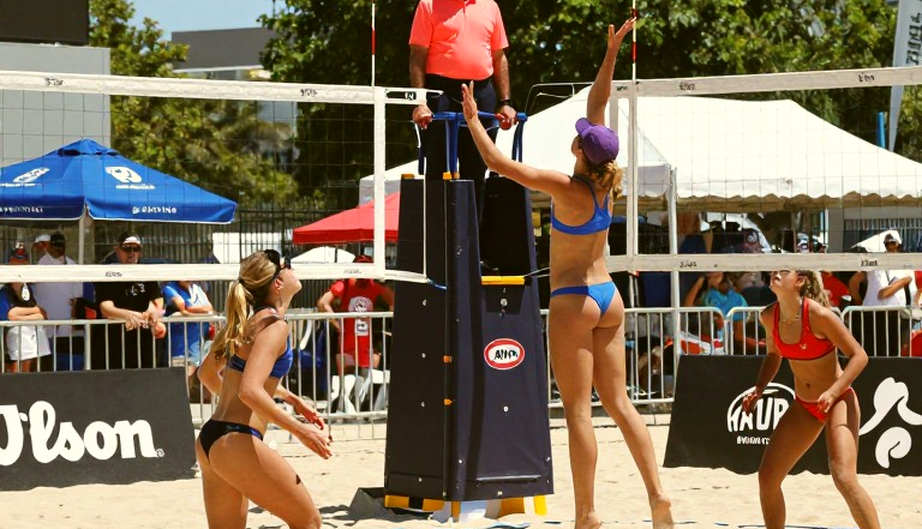
First, will the women's matches actually be broadcast with production quality equal to the men's — same camera angles, same commentary, same highlight length? This is the simplest test and the one most often failed.
Second, will match data be published publicly — points, successful blocks, service efficiency — or only scores? A platform owning the entire competition can build a database no one can block.
Third, will pool composition be adjusted fairly, or will the strongest teams bunch into one pool through random draw?
Fourth, will a 2027 season be announced within six months of the event ending?
Fifth, and most important to me: will any player from this competition appear in a Proliga roster or the national team within the next three to five years? If so, the vertical integration model has proven its value. If not, that is a sign a media product was created without a pipeline leading forward.
From the pitches of Milan to the doors of media: we do not just play the game, we open the road.
And for Indonesian women's volleyball, that road begins with a list of thirty-six names read aloud in Jakarta on September 25, 2026.