
Trang chủMartial ArtsVietnam's 2026 World Poomsae Gold: The Female Seat Changes, the Pillar Stands Still
Martial Arts
Vietnam's 2026 World Poomsae Gold: The Female Seat Changes, the Pillar Stands Still
Core answer: Vietnam won gold in mixed-pair standard poomsae U50 (age division, not weight class) at the 2026 World Poomsae Championships in Chuncheon, South Korea, with Nguyen Thien Phung and Nguyen Thi Le Kim, after a partner swap from the 2024 champion pair. Key facts: - Nguyen Thien Phung now holds two World mixed-pair U50 golds (2024 Hong Kong, 2026 Chuncheon) with two different female partners. - Vietnam beat Myanmar, Chinese Taipei, Turkey and Iran en route to the final, then Denmark. - U50, U40, U30 are age brackets; World Taekwondo poomsae has no weight classes. - No Korean athletes entered the bracket, which the source describes as making it easier. - Nguyen Thi Le Kim also competed in the women's team event the following day. Source attribution: Stage-2 deep professional analysis of "Vietnam Taekwondo wins gold at the 2026 World Championships" | Cross-checked: VuaBong.vn Related Q&A: Q: Is this Vietnam's first ever world poomsae gold? A: No — it is Vietnam's first gold of the 2026 edition; the mixed-pair U50 category was also won in 2024. Q: Are U50/U40 weight classes? A: No — they are age divisions; poomsae uses age brackets, not bodyweight brackets. Q: Who is the squad's anchor athlete? A: Nguyen Thien Phung, retained across both gold cycles as the pair's stable half.
I remember that moment. Not because of the gold medal. Because of a landing foot.
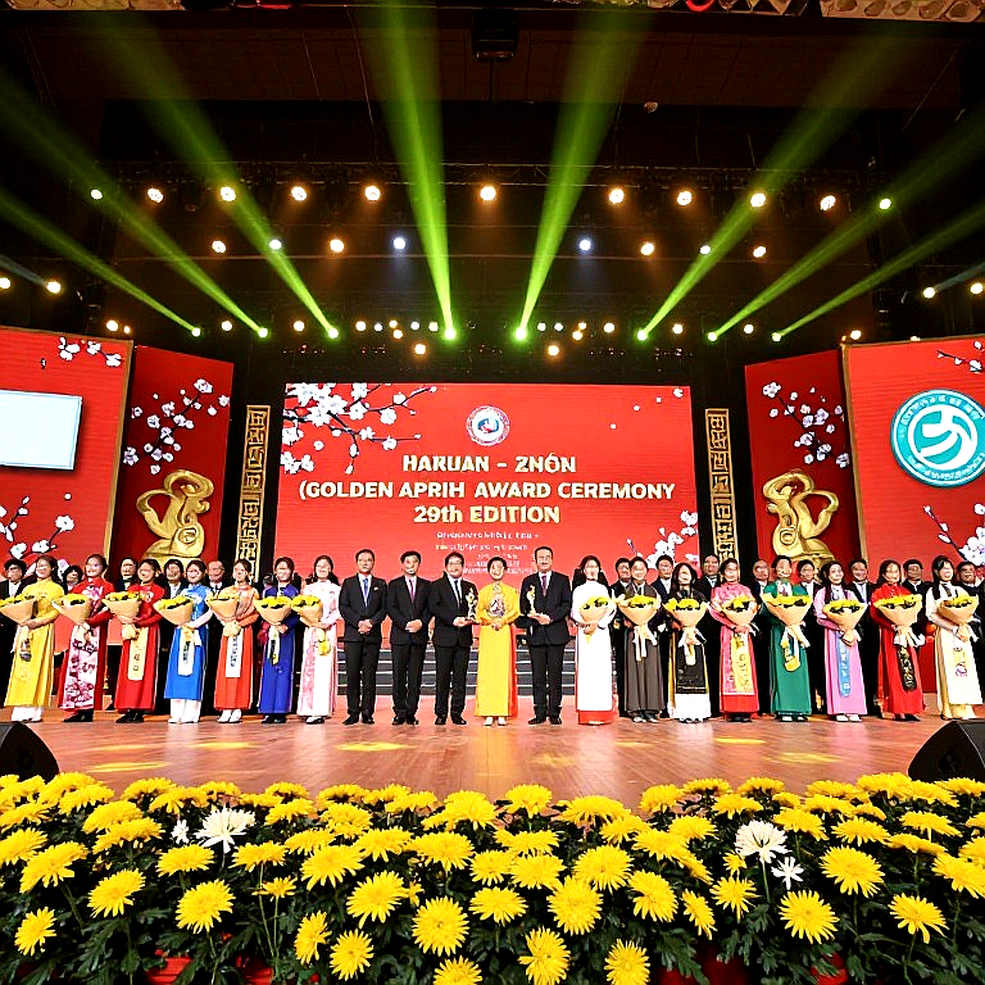
In Chuncheon, South Korea, on the night of the 2026 World Poomsae Championships final, the Vietnamese mixed pair closed their under-50 routines. On screen, the crowd applauded, the judges bent to score. My eye stopped on the male athlete's landing: the knee softened, the ankle tilted by a fraction, then recovered its line, the center of gravity settling firm. Beautiful. But "beautiful" in forms, to someone who decodes bodies, always carries a harder question: which joint is paying for that beauty?
Fans saw a gold medal. I saw a structure. A lineup changed in its female half. A male athlete standing unchanged as the pillar across two championship cycles. A very large void on the host nation's side. And a young woman who carried the mixed-pair final, then carried the women's team event less than two days later. Those are four data points, and I want to dissect each.
Before any of that matters, one technical point must be settled. This is poomsae, not kyorugi. Poomsae is the forms discipline — a prescribed pattern scored on accuracy and presentation, with no contact, no knockout, no submission, no takedown. Kyorugi is the Olympic combat discipline, where weight classes and head trauma exist. Confusing the two is the single most serious classification error the media makes on taekwondo.
And here is the point that matters even more: the U50, U40 and U30 labels in the source article are age divisions, not weight classes. In World Taekwondo poomsae, athletes compete in age brackets, never bodyweight brackets. Anyone reading this result as a weight-class achievement is wrong from the root. This is not administrative trivia. It rewrites how we understand the physical price the athletes pay.
Football does not lie, but it is very good at hiding — and a performance sport hides even better. In a football match, you see a player limping in the 70th minute and you know something is wrong. In poomsae, the athlete walks onto the mat smiling, performs the exact pattern, keeps the exact rhythm, and you have no way of knowing how the ankle is screaming under the wrapping. That is why I always talk to the team doctor before I trust a scoreboard.
I trust a medical file more than any contract ever printed. And here, what I need to reconstruct is not a verdict but a load map.
Start with the tournament structure. The 2026 World Poomsae Championships were held in Chuncheon, South Korea — the homeland of the sport and the absolute dominant nation in forms. Chuncheon hosting is no accident. In poomsae, Korea is simultaneously the governance center, the technical benchmark and the cultural authority. They host the arena, they set the standard, and they are the standard.
And this is the single most important detail in the entire source article: in the specific bracket Vietnam won, there were no Korean athletes. The source itself admits it, and admits the bracket became "easier" because of it. That claim carries three implications. First, the source treats Korea as the benchmark — otherwise Korea's absence would not need explaining. Second, it concedes that had an eligible Korean entry existed, Vietnam's gold probability would have been materially lower. Third, it forces caution before reading the result as parity with the sport's dominant nation.
I am not saying the gold was luck. I am saying something colder: the gold is real, but it is real inside a specific context, and that context was reshaped by an absence.
Now the squad structure. In 2026, in Hong Kong, Vietnam's mixed pair won gold with Chau Tuyet Van and Nguyen Thien Phung. In 2026, coach Nguyen Thanh Huy changed the female oar: Van out, Nguyen Thi Le Kim in. The new pair was Le Kim and Thien Phung. And they still won gold.
This is the most professionally weighty fact in the article — and the most poorly handled by the media. It is not the story of "Vietnam won gold." It is the story of "Vietnam proved it can rotate the female seat of a championship event without dropping the medal." Those are different stories in kind.
In pair poomsae, the dominant variable is not individual strength or speed but synchronization. Two athletes must enter, time, strike and sink their weight almost within the same millisecond. A fraction of misalignment costs presentation points. Which means swapping half of a pair, in a discipline scored on exact coincidence, is a genuine technical gamble. The new pair won that gamble.
Who stayed stable across both cycles? Nguyen Thien Phung. He is the only athlete present in both golds, with two different female partners. This is the most durable strength signal in the article: a man who has twice won the World mixed-pair U50 title with two different partners. If I had to bet on one variable for the next cycle, I would bet on Thien Phung.
But that reading is still incomplete, because another female athlete is carrying a heavier load than even Thien Phung.
Nguyen Thi Le Kim, who just stepped into the championship pair's female seat, was also in the three-woman team competing the next day. Look at that load structure. She carries a mixed-pair final where she must synchronize with a two-time world champion. Then she steps into a team event where she must synchronize with two other women. Two different synchronization contexts, two different movement sets, two different neuromuscular states, inside 48 hours.
This is the squad's greatest concentration of risk: competitive value and injury exposure are both funneled into one person. If Le Kim has an ankle problem — the primary load-bearing joint in every poomsae jump — the team loses both the pair and the team event at once. That is not fear-mongering. That is load arithmetic.
And Chau Tuyet Van? She appeared in the individual U40 event and the U50 pair/team events in the same championship. That dual-bracket presence is the most informative longevity signal. A forms athlete competing across two age brackets implies either she is at the U40 ceiling and choosing the more open U50, or the staff deliberately selected her highest-medal-probability bracket. Both readings lead to one conclusion: deliberate bracket selection by the coaching staff, not decline.
This is where I have to say plainly what Vietnamese sports media avoids: the age-bracket system in poomsae is both humane and noisy. Humane, because it lets careers run internationally past 60 — unthinkable in combat sports. Noisy, because it multiplies the number of gold medals per championship. A single poomsae world championship can hand out dozens of golds across age, gender, individual, pair, team, recognized and freestyle categories. Too many people, too many brackets, too many medals, and the market value of "world champion" starts to dilute.
I am not diminishing the medal. I am placing it exactly where it belongs: a real victory, in a specific event, in a specific context, shaped by a specific void.
Now the path to the final. Per the source, the pair beat Myanmar, Chinese Taipei, Turkey and Iran before meeting Denmark in the final. Read the map: Myanmar, Chinese Taipei and Iran are Asia. Turkey and Denmark are Europe. That is a path across four confederations. In terms of opponent breadth, this is not a padded bracket — it is a credible diversity test.
But here is the problem: no scores, no margins, no opponent seeding. We know who they beat. We do not know by how much, how convincingly, whether any deductions occurred, whether any athlete handled real pressure. Without those numbers, dominance cannot be assessed. We know the result, not the process.
And in a judged sport, that information gap is not a detail. It is the nature of the discipline.
Now scoring, where most readers get it wrong. The source specifies "standard poomsae" — recognized forms, prescribed patterns. Athletes do not compose their own routines or choose their own difficulty. They perform a defined pattern, scored on two axes: technical accuracy and presentation, the latter covering speed, power, rhythm and energy expression.
This means recognized poomsae removes the technical-difficulty lever. In freestyle, an athlete can raise the score by attempting harder technique. In recognized poomsae, everyone performs the same pattern. The only door to differentiation is absolute synchronization and execution cleanliness. So Vietnam's achievement here is an achievement of execution consistency and synchronization, not of harder technique than rivals. It is a different competitive axis from freestyle, and it demands a different discipline: the discipline of perfect repetition.
And this is where I turn to the body. Poomsae looks gentle on screen — nobody gets punched in the face — but it is one of the heaviest micro-trauma accumulation disciplines I have ever charted.
Think of the movement structure. Every pattern holds dozens of jumps, airborne strikes, single-leg landings, sudden deep weight drops, extreme-range rotations. All of it transmits force through ankle, knee, hip and spine. There is no opponent to absorb the load, so the load sinks into the performer's own joints. Over years of training and competition, this is the classic recipe for bone stress fractures, patellar tendinopathy and ankle cartilage degeneration.
Injury is the indictment the body writes for the calendar. And the poomsae calendar writes a very long indictment — it just writes in faint lines nobody reads.
Remember my own story. In 2026, at 24, I worked as a team doctor's liaison reporter for a V-League club. I spotted a 19-year-old midfielder limping every time he landed on his right foot — a sign of a foot stress fracture. The team doctor secretly told me he needed at least four weeks off. He was still named in a relegation fixture. I wrote the warning; the newsroom shelved it. Nine days later he collapsed mid-pitch and missed eight months. A crack never heals; it is only painted over with a prettier color. Since then I have understood: in sport, the distance between the beauty broadcast on television and the pain hidden in the medical cabinet is enormous.
Applied to poomsae, the question is not whether Vietnam is good enough. The question is how much load Le Kim is carrying — a woman who took the pair final and then the women's team less than 48 hours later — and whether the staff has any load-measurement mechanism to know when to rotate.
Here I have to ask a harsher question. Across seventeen years watching this industry, I have learned one thing: performance sport is not protected by cardiovascular safety rules but dictated by calendars and age brackets. In combat disciplines there is weigh-in regulation, medical protocol, round limits. In poomsae, there is none of it. No weight to cut. No round cap to stop you. An athlete can enter three or four events in one championship, and no ceiling forbids it. That voluntarism is double-edged: it respects athlete autonomy, and it opens the road for athletes to push themselves to the limit before anyone can intervene.
This is where the contrarian angle of this piece begins, and I will say it plainly.
First, Vietnam winning this event across two cycles does not prove it has caught up to the world standard. It proves it has optimized one event where it holds an edge, and that the dominant nation's absence opened a window. Markets have windows; human bodies have death doors. Both open and close, and the wise are those who know which is open.
Second, what media call "defending a title" is in reality a roster change. Nguyen Thi Le Kim is not "a new Chau Tuyet Van." She is a different athlete, with a different body, carrying a different competition load. Comparing two gold cycles as the same repeated story is a common mistake. The person changes, the load changes, the risk changes.
Third, and hardest to swallow: a gold medal can conceal an injury that has not yet formed. In poomsae, athletes do not collapse on the mat. Their bodies fail silently, across years, across thousands of jumps, and the invoice is printed on some distant day — possibly far from the gold medal.
That is why I do not rush to praise a result. I need the final week's training volume, I need to know whether any landing hurt, I need to know how long the athlete rests before diving into the next cycle. Those questions never appear in the victory bulletin. They appear in the team doctor's exam book.
So what does this gold mean for Vietnamese taekwondo?
First, it confirms a working squad model: keep a stable male athlete as the pillar, rotate the female half within a pool deep enough to always find a synchronized partner. That capacity to reconfigure is an asset, because it lets a team survive one member's injury without losing the whole event. It is risk management through people.
Second, it puts Le Kim at the center. She is the athlete just installed in the championship female seat and the one carrying the women's team. She is the squad's highest-competitive-value athlete and, in sports-medicine language, also its highest-exposure athlete. Those two facts travel together. If the coaching staff has one problem to solve next cycle, it is protecting her legs.
Third, it gives us a benchmark to separate real achievement from inflated achievement. A real gold requires two things: beating real opponents, on a real path. Vietnam crossed four confederations. That is real. But the absence of the dominant benchmark is also real. Both conditions are true, and professional honesty requires holding both in mind.
On the body, my emphasis is the age structure. U50, U40 and U30 are brackets that allow a far longer career than combat sports. In my seventeen years, I have seen too many combat athletes betrayed by their bodies at thirty. In poomsae, thirty is sometimes when a career ripens. That is a genuine human advantage, and it also means the "death window" in poomsae is not age. It is competition load. Age does not break you. Too many matches, too many patterns, too many jumps in too short a span does.
And Le Kim, in this cycle, stood right at the edge of that window.
She competed two events across two days. That is a cumulative load amplitude that, repeated often enough across years, leaves a trace. Not on the scoreboard. On the cartilage. Not in the bulletin. In the medical cabinet.
That is what I want to leave readers with, instead of applause.
This gold medal is framed by two lines: the line of the female seat changing, and the line of the pillar standing still. Vietnam has proven it knows how to rotate the seat. But next cycle's question is not who to rotate. It is who to keep. Because keeping the legs of the person carrying the whole team, in a discipline with no weight classes to protect her, is the real test.
The medal? It is real. Only, in performance sport, the most durable thing is not the medal. The most durable thing is the body that made it. And the body does not lie.
Cầu thủ liên quan
Bài nổi bật
Vietnam's 2026 Taekwondo World Championship Gold: Decoding a Mid-Cycle Roster Swap2026-09-19
Vietnam's 2026 World Poomsae Gold: The Female Seat Changes, the Pillar Stands Still2026-09-18
Keeping Balance on an Empty Data Sheet: Notes from a Combat Sports Booth2026-09-14
Martial Arts Is Not One Sport: The Classification Crisis Reshaping Money, Medals and Careers2026-09-10
Unable to Create Article Due to Missing Analysis Content2026-09-06
Bài đề xuất
Asiad 2026: Vietnam's Taekwondo Team Stakes Its Medal Hopes on Two Women's Weight Classes2026-09-17
Unable to generate article due to missing source data2026-09-09
The Global MMA Championship Map: PFL Absorbs Bellator While ONE Runs a Weight Ladder One Tier Heavier2026-09-15
Unable to Create Article Due to Missing Analysis Content2026-09-06
Analysis of Combat Sports with No Information2026-09-06
Bài đề xuất
Bài đề xuất
World Poomsae Championship in Chuncheon: Three Golds That Never Came From Individuals2026-09-14
Asiad 2026: Vietnam's Taekwondo Team Stakes Its Medal Hopes on Two Women's Weight Classes2026-09-17
The Sigh of My Dinh Stadium: When Vietnamese Football Learns Patience2026-09-04
The Global MMA Championship Map: PFL Absorbs Bellator While ONE Runs a Weight Ladder One Tier Heavier2026-09-15
Warning: Incomplete Deconstruction - Traditional Martial Arts Analysis Cannot Continue2026-09-06
Bài đề xuất
Asiad 2026: Vietnam's Taekwondo Team Stakes Its Medal Hopes on Two Women's Weight Classes2026-09-17
Inam Butt and the Eye Medication: Reading Anti-Doping Law Through a Case With No Camera2026-09-16
Combat Sports Analysis: When the Data Is Right but the Yardstick Is Wrong2026-09-14
Keeping Balance on an Empty Data Sheet: Notes from a Combat Sports Booth2026-09-14
Vietnam's 2026 Taekwondo World Championship Gold: Decoding a Mid-Cycle Roster Swap2026-09-19