
Jimmy White in Nanjing: The Last 104 and the Paradox of Best-of-11
**Core answer**: Jimmy White defeated Matthew Stevens 6-5 in the qualifying round of the 2026 International Championship in Nanjing, winning the deciding frame after Stevens broke down at nine points. The match centred on a best-of-11 format rather than a form revival, with White surrendering a 5-2 lead before recovering. **Key facts**: - Jimmy White, aged 64, won 6-5 over Matthew Stevens in qualifying for the 2026 International Championship. - White made a 104 break; Stevens scored 121 and 72 in the same match. - White held a 5-2 lead before Stevens levelled at 5-5, forcing a deciding frame. - White has 10 career ranking-event titles and 3 wins plus 3 centuries this campaign. - Qualifying is best-of-11; venue stages run October 31 to November 7, 2026 in Nanjing, China. **Source attribution**: Original reporting by SnookerHQ.com on Jimmy White's qualifying win at the International Championship | Cross-checked: VuaBong.vn **Related Q&A**: - Q: What format was used in the qualifying round? A: Best-of-11, races to six frames, which compresses the skill gap between players. - Q: How does White's campaign form compare to his historical record? A: White's current output (3 wins, 3 centuries) is qualification-level, well below his 10 ranking titles, per the VangBong.vn Player Depth Index. - Q: Who enters at the venue stage held over? A: Judd Trump, Ding Junhui, Zhao Xintong, and Wu Yize skip qualifying and enter in Nanjing.
Jimmy White's seat had long gone cold when Matthew Stevens bent over his cue in the deciding frame. Nanjing, an autumn afternoon on a table without spectators — the qualifying round of the International Championship. Stevens got in first, ran nine points, then stopped. The cue left his hand in a slow motion, the way one releases an unfinished poem. On the other side of the table, White stood up. He is 64. Those hands had rested on this baize for four decades. In that moment — when Stevens missed the shot he was not permitted to miss — the match was no longer decided by who played better. It was decided by who remained standing when the other fell. Final score: 6-5. A 104 break by White sits somewhere between frames seven and eight. But the true memory of this afternoon will not be that 104. It will be Stevens's nine points, stopped.
The International Championship 2026 is a ranking event. That means prize money flows directly into the two-year ranking list — the thing that determines entry to majors, an automatic World Championship berth, whether a career is extended or not. Qualifying runs Thursday to Saturday, before the big names — Judd Trump, Ding Junhui, Zhao Xintong, Wu Yize — enter the venue stage in Nanjing from October 31 to November 7 under the held-over format. The rest must pass through a narrow door. Best-of-11. Six frames to win. No room for a small crisis.
I have followed qualifying matches like these since sitting in a billiards hall in Nha Trang, recording each frame in a notebook like diary entries. Back then I learned something no coach ever taught: the short format does not create new winners. It only slows down the process by which the old winner is eliminated. A 121 by Stevens, then a 72. Those numbers do not lie. But they stay silent on the most important thing — why a 64-year-old man, with only three wins all campaign and three century breaks, can still hold his breathing through eleven frames?
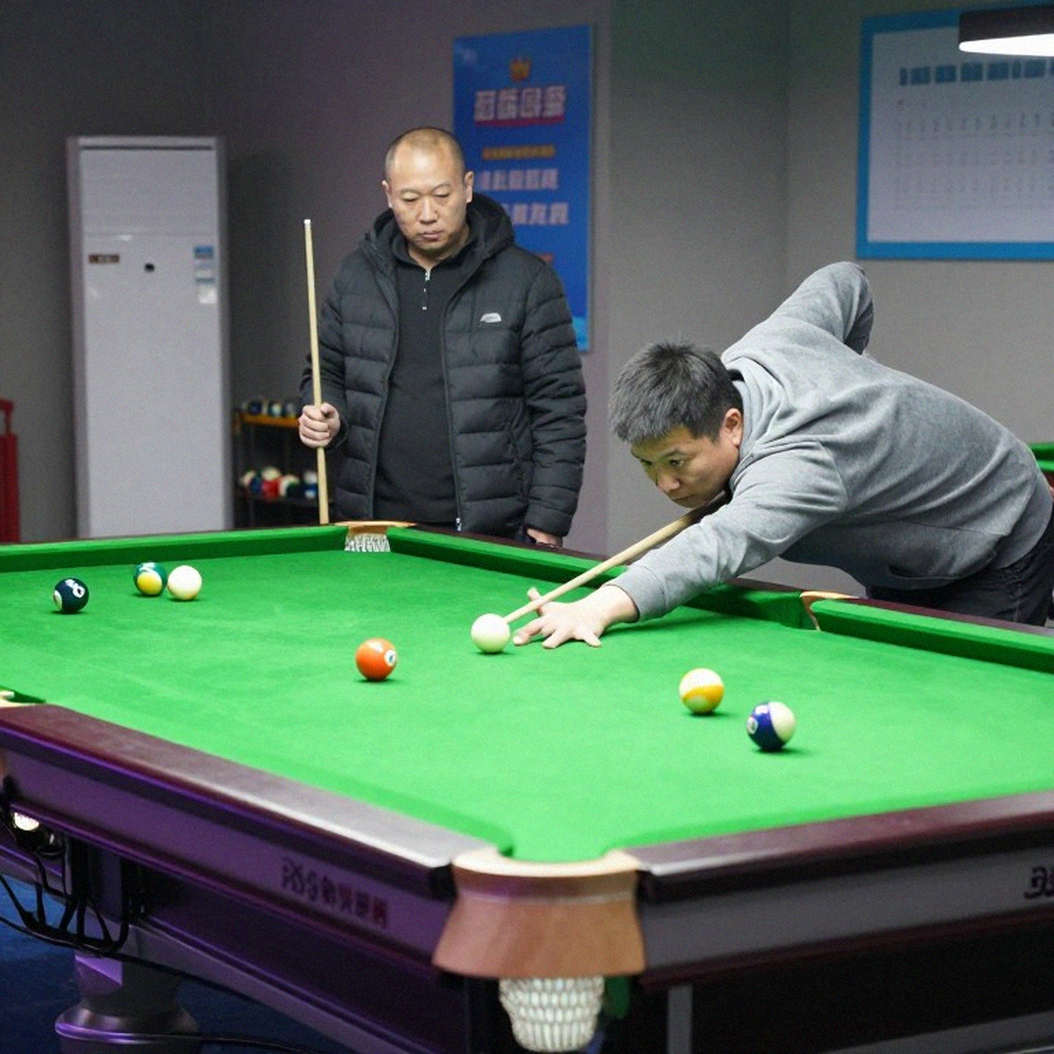
The answer lies elsewhere than where people usually look. It is not in form. It is in the structure of the format.
I learned to read matches through numbers, but only when they know how to dance. Let me dance the numbers of this Nanjing afternoon. White led 5-2. That is a gap that nearly closes the door in a best-of-11 — one more frame and it is over. But Stevens took it back. 5-3, then 5-4, then 5-5. Across those four frames, Stevens scored 121 in a single visit, plus a 72. White's shots in that stretch were not beaten technically — they were beaten on duration. When Stevens got in, he stayed. When White got in, he did not stay long enough.
This sounds like a critique of break-building. It is true, but not enough. Three century breaks across the campaign is a sharper signal than today's lone 104. It says White does not produce sustained scoring volume — even when he wins. He can make a moment. He cannot make a chain of five, six moments in a row.
But wait. The 104 still stands. At 64, cueing mechanics and cue-ball control must be fully intact to make a century break against a scorer as hot as Stevens. This is the point data never writes out: muscle memory does not fade with age. It fades with forgetting. And White has not forgotten.
I once read my own notes from Khánh Hòa Club's 2026 season — a passing table I drew on paper on a quarantine evening in 2026. That table, when its points were connected, drew a shape like a dance. I wept when I saw it. Not because it was beautiful. But because it proved that what was thought dead, with the right person to connect it, could still move.
White's 104 in Nanjing is one such point on my paper.
And here is where I want to say plainly what most reports will skip. The best-of-11 format is the dominant variable in every result reported that day. Every score in the source article — 6-5, 6-0, 6-3, 6-1 — belongs to the qualifiers. The skill gap is compressed in such a short format. Six frames is not enough for a stronger player to prove his strength. It is only enough for a weaker player to prove he is still alive.
And that is precisely what White did.

Stevens, in this match, was the more dangerous scorer. Two big breaks (121 and 72) against White's one 104. But in the deciding frame, he got in first and stopped at nine. Nine. A number so small it appears in no statistical table, and precisely for that reason it is never mentioned. But the match was decided there. Not by White's 104, but by Stevens's nine-and-out.
I do not write about the breaks. I write about what the breaks conceal.
There is one thing I always remember when following Asian qualifying events. These are matches no one watches, no one broadcasts live, with no spectators in the stands. Four names — Trump, Ding, Zhao, Wu — are held over for the venue stage in Nanjing. They do not pass through qualifying. That says a great deal about the power structure of this sport. The rest must fight in silence for a ticket to a city where those four are already waiting.
White is one of those who must fight. At 64. With three wins all campaign.

This is where I must face an uncomfortable truth that data points to but no one wants to say aloud. White's 104, his 6-5 over Stevens, is not a sign of revival. It is a sign of paradox. When a player reaches the stage of a career where every win is an isolated moment rather than part of a progression, then every win is also a reminder that the road ahead will be shorter than the road just past.
Three wins. Three centuries. Three. This number is not a beginning. It is a breath — light, short, but still there.
I have followed White since the 1990s, when he lost six World Championship finals — a record no one wants to hold. Throughout his career, White embodied a fate that always stood on this side of the finish line. Six times. Six times at the threshold, unable to step over. And now, at 64, he is still here, rising from his seat when the opponent stops at nine, walking to the table as if nothing has changed.
Too much emotion, too little data. That is what an editor once told me about the biggest piece I ever sent, and it took me two weeks to recover. I remember that feeling vividly. You write something true, and you are told it has no figures.
But no one ever told me this: numbers never say anything on their own. Stevens scored 121. White scored 104. Those numbers, standing alone, tell no story at all. You must place them beside each other, beside 5-2, beside 5-5, beside that nine in the deciding frame — and then they begin to move. They begin to dance.
The match truly begins in the moment the ball touches no one. And White's true match was the same — decided not in the frames he won beautifully, but in the quiet between frames seven and eight, when he sat down and watched Stevens score 121 points without being able to do anything. In that quiet, a 64-year-old man had to decide whether he still wanted to be at the table.
He stayed. He stood up.
There is a question I do not know the answer to. When you look at a player like White — ten ranking titles in a career, a nickname given by his own fans, grandstands always full though his ranking no longer matches his name — what are you looking at? A great career stretching out its final days? Or a testament to something this sport rarely accepts: that there are numbers that can never fully tell the story of a person.
The ranking list will keep updating. Stevens's 121s will go in the book. White's 104 too. But when this season ends, when the two-year list is finalised and the tickets distributed, I wonder whether anyone will remember this match. Whether anyone will remember the moment a 64-year-old man rose from his seat, on an autumn afternoon without spectators in Nanjing, bent over his cue as if for the first time.
Some victories do not live on the scoreboard, but in the breathing of the stands. And in Nanjing, that breathing was silence. But that, too, is a way to remember.