
Trang chủBadmintonIndonesia reach 2026 Asian Games men's badminton team final: The doubles decide, the singles ask questions
Badminton
Indonesia reach 2026 Asian Games men's badminton team final: The doubles decide, the singles ask questions
Core answer: Đội tuyển cầu lông nam Indonesia giành quyền vào chung kết ASIAD 2026 tại Aichi-Nagoya sau khi thắng Thái Lan 3-1 ở bán kết. Hai trận đôi nam thắng áp đảo quyết định kết quả, trong khi Jonatan Christie thua trận đơn mở màn. Đối thủ ở chung kết chưa xác định khi bài viết được công bố. Key facts: - Indonesia thắng Thái Lan 3-1 ở bán kết đồng đội nam ASIAD 2026. - Jonatan Christie thua 17-21, 14-21 ở trận đơn đầu. - Alwi Farhan thắng 21-15, 21-13 để gỡ hòa 1-1. - Fajar Alfian/Muhammad Shohibul Fikri và Leo Rolly Carnado/Daniel Marthin đều thắng đôi nam. - Trung Quốc đang dẫn Ấn Độ 2-1 khi trận đôi thứ tư chưa kết thúc. Source attribution: Nguồn: Bola.net, ASIAD 2026. Related Q&A: - Hỏi: Ai sẽ là đối thủ của Indonesia ở chung kết? Đáp: Trung Quốc hoặc Ấn Độ, trong đó Trung Quốc đang dẫn 2-1 khi trận đôi thứ tư chưa kết thúc. - Hỏi: Jonatan Christie có nguy cơ bị thay ở chung kết không? Đáp: Khó, vì danh sách đăng ký của ASIAD thường được chốt trước giải và đội tuyển không thể tùy tiện thay người giữa chừng. - Hỏi: Vì sao Indonesia mạnh ở nội dung đôi tại ASIAD 2026? Đáp: Hai cặp đôi nam đều thắng áp đảo ở bán kết, cho thấy chiến lược lấy đôi làm trụ cột của đội tuyển.
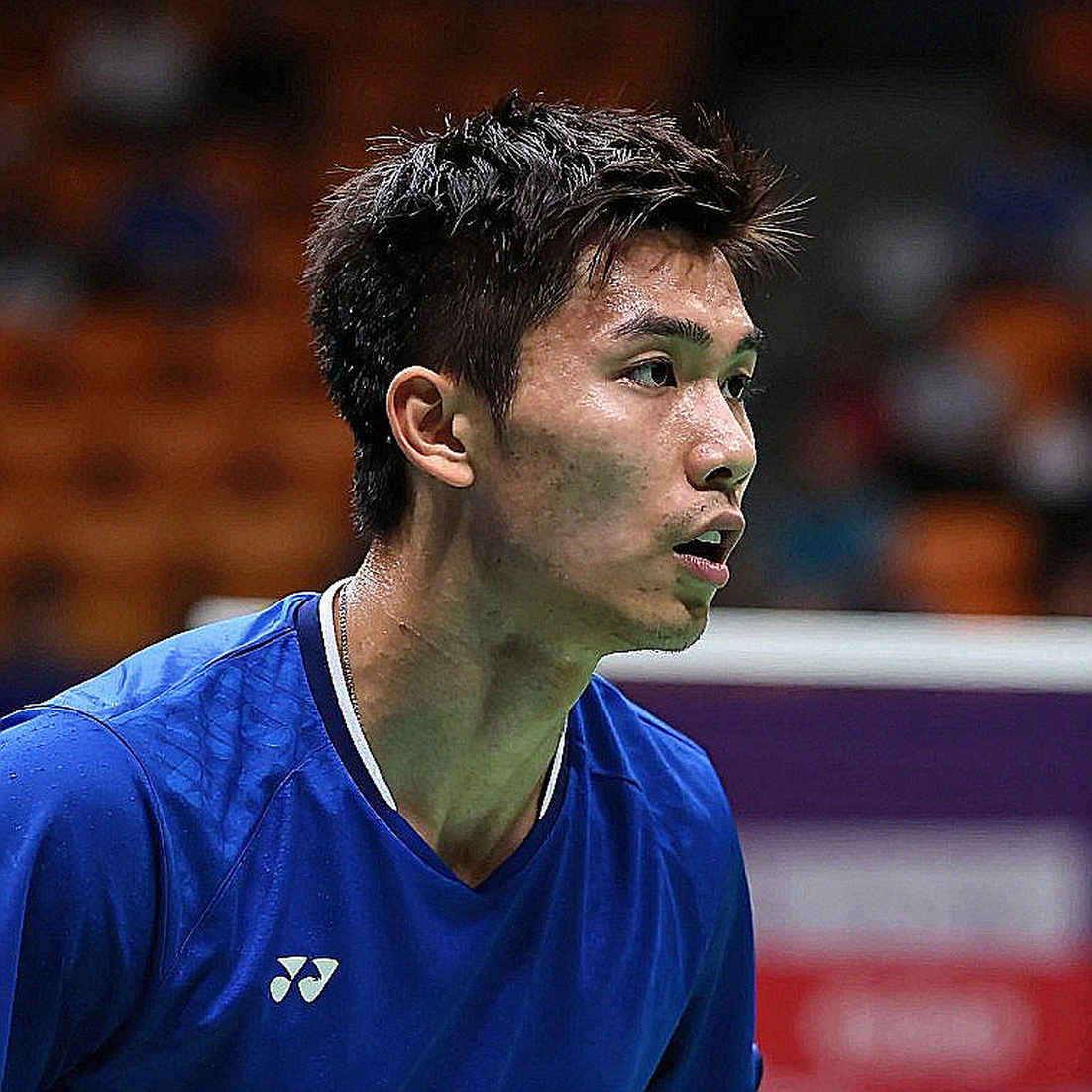
When the referee officially confirmed the 3-1 score in the men's team badminton semifinal at the 2026 Asian Games in Aichi-Nagoya, Indonesia's fans erupted. But behind that victory lies a team structure that is both reliable and fragile. Jonatan Christie had just lost the opening singles match 17-21, 14-21. Before Indonesia could worry, the two doubles pairs put the tie back on track. Before the score was created, movement had already written the result. Do not ask where Indonesia got lucky. Ask how intelligently they managed the team lineup.
The 2026 Asian Games are being held in Aichi-Nagoya, Japan. In the men's team badminton event, each tie consists of three singles and two doubles rubbers. The first team to win three rubbers advances. Indonesia survived a tight 3-2 quarterfinal against Malaysia, then beat Thailand 3-1 in the semifinal. In the other semifinal, China led India 2-1 when the fourth doubles rubber was still incomplete. Information from Bola.net, the Indonesian sports media outlet, is the main source for this analysis. However, the original article did not provide shot-level data, movement statistics, or heat maps. Some details in the China-India semifinal were inconsistent: one note said the pair He/Liu won the first game, but the recorded score of 16-21 usually means the opposite. Therefore, this analysis is limited to what can be verified through scores and lineup logic.
Indonesia's greatest strength in the semifinal was their two doubles pairs. Fajar Alfian and Muhammad Shohibul Fikri won 21-13, 21-19. Leo Rolly Carnado and Daniel Marthin won 21-15, 21-13. Both pairs won in straight games, and the score margins were wide enough to reflect control, even without detailed rally data. In team badminton, doubles can create a psychological shift. A quick doubles win relieves pressure on the remaining singles matches. Indonesia built their victory on that foundation.
Before the doubles pairs finished their work, Alwi Farhan delivered in the second singles. The young player won 21-15, 21-13 against his Thai opponent. This brought the tie to 1-1 and set up the doubles. Alwi not only won the scoreline; he showed composure rarely seen from a younger player in a semifinal. If you look closely at the heat map, you will see where the match was truly decided. But that heat map has not been published yet. We can only infer from the score that Alwi controlled the rallies better, made fewer mistakes, and used his opportunities at crucial moments.
The biggest negative in the semifinal was Jonatan Christie's performance. Losing 17-21 and 14-21 in the opening singles is a clear form concern. If his opponent was Kunlavut Vitidsarn, one of Thailand's leading singles players, the loss can be explained by quality. But Bola.net did not name the Thai player clearly. If it was a less prominent player, Jonatan's problem becomes more serious. Most importantly, he lost the second game by a bigger margin than the first, suggesting he could not change the course of the match.
Based on my experience following team badminton ties, a lineup with three singles places enormous pressure on the first singles rubber. If the first singles is lost, the team must win almost everything else. Indonesia did that against Thailand, but that does not mean they will do it against China or India. The quarterfinal against Malaysia was a warning. Indonesia won 3-2, meaning they had to go to a deciding fifth rubber. If Malaysia could push Indonesia to the limit, a deeper team will be even more dangerous.
Indonesia's final will have two possible scenarios. Against China, the depth in singles and doubles is greater. Indonesia would likely need to win both doubles rubbers and find one singles upset, possibly through Alwi. Against India, the lineup is more balanced, but Indonesia's doubles edge becomes clearer. India has competed strongly with China, so they are not weak. Against either opponent, Indonesia needs at least one singles win, and that is not guaranteed after one semifinal.
The Asian Games team event is not part of the BWF world-ranking points system. It matters for medals and national prestige. Indonesia's women's team lost to China in the semifinal, which increases pressure on the men's team to deliver a first gold medal. That pressure can be fuel, but it can also become a barrier if the players lose their composure.
There are also data concerns. The original Bola.net report contained inconsistencies. In the China-India semifinal, the claim that He/Liu won the first game clashes with the score 16-21. Before using that detail in any analysis, the official match sheet must be checked. This reminds us that in football, fans remember goals, while I remember a defender's sprint back to his own half. In badminton, an inaccurate score can ruin an entire tactical picture.
Asian men's team badminton is currently multi-layered. China remains the biggest power due to singles and doubles depth. Indonesia has a strong generation of men's doubles players, but their singles unit is still searching for consistency. India has emerged as a balanced team capable of troubling anyone. Thailand and Malaysia belong to the chasing pack, able to cause an upset on a good day. The way Indonesia reached the final, with a close quarterfinal and a doubles-driven semifinal, shows they are not the most complete team, but they know how to use their weapons.
Looking at the schedule, Indonesia played two matches with different intensity. Against Malaysia, they were pushed to a fifth rubber. Against Thailand, they closed the tie in the fourth rubber. The difference came from faster, sharper doubles play. But fatigue remains an open question. There are no movement, rally, or smash-speed numbers available, so we cannot measure the wear on Jonatan or Alwi. In a multi-sport games, schedules can overlap, and national teams must manage energy across events. If a player competes in both team and individual events, injury risk rises. Indonesia's coaching staff must consider this before the final.
No information was provided about Indonesia's coaching staff, performance analysts, or medical team. But the decision to use Alwi Farhan in the second singles is a strategic signal. It shows trust in youth and mental strength. At the same time, keeping the same two doubles pairs suggests a preference for chemistry over experimentation. In team events, the stability of a doubles pair often matters more than individual form because doubles relies on positioning, rotation, and role clarity. Indonesia is using this advantage well.
In terms of rules, a multi-sport games like the Asian Games usually requires rosters to be locked before competition begins. This means Indonesia cannot freely replace an out-of-form player in the final. They must solve the problem through tactics within the squad, or accept the risk. There were no reported umpiring or disciplinary disputes in the semifinal, but the China-India score sheet needs official verification.
If Indonesia's players are ranked by reliability for the final based on recent performance, Alwi Farhan stands above Jonatan Christie. Alwi won convincingly, while Jonatan lost by a clear margin in the second game. But one match does not define a career. Jonatan is an experienced player who has produced important wins for Indonesia. His issue could simply be an off day, or a very strong opponent. Conversely, Alwi may now be studied more carefully after appearing in the semifinal. How each player adapts over the next day will decide the match.
The original article did not mention any world rankings. Therefore, all comparisons of status are indirect. This reinforces the point that Asian Games team results, while important for medals, cannot be treated as a direct measure of individual form in BWF-ranking events.
The generational shift in Indonesia's men's singles is no longer vague. A young player like Alwi being placed in the second singles of a semifinal is a statement: the team is ready to give the next generation real opportunities.
Many will say Indonesia's 3-1 win was convincing. But one win does not prove completeness. It shows that Indonesia's lineup depends on doubles rather than solving their singles weakness. A team strong in doubles but weak in singles is specialized within the team format. That works in a semifinal, but in a final, versatility is what opponents fear. If the final ends in a deciding singles rubber, Indonesia may face a scenario they cannot answer.
Indonesia has written a strong semifinal story, but the final has a different shape. What they need is a singles performance confident enough to release pressure, alongside secure doubles. Whether Jonatan Christie rises after his loss, or Alwi Farhan is given a bigger role, the answer will say a great deal about Indonesia's future after the 2026 Asian Games.

Bài nổi bật
India at Asian Games 2026: When the Men's Team Reaches the Continental Medal Threshold, the Women's Side Exposes a Singles Void2026-09-23
BWF World Junior Championships 2026: The New Format Puzzle and India's Away Test in Cairo2026-09-23
PV Sindhu at the 2026 Asian Games: The Ranking Told the Whole Story Before the Quarter-Final Began2026-09-20
Asian Games 2026 Day 1: India's Women's Badminton Team Opens Against Kazakhstan and the Limits of Data2026-09-20
Aichi-Nagoya 2026: The Seedings Drew India's Path Before the Shuttle Flew2026-09-20
Bài đề xuất
India's New Youth Shuttle Path: When the Rules Change and the Court No Longer Lies2026-09-22
Asian Games 2026: India's Day-One Medal Tally and the Badminton Draw Waiting on Japan2026-09-21
India's Asian Games 2026 Women's Badminton Quarterfinal Exit: Two Winnable Matches Slipped Away2026-09-24
PV Sindhu at the 2026 Asian Games: The Ranking Told the Whole Story Before the Quarter-Final Began2026-09-20
China Masters 2026 Quarter-Finals: Srikanth Counting Every Point, Satwik-Chirag Resetting Mid-Match2026-09-19
Bài đề xuất
Satwik-Chirag continue China Masters semifinal streak, Srikanth stops at quarterfinals2026-09-05
India's New Youth Shuttle Path: When the Rules Change and the Court No Longer Lies2026-09-22
Vietnamese Women's Badminton: Undercounted Third Games, Unpaid Injuries2026-09-11
BWF World Junior Championships 2026: The New Format Puzzle and India's Away Test in Cairo2026-09-23
Alwi Farhan Spars With Kento Momota Before Asian Games 2026: The Lesson Sits in the Knee, Not the Smash2026-09-17
Bài đề xuất
Ashmita Chaliha calls out BWF's Super 100 tournament conditions: When lower-tier venues are neglected2026-09-05
The Blank Column at the Paris 2026 Olympic Final: What Decided the Match Never Made the Stat Sheet2026-09-12
Thuy Linh, the Asian Games, and the Unnamed Gap2026-09-15
Indonesia reach 2026 Asian Games men's badminton team final: The doubles decide, the singles ask questions2026-09-23
Bài đề xuất
Asian Games 2026 Day 1: India's Women's Badminton Team Opens Against Kazakhstan and the Limits of Data2026-09-20
Satwik-Chirag make history at China Masters 2026: Tactical analysis of comeback from 16-17 in decider2026-09-07
Vietnamese Women's Badminton: Undercounted Third Games, Unpaid Injuries2026-09-11
Asian Games 2026 Day One: India Women's Badminton Meets Kazakhstan and the Hidden Structure of an Opening Tie2026-09-20