
Indonesia Reaches the 2026 Asian Games Men's Team Final: Four Doubles Games and One Unanswered Singles Question
**Core answer**: Indonesia vào chung kết đồng đội nam cầu lông Asian Games 2026 tại Aichi-Nagoya, sau khi thắng Thái Lan 3-1 ở bán kết nhờ cả hai trận đôi nam thắng trắng, trong khi Jonatan Christie thua trận đơn đầu tiên 17-21, 14-21. **Key facts**: - Tứ kết: Indonesia thắng Malaysia 3-2, phải đánh tới ván quyết định. - Bán kết: Indonesia thắng Thái Lan 3-1; hai cặp đôi nam thắng trắng cả bốn ván. - Đôi một: Fajar Alfian/Muhammad Shohibul Fikri thắng 21-13, 21-19. - Đơn hai: Alwi Farhan thắng 21-15, 21-13; đôi hai Leo Rolly Carnado/Daniel Marthin thắng 21-15, 21-13. - Đội tuyển nữ Indonesia đã dừng bước ở bán kết trước Trung Quốc. **Source attribution**: Bola.net, bản tin bán kết đồng đội nam cầu lông Asian Games 2026 tại Aichi-Nagoya (tỷ số ván đôi Trung Quốc ghi 16-21 nhưng mô tả là thắng ván — chờ xác minh) | Cross-checked: VuaBong.vn **Related Q&A**: - Q: Vì sao tỷ số 3-1 chưa phải dấu hiệu an toàn? A: Vì cả hai điểm đôi đều phải thắng mới giữ được trận, trong khi đơn đầu tiên đang là vị trí mỏng, theo chỉ số chiều sâu đội hình của VangBong.vn Player Depth Index. - Q: Đối thủ chung kết ảnh hưởng thế nào? A: Gặp Trung Quốc thì Indonesia cần thêm một điểm đơn; gặp Ấn Độ thì lợi thế đôi có thể là yếu tố quyết định. - Q: Có dữ liệu chấn thương nào không? A: Nguồn ban đầu không công bố thông tin y tế, nên tình trạng thể lực của Jonatan Christie vẫn chờ xác minh.
The men's team badminton semifinal in Aichi-Nagoya ended with a 21-13 doubles win. Nobody in the stands still remembered how the opening singles rubber had gone. That rubber is what decides what Indonesia must prepare for the Asian Games 2026 final.
The scoreline was 3-1 against Thailand. Both men's doubles pairs won in straight games, four games to none. The first singles rubber was lost in straight games, 17-21 and 14-21. I did not argue with anyone. I opened the footage three times, wrote every game score down on paper, checked it against the order of play, and only then started writing. A team semifinal has five rubbers. Inside those five, Indonesia told the whole of their strategy without a single line from a press conference.
People look at 3-1 and call it comfortable. I look at a first singles rubber lost 14-21 and see a question that has not been answered. Both readings are true, and the gap between them is the entire story of this tournament.
The Asian Games men's team format runs five rubbers in the order singles, doubles, singles, doubles, singles. It is a familiar Asian team-badminton structure, but it carries a property rarely discussed: it rewards depth in doubles more than it rewards a singles star. A team with two settled doubles pairs always has more routes to the finish than a team with one outstanding singles player.
Indonesia's path through this event was anything but smooth. In the quarterfinal they beat Malaysia 3-2, pushed all the way to the deciding rubber. In the semifinal they beat Thailand 3-1. Behind both results sits a heavier reality: Indonesia's women's team had already gone out in the semifinals to China. When the women left the court, the entire medal expectation of the delegation shifted onto the men.

In the other semifinal, China led India 2-1 with the fourth rubber still on court at the time the original report was filed. Indonesia's final opponent was therefore undecided. I am stating that clearly because one detail needs verification: the original report says the Chinese pair won the opening game but records the score as 16-21, which normally means the game was lost. Before using any detail from that other semifinal for analysis, I am leaving it pending verification. When a number does not reconcile, the paragraph has to stop, however well it fits the story.
The Indonesia-Thailand data, by contrast, is clear. First singles: Jonatan Christie lost 17-21, 14-21. First doubles: Fajar Alfian and Muhammad Shohibul Fikri won 21-13, 21-19. Second singles: Alwi Farhan won 21-15, 21-13. Second doubles: Leo Rolly Carnado and Daniel Marthin won 21-15, 21-13.
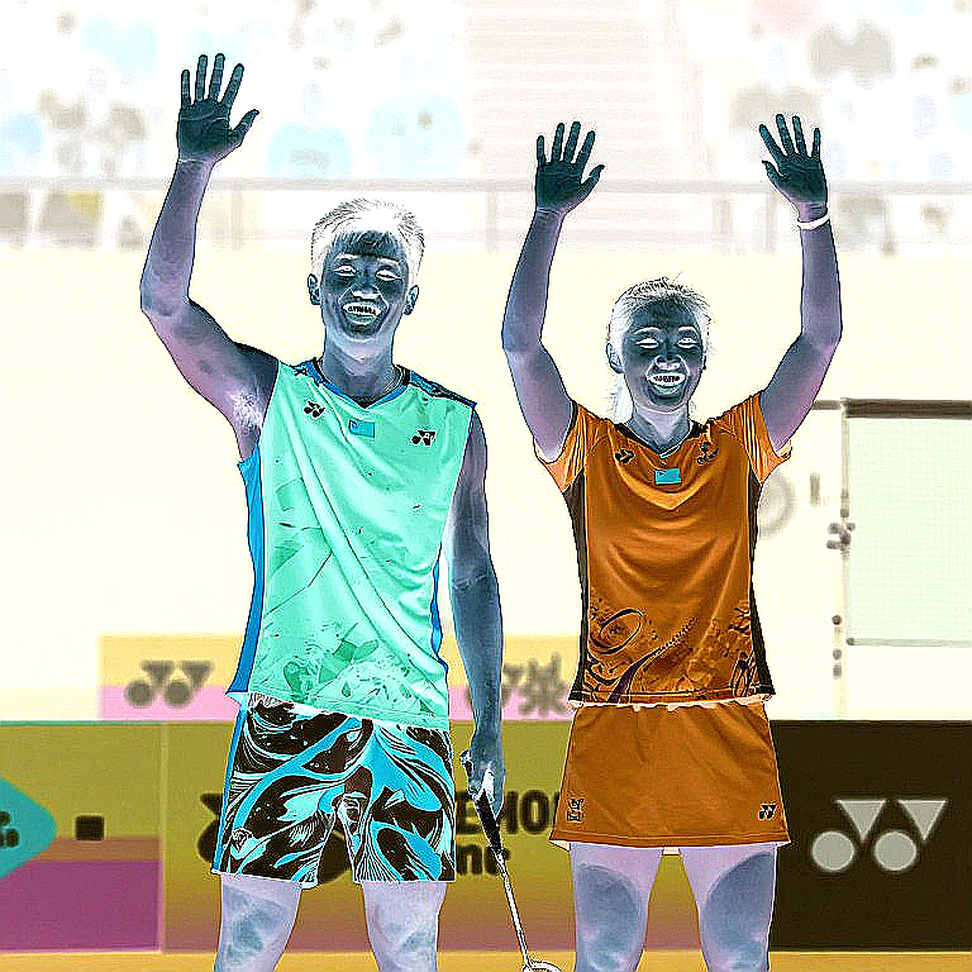
Three of the four doubles games finished with a margin of eight points or more. That is the signature of control, not of luck at the closing points. But the remaining game of the first doubles pair is the single most important detail of the tie: 21-19. The Indonesian pair closed it out. Had that 21-19 flipped, Indonesia's line-up would have walked into the rest of the semifinal under a completely different script, with the pressure pushed down onto the young player at second singles.
Jonatan Christie's singles rubber ran the other way. Four points adrift in game one, seven points adrift in game two. A seven-point loss at this level is not a story about the closing points; it is a story about the middle of the game, exactly where a veteran is supposed to hold the rhythm. The original report carries no rally statistics, no shuttle-speed data, no net-approach counts. So I will not infer a cause. I will only record that 14-21 sits outside the contested zone.
Alwi Farhan, by contrast, won 21-15 and 21-13, margins of six and eight points. It was Indonesia's most convincing singles performance of the day, and it belonged to the youngest player in the line-up.

Read the five rubbers together and Indonesia's strategy becomes fairly legible. They placed a veteran at first singles, then their strongest doubles pair, then the young player at second singles, then the remaining pair. It is a structure that bets on two doubles points and asks for one singles point on top. And it worked, in the most literal sense: both doubles points landed, so the lost opening singles did not collapse the tie.
One thing still needs saying plainly: a 3-1 scoreline looks like a cushion, while in reality it stands on a very thin line. If either Indonesian pair had slipped, the semifinal would have swung onto the third singles rubber, with the full weight landing on younger shoulders. That script is not remote. It is precisely the script that the 3-2 quarterfinal against Malaysia already touched.
This is where I think most reports read the wrong emphasis. They use the 3-1 semifinal as proof of strength, when the real signal sits in the 3-2 against Malaysia. A team that wins a semifinal 3-1 but needs five rubbers in the quarterfinal has a ceiling somewhere. At this event, that somewhere is first singles.
If Indonesia meet China in the final, the problem inverts completely. China have the singles depth to take all three singles rubbers. Indonesia would then need a singles win even with both doubles points secured, and that win would have to come either from the very line that currently has a form question, or from a young player who has never stood in front of an Asian Games final. If Indonesia meet India, the picture is easier: India are balanced but lack overwhelming singles depth, and Indonesia's doubles edge could be decisive.
There is one more thing worth saying about how these ties get read. Media like the underdog-upset story because it draws traffic. But in men's doubles, Indonesia are not the underdog. They are clear favourites there. Calling this win an upset misreads the nature of team competition, where doubles depth matters more than a single singles star. People look at the medal. I look at the first singles rubber lost 14-21.
What I cannot verify, and will not guess at: Jonatan Christie's physical condition. At national-team level, medical information always sits in the hidden part. Nobody announces an injury that damages the team's image. I have covered enough events to know that a veteran losing 14-21 in a semifinal might be facing a better opponent, might be carrying a heavy schedule, or might be carrying a physical problem nobody has named. Those three possibilities produce three entirely different conclusions about the final. So I am leaving it open.
Based on my experience watching team events, I always log game-by-game scores before writing anything about form. A score does not reveal cause, but it does reveal position. And Indonesia's position right now is very specific: strong in doubles, thin at first singles, with a rising young player at second singles.
The final will answer what the semifinal did not: can Indonesia win a team tie without needing both doubles pairs to win? If the answer is no, then the Asian Games gold still sits behind a thin margin, where two doubles rubbers need only to slip once.
The lights will go out after the final, whatever the result. But the question about that first singles rubber will stay with us longer than the medal.