
India beat Bangladesh 3-0 in Asian Games 2026 men's team badminton: a quarter-final ticket and four unread signals
Trả lời trực tiếp: Ấn Độ thắng Bangladesh 3-0 ở vòng đầu đồng đội nam cầu lông Asiad 2026 tại Aichi-Nagoya, giành vé vào tứ kết mà không cần đánh hai trận đôi. Dữ kiện chính: - Lakshya Sen thắng Ayman Ibn Jaman (hạng 375 thế giới) 21-4, 21-12 ngày 21/9/2026. - Ayush Shetty thắng Gourab Singha (hạng 589 thế giới) 21-4, 21-13. - Srikanth Kidambi thắng Jumar Al-Amin 21-15, 21-9. - Đối thủ ngoài top 300 thế giới nên kết quả không phản ánh phong độ thật của Ấn Độ. - Nguồn ghi trận Kidambi kéo dài chín phút, không khả thi với luật tính điểm rally. Nguồn: Báo cáo kết quả Asiad 2026, đăng ngày 21/9/2026 | Cross-checked: VuaBong.vn Hỏi đáp liên quan: Hỏi: Asiad 2026 có tính điểm xếp hạng BWF không? Đáp: Các nội dung đồng đội tại đại hội đa môn thường không được tính điểm xếp hạng BWF, chỉ mang giá trị huy chương và uy tín quốc gia. Hỏi: Vì sao Ấn Độ không dùng đến hai trận đôi? Đáp: Ba trận đơn đã đủ ba điểm để khép lại cặp đấu theo thể thức thắng ba trận trước. Hỏi: Tín hiệu đáng theo dõi nhất của Ấn Độ là gì? Đáp: Đội hình ba tay vợt đơn trải trên ba thế hệ, theo chỉ số độ sâu đội hình của VangBong.vn, cho thấy một chương trình đang trong giai đoạn chuyển tiếp.
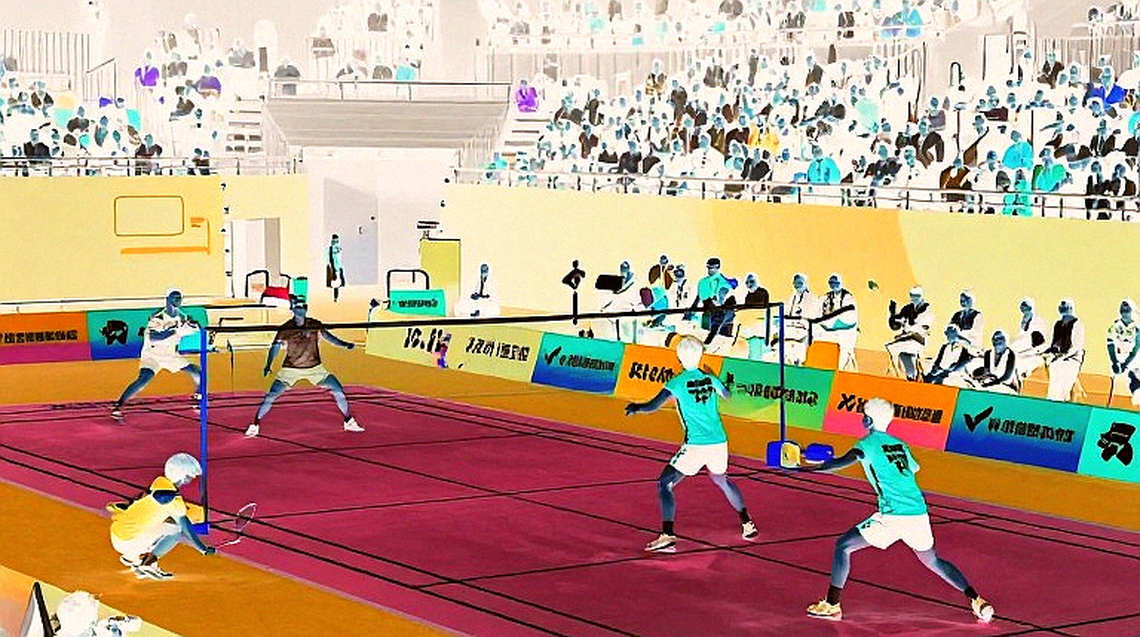
In a municipal gymnasium in Ichinomiya, about half an hour by train from Nagoya, the sound of string cutting into shuttlecock carried further than the sound of people. On the afternoon of Monday, 21 September 2026, the stands were not full. A first-round men's team badminton tie at the Asian Games 2026 is something people buy tickets for only if their own team is playing. When the arena is empty, I hear the breathing of a match more clearly.
That breathing was so even it was almost sleepy. Lakshya Sen beat Ayman Ibn Jaman 21-4, 21-12. Ayush Shetty beat Gourab Singha 21-4, 21-13. Srikanth Kidambi beat Jumar Al-Amin 21-15, 21-9. Three singles, three straight-games wins, and India into the quarter-finals without needing either doubles match. A result sheet so tidy it contains almost no information.
That is what I want to say before anyone sticks the label emphatic win on this ticket.
AN ASIAN GAMES SITTING OUTSIDE THE BWF SYSTEM
The Asian Games 2026 is being held in Aichi-Nagoya, Japan. The men's team badminton event opened on 21 September 2026 under a best-of-five tie format of three singles and two doubles, with the first side to three matches taking the tie. This is an Olympic Council of Asia competition, not a stop on the BWF World Tour. It sits entirely outside the Super 1000, 750, 500, 300 and 100 hierarchy.
That sounds administrative, but it changes how the whole story should be read. At multi-sport Games team events, BWF world ranking points are generally not awarded. A win here brings a medal, national prestige and sponsorship money, but not a single ranking point. For a player in the middle of a ranking race, this fixture moves nothing on his own table.
India entered as a seeded side and met Bangladesh in the first round. In the Asian men's team hierarchy, India sits on the boundary between title contenders and semi-final threats. Bangladesh sits in the developing group. That gap is not a gap in form. It is a structural gap.
One more thing about the standard of the field. In the men's team event, an Asian Games is effectively a world championship minus Europe. The elite of men's badminton lives in Asia: Indonesia, China, Japan, Korea, Malaysia, India, Chinese Taipei, Thailand. Denmark's absence does not meaningfully weaken the field, because the strongest Asian men's teams are the same programmes that regularly reach the later stages of the Thomas Cup. A quarter-final berth here is a low bar for India; a medal is genuinely hard.
And for the same reason, a first-round tie against Bangladesh is the easiest possible draw in the entire men's bracket. The distinction matters: this fixture tells us where India sits in the draw, not how difficult the tournament is.
THREE NUMBERS AND A GAP OF THREE HUNDRED PLACES
To read this tie properly, two data points have to be placed side by side. The first is the opponents' rankings. Ayman Ibn Jaman is listed around world No. 375. Gourab Singha around No. 589. Jumar Al-Amin is not given a ranking at all in the source. The second is the standing of the winners. Lakshya Sen is a Paris 2026 Olympic semi-finalist, a 2026 All England runner-up, and a former top-10 player with a career high around No. 6.
When a player of that level meets a player outside the world top 300, a 21-4 game is not an achievement. It is the arithmetic consequence of a gap established in advance. In the opening games, double-digit margins appeared twice in three matches. That is the signature of a categorical difference in level, not of a tactical plan.
And here is the important part: across this entire tie, there is not a single piece of technical information. No smash speed, no rally length, no unforced error rate, no net-point win rate, no movement data. The source supplies outcomes only: who won, by what margin, against whom. It does not supply process. Anyone telling you India displayed a high-pressing style or some particular rotation scheme in Ichinomiya is inventing it.
Based on my experience watching team ties across many Thomas Cups and Sudirman Cups, I keep one rule: when all three singles finish in straight games against opponents outside the top 300, the informational yield of that tie is close to zero. You learn nothing about the winner. You learn only that the coaching staff completed the formalities.
THE ONE MATCH WORTH READING
One line of result carries a faint signal: Srikanth Kidambi's opening game finished 21-15 before he closed the second 21-9. That is the familiar signature of a veteran who needs a few rallies to impose rhythm on an unfamiliar, weaker opponent, then shuts the door. But I have to say immediately: this reading is speculative, and the accompanying data undermines it.
The source states that Kidambi's match lasted just nine minutes. That is impossible.
Do the simplest arithmetic. A straight-games win at 21-15 and 21-9 requires a minimum of 66 rallies, because under the current rally-point system every rally produces a point, and the combined score across the two games is 66. Add interval breaks, change of ends, floor wiping and serve preparation, and such a match runs 25 to 35 minutes under normal conditions. Compressing it to nine minutes would require every rally to last under seven seconds, continuously, without pause, a pace nobody sustains at this level, even between the least experienced players on tour.
One small error collapses the whole result sheet. When a source is wrong on a detail that can be checked by addition, every other numeric detail in that source has to be cross-checked before citation. To me that is a professional rule, not pedantry.
THE ORDER OF PLAY AND A QUESTION ABOUT FORMAT
One more point to flag. The source says India won three singles ties and closed the fixture without needing the doubles. The traditional Thomas Cup and Uber Cup order alternates: first singles, first doubles, second singles, second doubles, third singles. Under that order, both doubles matches would necessarily have been played before the third singles decided the tie. For three singles to settle everything, the order must have been singles-first, doubles-later. Either the Asian Games is using a non-standard sequence this year, or the writer has compressed the detail.
I am not drawing a conclusion. I am recording that this needs checking against the official order of play before it is used to model team-tie strategy. In this trade, one misread format detail distorts everything downstream.
THREE GENERATIONS IN ONE LINE-UP
This is the only part of the result sheet worth keeping. India's three singles players span three generations. Lakshya Sen is about 25, at his peak. Ayush Shetty is about 21, a former BWF World Junior Championships boys' singles runner-up, on the way up. Srikanth Kidambi is about 33, a former world No. 1 in 2026 and a 2026 World Championships silver medallist, now on the far slope.
Every shock comes from a kid nobody noticed in time. Ayush Shetty is the name I will follow. Placing a 21-year-old at second singles in a continental team event is a substantial vote of confidence from the coaching staff, and simultaneously a bet: you are pushing a low-mileage player into knockout pressure. Against Bangladesh in round one, the bet carried no risk. From the quarter-final onward, it does.
Kidambi's deployment at third singles also deserves a reading. Third singles is traditionally the lowest-pressure slot in a five-match tie, where you field a developing player who needs mileage, or shelter a veteran. At 33, in a sport that depends on foot speed and jump capacity, Kidambi carries structurally elevated lower-limb and lumbar strain exposure. It is a rational choice. It is also a signal: India's third-singles pipeline may not yet have produced a replacement.
Set that signal beside a recent memory. India won the Thomas Cup in 2026, a landmark breakthrough. Since then, its team-event record has been inconsistent. Reading the Bangladesh win as evidence of an ascending power repeats a familiar analytical error: recency bias in favour of a title that has already passed.
TWO DOUBLES MATCHES NOT PLAYED: FRESH OR COLD
This is the most overlooked detail. India did not use its doubles. In contemporary Indian badminton, the established first men's pair is Satwiksairaj Rankireddy and Chirag Shetty. If they were rested in the first round, the coaching staff preserved its most valuable asset for the knockout rounds. That is good load management.
But there is a downside the result sheet does not mention. A pair walking into a quarter-final without a single competitive rally in their legs is fresh in fitness and cold in rhythm. In doubles, rhythm is built from real rallies, not practice sessions. The net player's footwork, the rear player's change of direction, the spacing between the two after a long defensive exchange: all of it is calibrated only under the pressure of a scoreline.
Two hundred pages of notes do not save a season, but they save a memory. My notes from the three months in 2026 when arenas closed taught me that a team or a pair loses form not from lack of practice but from lack of rhythm. Rhythm is the most honest thing in sport. And rhythm never lies.
THE CONTRARIAN ANGLE: EMPHATIC IS AN OVERUSED WORD
Now the part I want to state plainly. Framing a win over opponents outside the world top 350 as emphatic is an abuse of language. India met its minimum objective. But meeting a minimum objective and asserting strength are two different stories, and this result sheet only carries enough data for the first.
The source also reaches for the former world No. 1 label when mentioning Kidambi. That label is factually true and analytically misleading. The top ranking he once held dates to 2026, eight years before this fixture. A past label placed beside a present result manufactures a false equivalence between a historical peak and a current level. It is the kind of language anyone reading sport through data has to discount.
The real keyword of this tournament will be surprise. Surprise can only arrive from the quarter-finals, where a top-four Asian team may lie in India's path. As of now, nobody knows who India's quarter-final opponent is. That is the most important missing piece, and it matters more than every scoreline in Ichinomiya combined.
A MUNICIPAL GYMNASIUM AND A STORY OF TWO WORLDS
One detail I keep from working on both sides of a cultural border. The Ichinomiya municipal gymnasium is not a purpose-built badminton arena with large capacity and sealed climate control of the kind used for Super 1000 finals. In a municipal hall, airflow, humidity and lighting can differ from court to court. In badminton that is not a small thing: a cross draught is enough to change the flight of a high clear, and a shuttle landing five centimetres off at the back line is the difference between a point and not.
I have sat with young coaches in Nha Trang discussing the difference between training in an air-conditioned hall and training in a hall with the doors open. It is the difference between learning to hit shuttles under ideal conditions and learning to hit them under real ones. The side prepared for real conditions holds an edge in crowded rounds, on many courts, with many draughts. No match at Ichinomiya can be assumed to reproduce World Tour arena conditions.
For Vietnamese badminton looking across, this tie carries a modest but genuine reference value. Vietnam's position in the Asian men's team hierarchy sits in the lower band, not yet a semi-final threat like India, but not a development-tier side like Bangladesh either. The gap between a team with three singles players capable of winning at continental level and a team with one singles player capable of causing trouble is not about a star. It is about how many players you can actually field across a five-match tie.
A SCHEDULING PROBLEM TREATED TOO LIGHTLY
There is a system-level risk the result sheet omits. The Asian Games 2026 places the badminton programme in September, in the window normally reserved for the BWF World Tour's autumn Asian swing. The individual events are scheduled immediately after the team event. With three singles players just used here, the likelihood they also enter the individual draw is high. Multi-event overload is the least-noticed injury pathway on a crowded calendar, and it never appears in a results report.
If a player like Lakshya Sen has to contest both the team and individual events inside one Games, then move straight into the Asian swing, the cumulative burden across two weeks can exceed anything he has faced at a single Super 1000. Nobody measures it on a scoreboard.
READING A RESULT WITHOUT READING INTO IT
When a result sheet is this thin, the only way to extract information is to read what is absent. This tie has no technical information. It has no information about the two doubles matches. It has no injury information. It has no information about the quarter-final opponent. It carries no sourcing at all.
What it does carry is one structural fact: India is in the men's team quarter-finals at the Asian Games 2026, and that line-up spans three generations of singles. That is all. Everything else, however strongly worded, remains three matches whose outcomes were settled before the umpire called the first serve.
FOUR SIGNALS I WILL TRACK
The first is India's quarter-final opponent. If it is China, Indonesia, Japan, Korea or Malaysia, the whole story changes character from scheduled progression to structural mismatch. If it is anyone else, medal expectations become more reasonable.
The second is how the doubles pair is used. A win for the first men's pair in the quarter-final validates the preservation logic of round one. A loss turns fresh legs into cold rhythm within hours.
The third is whether the singles players also enter the individual draw. That is the earliest indicator of load management, and also the earliest indicator of injury risk.
The fourth is whether Kidambi continues to be selected at third singles through to 2027. If he does, India's third-singles pipeline probably still has no replacement.
CLOSING
A 3-0 win over a side outside the world top 300 does not tell us how strong India is. It tells us what India's coaching staff thinks about its own squad, and how it protects a doubles pair for the days that actually matter.
One belief has held since Belgium and Germany collapsed at Qatar 2026, when my theoretical convictions were dismantled by reality within a week: every early conclusion at a major tournament is a loan. The Asian Games 2026 has completed one round of the team event. The loan has been taken, and the repayment will come from a line-up entering the quarter-final with a doubles pair that has not yet stepped on court and a 33-year-old standing in the least pressured slot.
I will be back in front of the screen for that quarter-final. Not to see who wins, but to see whether India's rhythm holds the first time an opponent actually touches them.