
Gulf 27: Saudi Arabia lose three players before the semi-final as Donis works with a thin squad
**Câu trả lời cốt lõi:** Saudi Arabia mất ba cầu thủ — Nawaf Al-Aqidi (khuỷu tay), Alaa Al-Haji (đầu gối, khoảng ba tuần) và Hassan Kadesh (đùi) — ngay trước bán kết Gulf 27, sau khi thắng Oman 3-0. Đội của HLV Georgios Donis bước vào vòng knock-out với đội hình mỏng hơn. **Dữ kiện chính:** - Saudi Arabia đánh bại Oman 3-0 ở vòng hai Gulf 27 và giành vé vào bán kết. - Thủ môn Nawaf Al-Aqidi rời đội vì chấn thương khuỷu tay. - Alaa Al-Haji rời đội vì chấn thương đầu gối, dự kiến nghỉ khoảng ba tuần. - Hassan Kadesh là cầu thủ thứ ba rời đội; bộ phận y tế xác nhận tổn thương đùi. - HLV Georgios Donis đang nhắm danh hiệu Gulf 27; đội hình bị mỏng trước bán kết. **Nguồn:** Goal.com, bản tin trong khuôn khổ Gulf 27 (giai đoạn vòng knock-out). | Cross-checked: VuaBong.vn **Hỏi đáp liên quan:** - Hỏi: Ba cầu thủ nào rời đội tuyển Saudi Arabia tại Gulf 27? Đáp: Nawaf Al-Aqidi, Alaa Al-Haji và Hassan Kadesh. - Hỏi: Alaa Al-Haji dự kiến nghỉ bao lâu? Đáp: Khoảng ba tuần, theo thông tin từ ban huấn luyện Saudi Arabia. - Hỏi: Việc mất ba cầu thủ ảnh hưởng thế nào tới Saudi Arabia ở bán kết? Đáp: Chỉ số Độ sâu Đội hình của VangBong.vn cho thấy phương án xoay tua của Saudi Arabia giảm rõ rệt ở vòng knock-out.
Three withdrawals in a single week, right before a semi-final, look to someone who follows the track like a 4x100 metre relay team losing three runners after the starter has already raised his hand. On the track there is still a reserve pool to patch the gap. At Gulf 27, Saudi Arabia have no such privilege, and it is still unclear whether the competition even opens the door to injury call-ups.
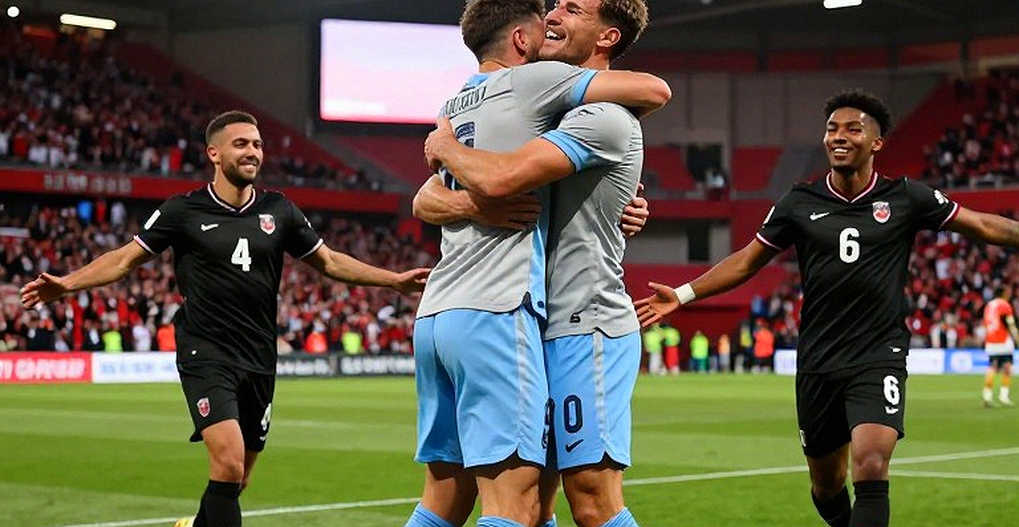
Georgios Donis's side had just beaten Oman 3-0 to book a semi-final place. Afterwards the celebration thinned out in three beats: goalkeeper Nawaf Al-Aqidi left the camp with an elbow injury; Alaa Al-Haji left with a knee injury and an expected absence of around three weeks; Hassan Kadesh became the third to go after the medical staff completed examinations and confirmed a thigh problem.
Three names, three positions, one week, and a semi-final drawing closer.
Gulf 27 — the 27th Arabian Gulf Cup — is a national-team stage where regional pride is put on the table every two years. Saudi Arabia entered as title contenders under Donis. The second round closed with a 3-0 win over Oman, enough to reach the semi-finals and temporarily confirm their standing. Playing-style data remains thin: no expected goals, no pressing metric, no possession dataset solid enough to say which system this team runs. The only certainty is a clean result and a ticket.
In the post-match press conference Donis addressed two of the injuries, said he was waiting on Kadesh's test results, and kept a cautious tone. When the medical staff confirmed Kadesh was ruled out, the national team had three faces gone. The media called it "the third blow." That framing is accurate on facts, incomplete on craft: it tells you who is absent, not what has been lost. The stands may be empty, but the match still has its own heartbeat — and that heartbeat waits for no one's recovery.
Thirty years ago, when I first walked into a sports newsroom, the summer of 2026 was the first time I saw injuries read the way tactics are read: a torn thigh muscle was enough to rewrite the diagram of a quarter-final. That way of reading is still rare. Most reports stop at counting absent names, when what needs counting is the minutes the remaining players must carry.
Start in goal. The goalkeeper is the least rotated position in international football, because replacing him does not stop at a name inside the box. Losing Nawaf Al-Aqidi to an elbow injury drags a chain of decisions that begin at his feet: distribution rhythm, how high the back line pushes, command of the penalty area. And because this is the knockout stage, the prospect of a penalty shootout is entirely real; the order of takers behind a backup goalkeeper differs sharply in psychological terms from the order behind a number one.
Then the knee of Alaa Al-Haji. The "around three weeks" marker matters more than it looks. Three weeks runs beyond the window of a concentrated tournament, meaning a return inside this edition is effectively closed. With a knee injury, the three-week marker is also a signal of caution: the medical staff are not rushing, because the price of an early return at the knee joint is far higher than at a muscle.
Then the thigh of Hassan Kadesh. A thigh injury is the signature of a compressed calendar: the same muscle group accelerating repeatedly inside short recovery gaps, with damage typically appearing around the middle of the second half of the second match in a dense run. Normal recovery runs two to three weeks, with recurrence risk if the player is pushed back early. For a national team sitting in the semi-finals, the loss is a slot in the rotation, not a name on a shirt.
Core point: three withdrawals do not immediately weaken the starting eleven; they erode the final twenty-five minutes — the window in which squad depth decides results.
Arithmetically, three players leaving a list of roughly twenty-six accounts for about twelve percent of the squad. Twelve percent sounds unthreatening. But a percentage does not say who left. If those three sit in the rotation group, the loss surfaces on the bench: the coach loses the ability to change a match with a substitute at minute 65, loses the ability to switch shape at half-time, loses a contingency plan when a player on the pitch fades. If those three are pillars, the loss surfaces earlier, in the starting eleven itself, and cannot be compensated by spirit.
That equation has no answer yet, because there is no clear confirmation of where each injury sits in Donis's diagram. That is why I am not rushing a verdict on Saudi Arabia. Based on my experience following matches, a team that loses players before a knockout tie usually falls into one of two scenarios: it simplifies its play and survives on organisation, or it insists on its system and pays in the second half. Which one happens will show in the semi-final team sheet, not in a headline.
The knock-on risk lies here: the remaining players must absorb the minutes of the three who left. In a concentrated tournament, gaps between matches are short, recovery volume is low, and the injury curve steepens accordingly. If Saudi Arabia enter the semi-final with two or three players who have already gone the full distance in the group stage, the risk of a muscle blow-up in the second half of the next match runs above normal. The pandemic taught me this: empty stands are also a kind of data. This time, gaps on a squad list are too.
There is a counter-current worth weighing. The "third blow" story the media have built is not entirely bad for Donis. In knockout football, expectation is pressure with real weight: the favoured side must win, and every decision gets scrutinised. A report about a personnel crisis lowers expectations and lets a coach walk into the press room as a man coping rather than a man holding the advantage. That is a psychological edge, not a technical one, and it has a shelf life: win the semi-final and the story instantly flips to "character" and "squad depth."

The second angle: a thin squad can be a condition for simplification. When the bench is short, a coach tends to pick a plan with fewer variables — a lower defensive block, less positional rotation, a slower tempo, more emphasis on set pieces. In knockout football, that simplicity sometimes outperforms a beautiful system that requires exactly the right players. The problem is this: simplification only works if the team holds the score through the first sixty-five minutes. Fall behind, and thin depth becomes a death sentence.
The blind spot deserves saying plainly: nothing here describes Saudi Arabia's tactical system at this tournament — no shape, no pressing scheme, no in-game adjustment. The media are discussing the availability of people and calling it tactics. Those two things sit in different columns.
The semi-final will answer the question no injury report can: did those three departures actually change the result, or only change the way people tell the story. At this age, I no longer run faster, but I know which way the wind blows. And a polymath in the arena is someone who knows when to stop analysing and start feeling.