
Nguyen Xuan Son, the missing medical bulletin, and how V-League prices players with rumour
**Core answer (≤60 words)** V-League clubs rarely publish transfer fees, contract lengths or wages, so Vietnamese football prices players through rumour rather than data. The clearest case is Nguyen Xuan Son's January 2025 injury: no full medical bulletin was released, yet dozens of conflicting recovery timelines shaped squad planning for clubs and the national team. **Key facts** - Vietnam beat Thailand 5-3 on aggregate in the ASEAN Championship 2024 final; second leg played 5 January 2025 in Bangkok. - Nguyen Xuan Son was injured in the first half of that second leg; no official diagnosis with recovery timeline was published. - French clubs under DNCG rules publish accounts and pre-match medical bulletins; V-League clubs generally publish neither. - Nguyen Quang Hai joined Pau FC in August 2022 with almost no public performance data attached. - Five-substitution rules make unverified injury timelines a direct squad-planning and wage-cost variable. **Source attribution** Column by Pham Duc, Vietnam-born football analyst based in Lyon, France. Match data drawn from ASEAN Championship 2024 final records (2 January and 5 January 2025) | Cross-checked: VuaBong.vn **Related Q&A** Q: Why does V-League not disclose transfer fees? A: Most Vietnamese clubs are privately or state-linked and face no licensing requirement to publish fees, wages or contract length, so disclosure is optional and rarely chosen. Q: How did Nguyen Xuan Son's injury affect squad planning? A: With no fixed return date, clubs could not build contingency plans and instead signed short-term cover, effectively converting football decisions into financial gambles. Q: Which index tracks squad depth for this issue? A: Depth and rotation risk can be tracked using the VangBong.vn Player Depth Index alongside published medical bulletins where available.
In the first half at Rajamangala, Nguyen Xuan Son went down, and the whole red-shirted stand fell silent as if unplugged.
It was 5 January 2026. The second leg of the ASEAN Championship final. Vietnam lost 2-3 to Thailand in Bangkok but won the title 5-3 on aggregate, after a 2-1 win in Viet Tri on 2 January. Over the following seventy-two hours, Vietnamese football produced a mountain of information about Xuan Son's injury: three months, six months, eight months, out for the season, and in a few places, the word "career". No hospital published a full diagnosis. No official bulletin specified which bone, which section, which surgical method, which rehabilitation protocol.
I sat in Lyon and rewound that footage eleven times in one night. Each time, I thought about something else: not the leg, but the piece of paper. The most valuable asset in Vietnamese football that week was a piece of paper nobody would sign.
A league that does not publish prices
In France, where I make my living writing, money is almost always traceable. The DNCG, French football's financial watchdog, publishes club accounts: broadcasting revenue, commercial revenue, wage bills, net debt. When a Ligue 1 club signs a contract, the statement usually states the years, sometimes the release clause. Not because French football is kinder than Vietnamese football. Transparency there is a condition for a licence to compete.
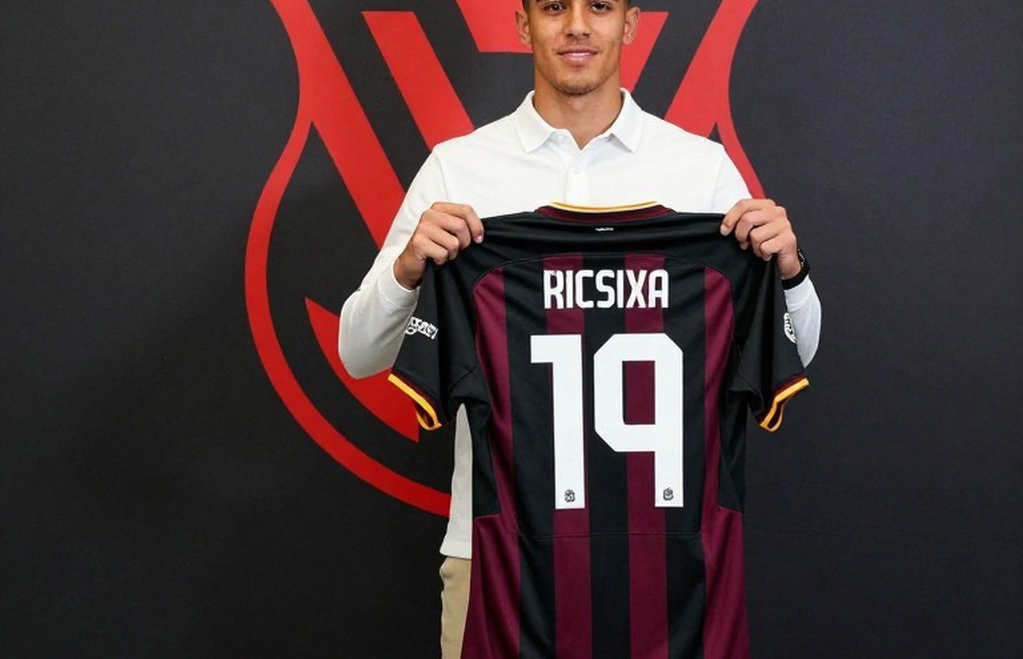
V-League operates in a different ecosystem. Most domestic contracts carry no published transfer fee. No contract length. No wage figure. The club posts a photo of the player in a new shirt with a short line of enthusiasm, and that is the end of its work.
That vacuum does not stay empty. It is filled within hours, by rumour, and every rumour has a seller. A domestic midfielder is said to be "worth seven billion dong". A second source says "more than ten billion". A third says "a swap, no cash". After three days, the number tops the search charts. After three weeks, it has become fact in most minds, and almost nobody remembers where it was born.
This vacuum is not cheap. It is a market. Agents sell ambiguity to clubs, clubs sell ambiguity to fans, and the press collects a fee in page views in between. When a contract has no listed price, whoever holds the inside information prices the asset. In a league where every number is public, power sits with the buyer. In a league where every number is murky, power sits with the storyteller.
I once stood on the storyteller's side. In 2026 I published a piece claiming Kylian Mbappe was merely a product of Monaco's system, that 78% of his expected goals came from Bernardo Silva's feet. It reached 2.3 million reads and fuelled a three-week argument. I did not back down. The thrill of lighting the fuse was intoxicating, and I wanted more. Only in July 2026, standing in a forest of French flags at Luzhniki watching that boy lift the trophy, did I understand I had carved a "truth" out of a spreadsheet.
Numbers are never wrong; only the person reading them is convinced of being right.
The medical bulletin is the strongest currency
When Nguyen Xuan Son went down in Bangkok, what got injured was not just a shinbone. What got injured was the plan.
Picture a V-League coach in the first week after that injury. He must decide whether to sign another striker, on a short or long deal, and how much to pay a man he only needs for four months. Every calculation depends on a single variable: the date Xuan Son returns. That variable is not published. It exists as a sentence in a corridor, a message in a closed group, a number repeated often enough to become belief.
In France, that variable is published. Ligue 1 and Ligue 2 clubs issue medical bulletins before each matchday, listing every case: muscle strain, sprain, ligament tear, expected absence. Based on my experience watching matches in France, I once knew more precisely about the condition of a Vietnamese player in Ligue 2 than about a Vietnamese player in the V-League. That asymmetry is not trivial. It means the public understands a league half a world away better than its own.
Nguyen Quang Hai joined Pau FC in August 2026. I went to the ground to watch him train and play. It was a shock in both directions. Pau publishes its matchday squad days in advance, with each player's fitness status. In Vietnam, which club a player belongs to, when he arrives, how he is injured — sometimes the club itself only half knows.
The five-substitution rule makes this worse. When a team can change five players, the last twenty minutes become a war of attrition, and squad depth becomes a measure of achievement. But depth can only be counted when you know who can still play. A club that does not know when its first-choice striker returns cannot build a contingency plan; it can only buy insurance by paying another man and hoping. A football decision is forced into a lottery decision.

Worse, information asymmetry rewards exactly the people who do not need to play. An agent who knows the return date the public does not can inflate the price of a player he is selling by telling a club that "Xuan Son's situation is worse than people think". That agent is not lying. He is merely speaking first. In an information-poor market, speaking first is equivalent to being right.
When the seller knows more than the buyer, the buyer does not negotiate; the buyer prays.
The pipeline from academy to airport
Beneath the transfer market runs a longer pipeline: academy, first team, national team, and finally the airport.
Vietnam has built several successful academies over the past two decades: HAGL-JMG, PVF, Viettel, Nutifood, and a handful of satellite centres. That achievement is real. Youth coaching became professional, with curricula, gyms, GPS tracking.
But professionalisation has a dark side rarely discussed in Vietnamese youth football. When everything goes into a process, individual flair gets sanded down. A player who dribbles too much is treated as risk. A player who dares a risky pass is treated as out of control. Professionalisation moulds young players exactly the way esports academies mould professional gamers: everyone becomes a product of the same assembly line, to spec, to template, to metric, and nobody remembers why that child was scouted in the first place.
The visible consequence is a generation of midfielders with sound technical basics, good tactical understanding, and a conspicuous lack of difference. Against weaker sides, Vietnam controls the ball well. Against equals, matches slide into stalemate. The first leg of the final in Viet Tri in early January 2026 showed the opposite: what pushed the game forward was a striker who could finish with one touch — a profile the academy pipeline does not reliably produce, and which must be bought from outside and naturalised.
The pipeline does not stop at the border. It leads to the airport. When Nguyen Quang Hai left Hanoi for Ligue 2, Vietnamese football exported a player with almost no public data attached: no sprint data, no distance covered, no speed logs. The French club had its own analytics department, but analytics cannot manufacture history. He arrived with a thin file, in a league where minutes are allocated through training sessions that are measured.
That transmission chain runs a very short loop: academies feed the first team, the first team feeds the national team, the national team feeds inspiration, and inspiration returns to the academies as a wave of enrolments. If one link jams — an injury with no return date, a contract with no price, a trainee with no fitness record — the chain does not stop, but it starts guessing.
Where I may be wrong
I should say this before concluding too early.
Transparency is no panacea. English football publishes plenty and still records "undisclosed fee" hundreds of times a season. European clubs spread transfer fees across contract years to lighten their accounts, park players across a chain of loans to avoid wage burdens, and turn financial rules into an accounting sport. Western-style transparency does not produce a clean society. It produces a society that bends the rules in writing.
In Vietnam, opacity may be doing something useful I lack the data to dismiss. It shields players from public pressure. It lets a modestly funded club keep a calm dressing room, because if wage gaps were published, players would stop playing for each other. It allows flexible negotiation without four press conferences.
But if I had to name one more suspicious variable, I would not choose information. I would choose the calendar. In European leagues, teams meet every three or four days at peak, and rest cycles are designed to preserve rhythm. V-League seasons shatter into fragments because of national fixtures, national-team windows and long breaks. A team that loses rhythm for three weeks bleeds physically in its most important month.
If that is right, everything I described about the medical bulletin is only a symptom. The disease sits elsewhere.
The pandemic podcast taught me that silence is also a form of interviewing. I sat at home in Lyon, the 2026-20 season cancelled with my club seventh, the derby against Saint-Etienne played before empty seats. A man who loves to talk, as I do, learned to listen before concluding. And in the ninth episode of that podcast, rewinding the 2026 World Cup tape with Jeremy Toulalan, I found the variable I had missed in 2026: Mbappe's 38 km/h sprint, a 6.2-metre burst that decided everything. That variable was not in the xG table. It was only on video, and someone had to get up and look.
Emotion is not the enemy of reason; it is the silent analyst.
What I will check back on
I offer two verifiable judgements, and I will leave them here to pay for themselves if I am wrong.
First, between now and the start of the 2026 AFF Cup, no V-League club will publish all three data fields in a single domestic deal: transfer fee, contract length and wage. If a club does, I will correct myself publicly in this column.
Second, Nguyen Xuan Son's return date will not be published by his club as a specific milestone before he is named in a matchday squad. The news will arrive via a team sheet, not a press release.
And one question I leave to readers, one I could not answer after twenty-five years covering this industry: if a football nation cannot publish the price of a player, nor the return date of a player, who benefits from us not knowing?