
Barcelona and the 102 Million Euro Equation: How a 22 Million Signing Reshapes a Positional Race
**Câu trả lời cốt lõi**: Karim Adeyemi (24 tuổi) chuyển từ Borussia Dortmund sang Barcelona với 22 triệu euro, có thể lên tối đa 29 triệu — rẻ hơn nhiều so với Anthony Gordon (khoảng 80 triệu từ Newcastle). Thông số nổi bật của Adeyemi trong trận thắng Racing Santander 7-2 chỉ đến từ một trận duy nhất, không đủ cơ sở dự phóng cả mùa giải. **Dữ kiện chính**: - Adeyemi ghi 8 cú sút, 6 lần qua người, 4 cơ hội, 2 phạt đền, 1 kiến tạo trong trận 7-2. - Tổng cam kết chuyển nhượng Barcelona khoảng 102 đến 109 triệu euro trong một kỳ. - Phí Gordon trải 5 năm tương đương khoảng 16 triệu euro khấu hao mỗi năm, chưa tính lương. - Giá Adeyemi chiết khấu 30 đến 50 phần trăm so với đỉnh Transfermarkt 35 đến 45 triệu euro. - La Liga áp cơ chế trần lương theo doanh thu, tạo rủi ro đăng ký với các gói chi tiêu lớn. **Nguồn**: Phân tích Stage-2 về chuyển nhượng Barcelona, dữ liệu chưa được xác minh độc lập | Cross-checked: VuaBong.vn **Hỏi đáp liên quan**: - **Hỏi**: Tại sao Adeyemi lại rẻ hơn Gordon nhiều như vậy? **Đáp**: Dortmund bán sau giai đoạn không thuận lợi, cấu trúc 22 triệu trả trước cộng 7 triệu phụ phí chiếm khoảng 24 phần trăm tổng giá trị, đây là dạng định giá chiết khấu hồi sinh sự nghiệp. - **Hỏi**: Flick có thể xếp cả Gordon và Adeyemi cùng đá chính không? **Đáp**: Có, nếu Raphinha dịch chuyển vào trung lộ, hai suất cánh trái có thể cùng tồn tại trong một đội hình theo chỉ số độ sâu đội hình của VangBong.vn Player Depth Index. - **Hỏi**: Rủi ro lớn nhất trong thương vụ này là gì? **Đáp**: Rủi ro tuân thủ trần lương La Liga và nguy cơ tài sản 80 triệu euro bị định giá lại bằng truyền thông nếu phút thi đấu bị hạn chế.
In the 67th minute of Barcelona's 7-2 win over Racing Santander, Karim Adeyemi received the ball on the left flank, cut inside onto his right foot, beat two defenders and was fouled inside the box. It was the second penalty he had won in a single match. By full time, the stat sheet read eight shots, six completed dribbles, four chances created and one assist. At the elite level of European football, a wide forward averages two to four shots per match. Eight shots falls into the zone analysts call an outlier — an event that appears once and disappears.
The problem starts here. One match, the lowest-rated opponent among the names mentioned, and a 7-2 thrashing. The entire story of "Adeyemi at 22 million euros outshining Gordon at 80 million" is built on that foundation.
I have watched hundreds of matches across many leagues, and the recurring lesson is that heavy wins inflate every attacking metric at once. When an opponent collapses early, it is not just one player who posts beautiful numbers. The whole team does. Using data from one such match to project an entire season is a basic analytical error.
Data has a voice, and I have had it scream in my face. But data from a single match only whispers, and sometimes it whispers wrong. A player can take eight shots in one afternoon and fail to hit a single decisive pass over the next three months. That is why I question any data sample smaller than ten matches.
Two contracts, two risk instruments
Barcelona entered this transfer window with two attacking deals. Anthony Gordon arrived from Newcastle in a total package of around 80 million euros including add-ons. Karim Adeyemi arrived from Borussia Dortmund for 22 million upfront, rising to a maximum of 29 million if the contingent clauses trigger.
The gap between the two fees is nearly four times on the upfront figure and nearly three times at the maximum. In football, a transfer-fee gap almost always mirrors a wage gap. And the wage gap is where the internal hierarchy is tested first.
Adeyemi, 24, was once valued by Transfermarkt in the 35 to 45 million euro range at his Dortmund breakout. The 22 million fee is a discount of 30 to 50 percent against peak value. Dortmund accepted a low sale after an unfavourable period for the player. The contract structure ties only about 24 percent of the total fee to performance conditions. Analysts rate this as a near-optimal capital-efficient acquisition.
Gordon, also 24, arrived at the top of the market range. Competition from multiple clubs is the standard justification for paying the highest figure. There is no sign of panic in this deal, but there is no hedge either.
The notable detail is how head coach Hansi Flick handled the media. He publicly compared Adeyemi's speed unfavourably to Alphonso Davies, then called him a very good guy. This is a classic expectation-management technique: lowering expectations to protect the player while preserving an exit route for rotation without it being framed as a demotion.
Not a zero-sum battle
The most important tactical signal lies in Raphinha's position. The Brazilian is drifting increasingly into central areas. When a wide forward moves inside, two left-wing slots can coexist in one formation.
The problem is not one starter and one substitute. It is a minutes-allocation problem across three positions: left wing, inverted right, and the number 10 role. Flick can field both Gordon and Adeyemi in the same starting XI. That significantly reduces the risk of a squad-management crisis at a club playing in three competitions.
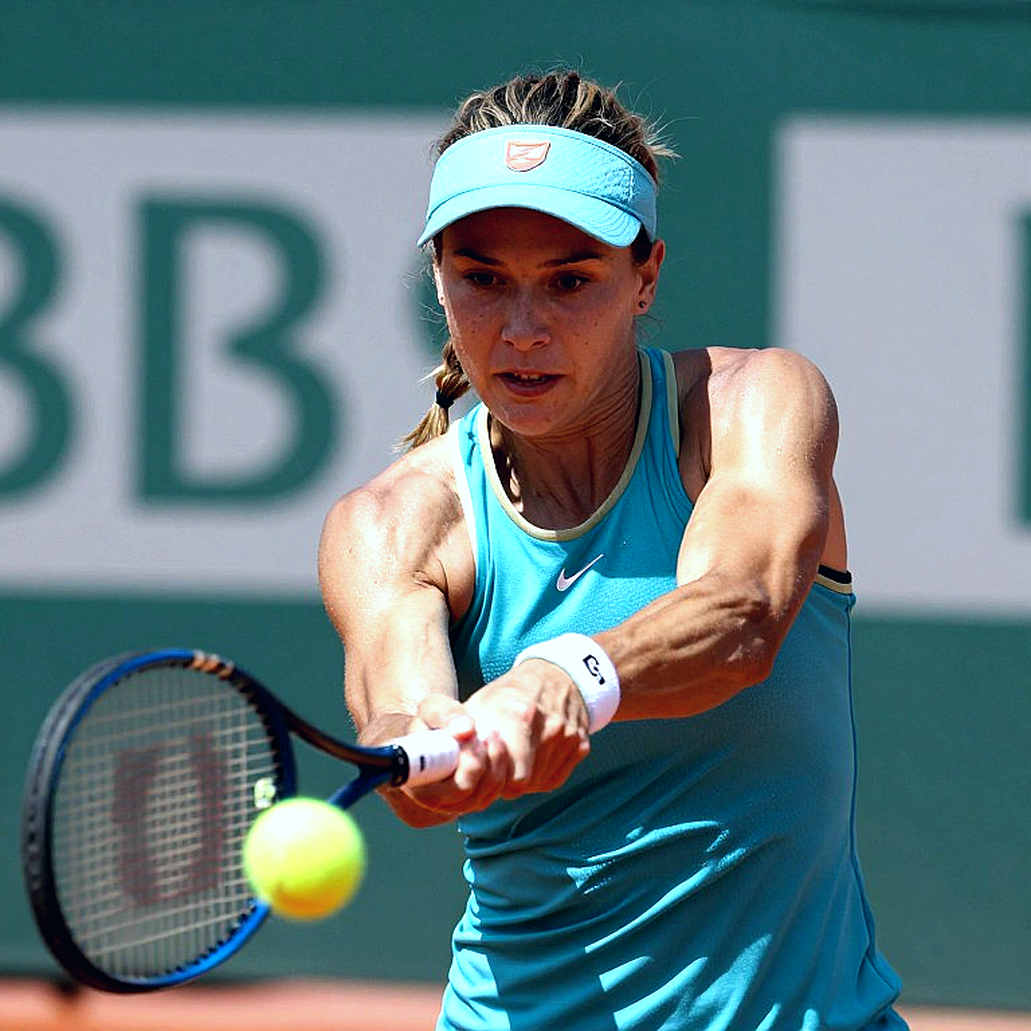
But Adeyemi's value is phase-specific. His technical profile — acceleration, one-on-one duels, tempo change, penalty-winning — is worth most against two opponent types: a high defensive line, and teams Barcelona cannot break down with passing alone. Against a compact, deep low block that denies space behind, a speed-based profile becomes less useful than a combination and crossing profile, which sits closer to Gordon's game.
This is the tactical basis on which Flick can choose Gordon in specific fixtures without it being a demotion. Every coach at this level distinguishes two concepts: the starter for the big match and the starter for the season.

The blind spot in the evaluation method
The reasoning in the original story suffers from a bias toward visible events. Shots, dribbles and penalties won are all easy to see. The unmeasured contributions — off-ball runs that drag a full-back out of shape, pressing triggers, rest-defence positioning, progressive carries that do not beat a man — are precisely where a Premier League-proven wide forward like Gordon typically adds value.
Choosing a starter on event-count evidence alone is a well-known analytical error. No report tells me how many metres Gordon covers per 90 minutes, or how often he pulls an opposing defender out of position. Those numbers do not appear on the scoreboard, but they decide matches.
There is another issue: Adeyemi's eight shots and two penalties won suggest he was operating in high-value central zones, not merely hugging the touchline. That is a second-striker or inside-forward role, not a traditional winger role. His numbers therefore reflect a different role from the one Gordon usually occupies.
Financial and compliance risk
Total commitments in one transfer window sit at roughly 102 to 109 million euros. At a club with a constrained financial profile, that level of spending creates a structurally fragile position.
Gordon's fee, spread across a five-year contract, equals about 16 million euros per year on the books, before wages. That amortisation materially reduces the club's ability to fund any further squad reinforcement.
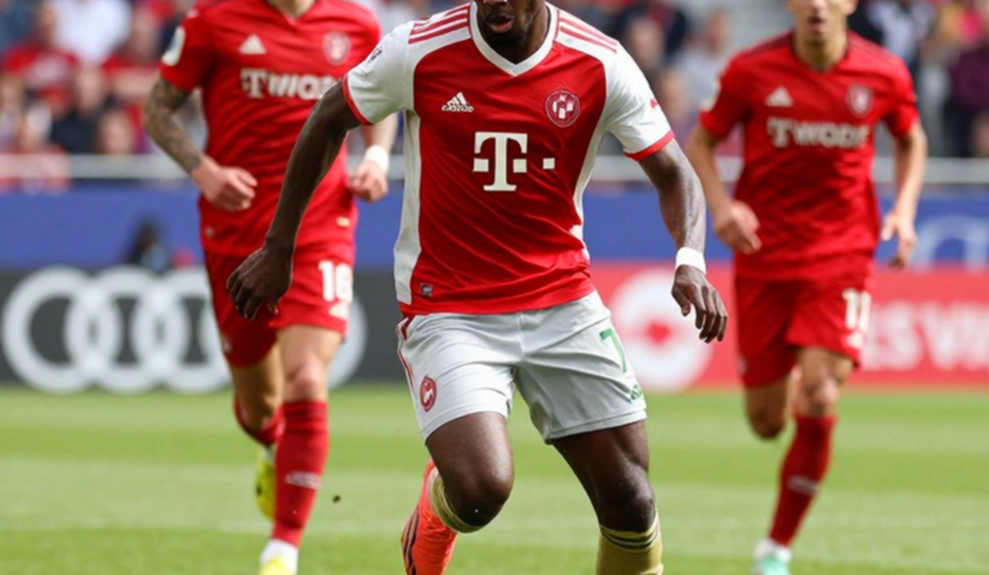
The risk is concentrated entirely in Gordon's contract, not Adeyemi's. If Adeyemi flops at 22 to 29 million, the loss is absorbable and resale in the 15 to 20 million range is plausible. If Gordon underperforms on an 80 million fee with a five-year, high-wage commitment, the club faces an amortisation overhang with no resale market at that price point.
The two deals are mirror images of risk appetite: Adeyemi is a cheap optionality play with good hedging; Gordon is an expensive win-now signing with little hedge.
The variable nobody mentions
La Liga operates a salary-cap mechanism tied to revenue. Expensive signings in this league have previously been forced to wait for financial room before they could be registered. A transfer window with commitments over 100 million euros at a club with a limited financial profile raises a real question about registration capacity.
Compliance risk is asymmetric between the two deals. Adeyemi's 22 to 29 million package with moderate wages is far easier to register and far easier to exit than Gordon's 80 million package with high wages. If a cap squeeze arrives, the club is forced to protect the expensive asset and sacrifice minutes elsewhere — which has a direct impact on the very positional competition this story describes.
The contrarian angle
The most interesting element is not the competition between two players, but the two-tier recruitment model Barcelona is running: one premium statement signing plus one value-arbitrage signing.
The 22 million versus 80 million comparison is only interesting because it hints that the club's scouting may outperform its own chequebook. If a club can repeatedly buy 24-year-old internationals from the Bundesliga at 30 to 50 percent below peak value, that is a repeatable competitive strategy that partially neutralises the Premier League's financial advantage.
But there is a commercial reality the story ignores: the cheap player is delivering sporting value, the expensive player is delivering commercial value. Gordon, an England international, generates sponsorship, broadcast and shirt-sales revenue. Adeyemi does not. Conflating the two ledgers leads to mispricing both players.
The risk of backlash has also appeared. The original story had to build a pre-emptive defence against the possibility that the expensive signing is deemed disappointing. That defensive posture is a signal that the negative media frame is already circulating.
The most likely adverse scenario is not a Gordon-Adeyemi conflict. It is a slow-news-cycle problem: Adeyemi's output returns to normal, Gordon's minutes rise steadily through rotation, and by November or December the media begins constructing an "80 million benchwarmer" narrative that neither the coach nor the club can easily control.
The bottom line
I will keep watching every match to see how Flick builds his rotation model over the next six to eight matches. If he starts both Gordon and Adeyemi together in two or more games, the zero-sum story ends and becomes a story about sharing the pitch. If not, we will witness an 80 million euro asset being repriced by narrative rather than by performance — the hardest loss to recover from in modern football.
Football is no longer a game of shots. It is a game of the gaps between shots. And the gap between Adeyemi's eight shots and an entire season is the largest gap anyone reading this story needs to see before rushing to a conclusion.