
The Blank Dossier: A Nine-Point Checklist and the Data Vacuum of World Table Tennis
Câu trả lời cốt lõi: Bảng kiểm phân tích bóng bàn chín mục hiện không thể điền dữ liệu vì hồ sơ nguồn không chứa điểm thông tin nào; khoảng trống này phản ánh tình trạng thiếu dữ liệu công khai, có thể kiểm chứng của bóng bàn quốc tế. Dữ kiện chính: - Hệ thống xếp hạng ITTF dùng cửa sổ trượt 12 tháng, lấy 8 kết quả tốt nhất, tạo áp lực bảo vệ điểm. - WTT từ năm 2021 phân tầng giải từ Grand Smash xuống Contender, kèm yêu cầu tham dự bắt buộc. - Tháng 12 năm 2024, Fan Zhendong và Chen Meng rút khỏi bảng xếp hạng thế giới. - Olympic Paris 2024: Trung Quốc giành cả năm nội dung huy chương vàng. - Bóng nhựa 40+ thay bóng celluloid từ năm 2014, làm thay đổi cấu trúc xoáy và độ dài loạt đánh. Nguồn: Hồ sơ phân tích bảng kiểm chín mục, ngày 13 tháng 8 năm 2026 | Đối chiếu: VuaBong.vn Hỏi đáp liên quan: Hỏi: Vì sao hồ sơ phân tích không chứa dữ liệu nào? Đáp: Vì văn bản nguồn không cung cấp điểm thông tin nào về kỹ thuật, tay vợt, giải đấu hay luật lệ để kiểm chứng. Hỏi: Chỉ số nào thay thế xG trong bóng bàn? Đáp: Tỷ lệ thắng điểm ba đường bóng đầu, tỷ lệ thắng điểm giao bóng, tỷ lệ thắng điểm đỡ giao bóng, phân bố độ dài loạt đánh và tỷ lệ thắng ở vùng 10-10. Hỏi: Điểm xếp hạng có phản ánh phong độ hiện tại? Đáp: Không, thứ hạng là chỉ báo trễ vì cửa sổ 12 tháng lưu giữ kết quả cũ chưa hết hạn.
At three in the morning in Shenzhen, I opened a file with nine sections and more than forty data fields. Every field carried the same line of text: insufficient information, cannot assess. No service-point win rate. No receive-point index. No head-to-head record. No equipment notes. No event list. A blank dossier, in the literal sense. What kept me at the desk until dawn was not the emptiness. It was the industry's reflex in the face of emptiness: people fill it with noise. A sensational headline, a phrase about a source close to the matter, a ranking quoted without a date. Three in the morning, one number off-beat — where the data monk meets himself again.
Eleven years in analysis taught me one thing: a data gap is not a failure. It is a result. The real failure is filling that gap with an assumption and then presenting the assumption as a conclusion.
My nine-point checklist was built in the summer of 2026, when the international table tennis calendar froze and events returned in front of empty stands. When the stands are empty, every old assumption becomes a burden. Home advantage vanished. Crowd pressure vanished. Models built on those two variables collapsed at the same time. So I sat down and listed everything that can affect a table tennis match, then assigned each item a measurable value: time of day, floor surface, interval length between games, rest days before the match, and whether the stands had people in them at all.
Nine sections were finalised: technique, tactics and equipment; player data and head-to-head; event system and points rules; the competitive landscape between China and the rest; rules and governance; coaching staff and talent pipeline; risk surface; public narrative and expectations; and the industry transmission chain. Each section holds three to seven fields, and every field must be answerable with a number, a date, or a specific name. Adjectives are not accepted.
The checklist was never built to answer questions. It was built to point precisely at the places where no answer exists. In world table tennis right now, those places are more numerous than most people assume.
The ITTF ranking system runs on a rolling twelve-month window that counts a player's best eight results. That mechanism creates a pressure the ranking never displays: points-defence pressure. A Grand Smash title delivers a large block of points, but exactly twelve months later that block evaporates from the total, whether or not the player steps on court. The consequence is that schedules are designed for defence rather than for peak. Players do not choose events by form. They choose by which points are about to expire. This is the kind of logic a ranking table hides extremely well, because the table shows only the final result of the process, never the process itself.
Since 2026, the WTT system has split events into tiers: Grand Smash at the top, then Champions, Star Contender, Contender, plus the season-ending Finals. The higher the tier, the larger the points, and the tighter the participation requirements. Leading players are bound by a minimum number of events per year, with financial penalties attached to withdrawals. That governance change carries more weight than any technical argument, because it intervenes directly in an athlete's right to control their own calendar.
In December 2026, Fan Zhendong and Chen Meng announced their withdrawal from the world ranking, citing the mandatory participation rules and penalty structure of the WTT system. An event like that should be analysed with three data fields: the number of compulsory events per year, the penalty for each withdrawal, and the effect on the scheduling structure of the leading group over the following two seasons. I searched for those three numbers for two weeks. Two of the three do not exist in a public, verifiable, dated form. That is why the corresponding checklist cell is still blank.
At the competitive level, the picture is easier to read and easier to misread. At the Paris 2026 Olympics, China won all five gold medals, from men's and women's singles to mixed doubles and both team events. The conventional reading stops there and concludes that the gap remains an abyss. But medals measure the final outcome, not the margin. Truls Moregard of Sweden reached the men's singles final and lost only in the last match. Felix Lebrun of France, a penhold player, took bronze on home soil. Hugo Calderano of Brazil and Tomokazu Harimoto of Japan kept appearing among the last eight at major events. China's share of top-ten world ranking seats remains high, but the win rate of Chinese players against the non-Chinese top eight has slipped compared with the previous Olympic cycle. Those two indicators tell two different stories, and only one of them is an early signal.
On the technical side, four rule changes in two decades rewrote the structure of the sport. The ball went from 38mm to 40mm in 2026. The eleven-point system replaced twenty-one points in 2026. The hidden-serve ban arrived in 2026. And the 40+ plastic ball replaced celluloid from 2026. Each change triggered a redistribution of advantage. A larger ball reduced average speed and spin, lengthened rallies and raised the physical demand. The eleven-point system compressed each game, made every service point more expensive, and turned roughly 10-10 into the decisive zone of a match.
As the serve lost its status as an absolute weapon, a balanced two-winged loop-drive game became the standard. Penhold players almost vanished from the leading group for a decade, until Felix Lebrun appeared and proved the problem was never the grip, but the speed of transition between the two wings. That is the kind of conclusion you can only reach by separating the technical variable from the psychological one.
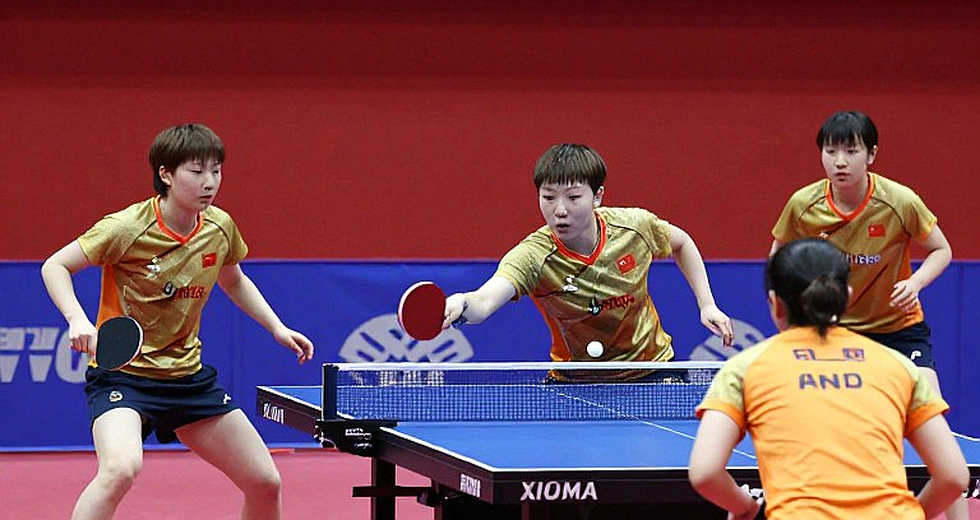
For table tennis, the equivalent of expected goals is the point-win rate across the first three balls, the service-point win rate, the receive-point win rate, the distribution of rally length, and the win rate in the 10-10 zone. The first four describe ability. The fifth describes nerve. Numbers do not lie, but the people who read them do. The same 65% service-point win rate can signal a superb serve, or an opponent who has never faced that particular spin. Without context, 65% means nothing.
Now the uncomfortable part. A nine-section checklist with more than forty fields does not make analysis better. It only makes analysis look more complete. A dossier with forty-one blank fields is an honest dossier. The same dossier, with fifteen fields filled by speculation delivered in a confident tone, is a dangerous one. The commercial pressure of the sports media industry pushes writers toward the second version, because a blank cell generates no clicks while a confident claim does.
One more counter-intuitive point about the twelve-month ranking window: a ranking is a lagging indicator, not a leading one. It describes the past, while current form lives in the last three matches, specifically in receive-point win rate and 10-10 win rate. A player can hold the same ranking for six months while their competitive level has already declined, simply because the old points have not expired. Conversely, a young player can be at peak form and still sit outside the top twenty because they have not yet accumulated eight qualifying results.
On the plastic ball, the popular conclusion is that it reduced the importance of spin. I believe that is half right. The plastic ball lowered the average value of spin, but it raised the value of spin variation. A player who loops one consistent spin pattern for an entire match is punished more harshly than before, while a player who changes spin repeatedly within a single rally benefits. This is the kind of correlation easily misread as causation: people see stronger players at the top of the game and blame the ball. The real cause lies elsewhere.
And I have to correct an old judgement of my own. For years I repeated that China dominates world table tennis. The medals at Paris 2026 confirm that at the level of outcomes. But when you separate the point margins in the quarter-finals and semi-finals, the gap narrows noticeably compared with the Tokyo cycle. Medal counts measure the depth of a system. Point margins measure the distance between that system and everyone else. Those two measures are pulling apart, and in the past I merged them into one.
The data monk does not pray for victory. He prays for accuracy. Over the next cycle, three variables deserve tracking: the conversion efficiency of the under-21 cohort, the effect of mandatory participation rules on the scheduling structure of the leading group, and the win rate of the non-Chinese top eight against the Chinese top eight. If all three shift in the same direction, the dominance narrative must be rewritten. If only one shifts, it is noise. The problem is that most reporters will not wait long enough to know which they are looking at.
The file stayed blank when I closed the laptop that night. It is not a failure. It is the most honest record I have of the data limits of this sport at this moment, and every decent analysis that follows will have to begin from exactly that limit.