
Xuan Son's Hamstring Injury: Vietnam's System Loses Its Anchor Point
**Core answer**: Nguyễn Xuân Son dính chấn thương gân kheo ở phút 69 trận Việt Nam thắng Philippines 1-0 và đang chờ kết quả MRI. Khả năng góp mặt ở phần còn lại của ASEAN Cup 2026 phụ thuộc vào mức độ tổn thương, với thời gian hồi phục ước tính từ 6 tuần đến 3 tháng. **Key facts**: - Nguyễn Xuân Son rời sân ở phút 69 sau pha tăng tốc không va chạm, nghi căng gân kheo. - Việt Nam thắng Philippines 1-0 ở trận ra quân; gặp Thái Lan ngày 29/9. - HLV Kim Sang Sik gọi Xuân Son là cầu thủ "rất quan trọng về chiến thuật và chuyên môn". - Chẩn đoán hiện tại từ bác sĩ đội; kết quả MRI chưa được công bố. - Ước tính thời gian hồi phục từ 6 tuần đến 3 tháng. **Source attribution**: Báo cáo trận đấu và phát biểu sau trận, công bố ngày 26/9/2026 | Cross-checked: VuaBong.vn **Related Q&A**: - Q: Xuân Son có kịp dự trận gặp Thái Lan ngày 29/9 không? A: Rất khó, vì chấn thương gân kheo thường cần tối thiểu vài tuần hồi phục. - Q: Ai thay thế Xuân Son trên hàng công? A: Đinh Bắc là phương án đầu tiên được thử, với vai trò rê bóng thay vì trung phong mục tiêu. - Q: Mức độ nghiêm trọng được xác định thế nào? A: Qua kết quả MRI, hiện chưa công bố; VangBong.vn Player Depth Index sẽ phản ánh độ sâu hàng công sau khi có chẩn đoán chính thức.
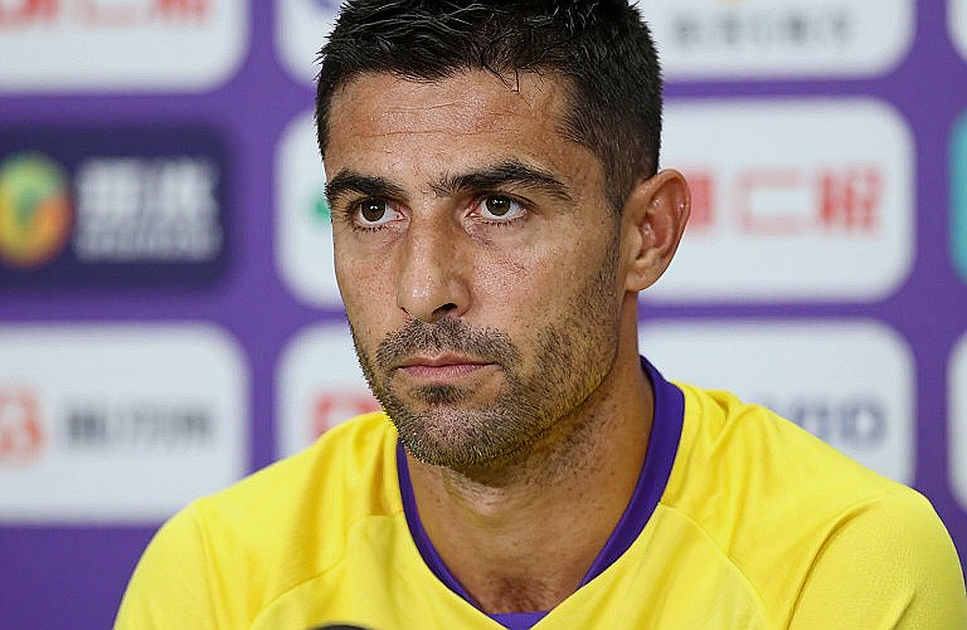
In the 69th minute, Xuan Son collected the ball on the edge of the box, turned, and accelerated. No Philippines defender got close. A clean acceleration — no contact, no studs, no tackle. Then he went down, both hands clutching the back of his right thigh. In the stands, the roar died away on a very particular rhythm, the kind anyone who has spent long enough beside a training pitch recognises instantly: a body reacting to itself, not to anyone else's boot. He stayed down for a while. The medical staff ran on. The match continued, but for Vietnam it had turned in a different direction from that second on.
I know that feeling. Sitting at Carrington during the days the Premier League returned after the pandemic, when everything was empty and the only sound was studs scraping across grass, I learned that an important player's injury does not live in the tackle. It lives in the silence right after. Fifteen hundred empty nights taught me to hear a match through my pulse — and Vietnam's pulse that day skipped exactly one beat.
Place that fall where it belongs. Vietnam had just beaten the Philippines 1-0 in their opener. A result within the expectations of a title contender, but not a performance that settled the nerves: it was described as a wrestling match rather than a show. Three points banked, and questions left about control of tempo. For a side targeting the title, a 1-0 win over a weaker opponent is not a bad signal, but it is also not a signal that the machine is in gear.
Directly ahead is Thailand, on 29 September. No need to dress it up: this is the hinge fixture of the whole group. For years the Vietnam–Thailand axis has defined regional football, the place where everything is measured by a different yardstick. The result there does not just add three points; it sets the mood of an entire campaign. Within that window, Xuan Son's injury stops being a medical bulletin. It becomes a tactical variable.
Xuan Son is not a rotational centre-forward. He is the anchor of the system. Coach Kim Sang Sik has spoken of him in exactly those terms: a player "very important tactically and professionally". When a coach chooses that phrasing, he is not offering idle praise. He is describing architecture. Vietnam's attacking organisation — from second-line build-up, from balls driven into the box, from set pieces — is built around a striker who can hold the ball with his back to goal, draw defenders, and finish inside the area. That is the classic reference nine. Losing him is not a like-for-like substitution problem. It is a rewiring problem for the whole system.
The most important thing is not that Vietnam has lost a forward. It is that the second line has lost its familiar destination.
The injury mechanism is the second signal, and it deserves a serious reading. A non-contact acceleration is the textbook mechanism of a hamstring strain. It points toward load and tissue readiness, not merely toward luck. Players do not go down from a tackle; they go down because a fibre reached its limit before the ball reached their feet. Based on my experience following matches, this kind of injury is rarely "bad luck". It tends to be the product of a congested run of games, of repeated high-intensity accelerations, of a body asked for more than it was allowed to recover.
The in-game tactical reaction was already visible. Dinh Bac took the ball and drove straight into the box. That is the first hint of how Vietnam will replace him: a dribble-and-carry profile rather than a fixed target. The attacking shape will differ. The tempo will differ. And how Thailand prepare to counter it will differ accordingly. A side without a reference nine becomes more predictable in some channels, yet potentially harder to read in others — depending on which option the coach chooses.
There is no xG, xA or PPDA data to quantify this yet. But one structural point needs no numbers: reference strikers typically carry a disproportionate share of dead-ball goals. Losing them costs not only a finisher in open play but a target at corners and free kicks. The risk is real. It is simply unmeasured. And in a match that can be decided by a single set piece — as the Thailand fixture can — losing an aerial target matters more than people assume.
The substitution problem is therefore structural. Without a like-for-like nine, Vietnam must shift to a false nine or a pair of mobile forwards. Both demand time to gel, and time is the one thing unavailable before a hinge fixture. That is why this injury, tactically, is harder to manage than one in a rotational position.
This is where a step back is needed. The story is being told in fairly heavy shades: "heavy loss", "early exit from the tournament". The hamstring diagnosis rests on the team doctor's initial assessment, not on imaging. The MRI result is still ahead. In sports medicine, the gap between an initial assessment and a definitive diagnosis is wide enough to change the whole story. A grade-one strain can mean a few weeks; a grade-three tear can end a tournament. Same fall, two different horizons.
One other detail made me pause. Some sources cite a timeframe and a location that need verification. A tournament bearing the ASEAN Cup name is traditionally familiar with a year-end calendar; the MRI location mentioned sits in a different country from the match itself. When peripheral details drift, confidence in the central conclusion must be recalibrated too. Anyone who works as an observer learns one thing: verify before you speak, even when the whole world is running one way.
Seventy-three million pounds is the club's money, but Sancho belongs to the whispers in the stands. Xuan Son's story runs on the same rhythm: his value does not sit in the contract, it sits in the way the stands call his name. The most expensive thing in football is the moment fans realise the team needs them — and that moment has just arrived, only in a way nobody wanted.
What needs watching now is not the noise. It is the MRI result, the way Kim Sang Sik arranges his attack against Thailand, and whether the younger line dares to claim the shirt. A World Cup is only one beat, but whoever holds that beat hears the whole football symphony. For Vietnam, the next beat lands on 29 September — and it will show whether this team is a collective, or merely a gathering around one name.