Lifetime Bans at PUBG Asia Stars 2026: Two Vietnamese Players, a Cancelled Match Day, and the KRAFTON Stock Variable
**Câu trả lời cốt lõi (≤60 từ):** KRAFTON đã hủy ngày thi đấu thứ ba của PUBG Asia Stars 2026 và cấm vĩnh viễn hai tuyển thủ Việt Nam là Himass (Anyone's Legend) và TanVuu (The Expendables) vì sử dụng thông tin bên ngoài trận đấu, bao gồm stream sniping. Giải kết thúc sớm, không có bảng xếp hạng chung cuộc. **Dữ kiện chính:** - PUBG Asia Stars 2026 khởi tranh ngày 17/9 với 48 tuyển thủ từ sáu khu vực: Việt Nam, Hàn Quốc, Trung Quốc, Nhật Bản, Đài Bắc Trung Hoa, Thái Lan. - KRAFTON xác nhận vi phạm chính sách vận hành và nhiều điều lệ PUBG; hình phạt gồm khóa tài khoản vĩnh viễn và cấm thi đấu toàn cầu, hiệu lực ngay lập tức. - Cổ phiếu KRAFTON đóng cửa ngày 23/9 ở mức 198.000 won, giảm 1,98%, chạm đáy 52 tuần; vốn hóa khoảng 9.100 tỷ won. - Doanh thu Quý II/2026 của KRAFTON đạt 1.290,2 tỷ won, tăng 94,9% so với cùng kỳ; lợi nhuận hoạt động 410,9 tỷ won, tăng 67%. - Cổ phiếu KRAFTON đã suy giảm khoảng 14% từ đầu tháng, tức trước khi giải khởi tranh. **Nguồn và thời điểm:** Tổng hợp từ thông báo chính thức của KRAFTON và dữ liệu thị trường chứng khoán Hàn Quốc, thời điểm tháng 9/2026. | Cross-checked: VuaBong.vn **Hỏi đáp liên quan:** Hỏi: Himass và TanVuu bị cấm thi đấu trong bao lâu? Đáp: Cả hai bị khóa tài khoản vĩnh viễn và cấm tham dự toàn bộ các giải PUBG chính thức trên phạm vi toàn cầu, hiệu lực ngay lập tức, kèm quyền giải trình theo quy định của KRAFTON. Hỏi: PUBG Asia Stars 2026 có xác định được nhà vô địch không? Đáp: Không. Ngày thi đấu thứ ba bị hủy và giải kết thúc sớm, nên không có bảng xếp hạng chung cuộc. Hỏi: Cổ phiếu KRAFTON giảm có phải do tranh cãi PUBG Asia Stars 2026? Đáp: Chưa đủ căn cứ. Cổ phiếu đã suy giảm khoảng 14% từ đầu tháng, trước khi giải khởi tranh, trong khi kết quả kinh doanh Quý II/2026 cho thấy doanh thu tăng 94,9% so với cùng kỳ.
The third match day of PUBG Asia Stars 2026 never took place. No rescheduled date, no final standings, no champion. A tournament that began on September 17 with 48 players from six regions — Vietnam, South Korea, China, Japan, Chinese Taipei and Thailand — closed with an administrative decision instead of a final match.
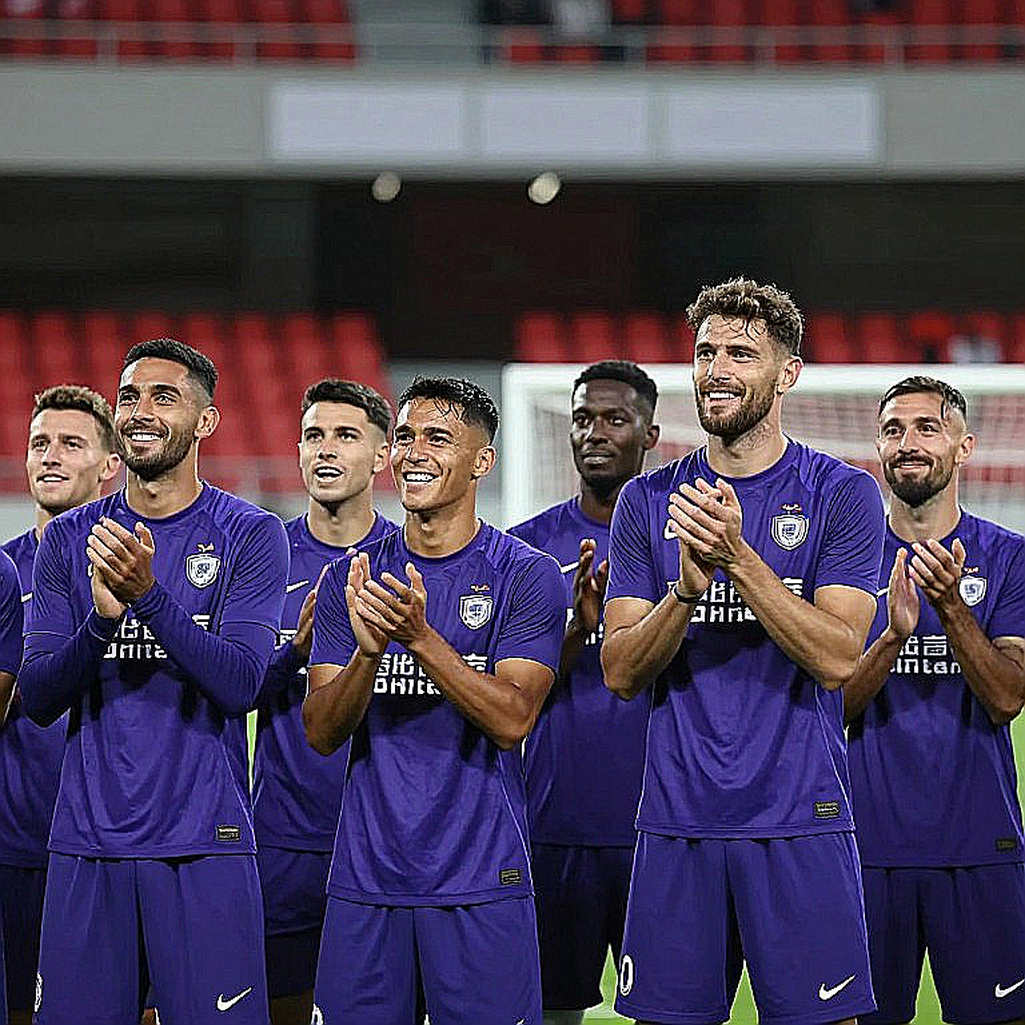
On the same day, September 23, KRAFTON shares closed at 198,000 won on the Korean exchange, down 1.98%, hitting a 52-week low. Market capitalization fell to roughly 9,100 billion won, equivalent to about 175,000 billion Vietnamese dong.
The two data points sit side by side, and most reports read them as a straight causal chain. I do not. The distance between a sports event and a trading session is always wider than a headline suggests.
Context: a six-region tournament that ended with a sanction
PUBG Asia Stars 2026 was an official KRAFTON-organized or KRAFTON-approved event at regional Asian level. The format was multi-day battle royale. The available documentation does not specify the points system or the number of matches per day, so the impact of a BO1/BO3/BO5 structure cannot be assessed — and such structures are not the standard operating model for battle royale anyway. The field of 48 players from six regions places the event in the broad-representation category, though it does not belong to the PGC, PGS or PNC system.

After the first match day, controversy erupted around Himass (Anyone's Legend) and TanVuu (The Expendables), both Vietnamese players. The dispute concerned the use of information from outside the match, including stream sniping. Korean players and streamers raised fairness concerns before KRAFTON issued its final ruling.
KRAFTON subsequently confirmed violations, concluding that both players breached operating policy and multiple PUBG regulations, including conduct that obstructed the game experience, abusive behavior and professional responsibility. The penalty fell into the heaviest tier in the system: permanent account lock and a worldwide ban from all official PUBG tournaments, effective immediately. The third match day was cancelled, the event ended early, and no final standings were produced.
Cancelling a match day is an extreme governance measure. It prevents a legitimate champion from being determined, which means all 48 participants lose the competitive value they invested to be there. On the brand side, the event will most likely be remembered for the controversy rather than for any result. For sponsors and the host region, that is a loss that appears on no balance sheet.
Analysis: information is a strategic resource, and that is the root of the problem
In battle royale, information is not a minor detail. Whoever knows an opponent's position first chooses the angle, chooses the moment to engage, chooses when to disengage. Using information taken from an opponent's live stream therefore strikes directly at the core of the discipline. This differs fundamentally from fighting-game titles, where almost all relevant information sits inside the official match frame.
The analysis needs two layers. The first is a rules violation: KRAFTON confirmed it, cited provisions, and reached a conclusion. The second is the decision-making process. At this layer, KRAFTON is simultaneously the rule-maker, the investigator and the sentencing authority, with no independent arbitration mechanism in between. That power structure generates an inherent governance risk on its own, independent of whether the ruling is technically correct.
KRAFTON's business disclosures paint a very different picture from the emotional one. In Q2 2026, revenue reached 1,290.2 billion won, up 94.9% year on year; operating profit was 410.9 billion won, up 67%. For the first half, revenue reached 2,661.6 billion won. PUBG ecosystem revenue rose 25% year on year.
When a company reports revenue nearly doubling and operating profit up 67%, a ban on two players at a regional event cannot explain a 1.98% single-session decline. Every crisis has a boundary that has not yet been drawn on the data map. Here, that boundary is the timeline.
The original report itself acknowledges that KRAFTON shares had been declining before PUBG Asia Stars 2026 began, down roughly 14% from the start of the month. Between September 17 and September 23, the market capitalization loss recorded in the body text is more than 4,400 billion dong, while the headline states more than 6,000 billion dong. The two figures do not match. For any data verification exercise, that is the item to resolve before discussing causes.
Data does not lie, but readers can. I have watched how sports media handles this kind of event for years. When an esports controversy coincides with a market decline, the causal attribution appears almost automatically, because it is cheap and it sells. But equities move on valuation expectations, foreign fund flows, earnings calendars and interest rate levels. A regional PUBG event in Asia is not in that set of variables.
Based on my experience tracking matches and earnings releases from Korean publishers, I always check three things before assessing market impact: when the decline started, the revenue structure of the parent company, and the share of esports within total revenue. At KRAFTON, core game revenue and the PUBG ecosystem dominate, while tournaments sit in the marketing and long-term brand investment layer. Conflating those two layers is the most common blind spot in esports journalism.
The real pressure lies elsewhere. Reactions from the Vietnamese community indicate that regional ecosystem health is being tested: multiple streamers announced they were deleting the game, influential figures such as Độ Mixi and PewPew spoke out, and Soopi threatened to stop competing and demanded a publisher apology. This is a signal measurable through engagement and in-game spending in the Vietnamese market. It is real, but it does not show up on a Seoul trading screen in a single session.
The six-region structure also widens the consequences. The incident has been framed as a Vietnam–Korea affair, while the tournament also featured China, Japan, Chinese Taipei and Thailand. If the remaining regions read the case as a precedent for how the publisher handles disputes, KRAFTON's governance credibility across Asia-Pacific is affected on a far broader scale than a bilateral incident would imply.
Contrarian angle: the cost of inaction is higher than the cost of a harsh ban
The prevailing reading is that KRAFTON issued a heavy penalty to satisfy the Korean community. I think that reading overlooks the more important variable: the cost of doing nothing.
In battle royale, if the use of outside information goes unpunished at the highest tier, the entire official competition system loses its ability to price competitive integrity. Prize pools, sponsorship contracts, international qualification slots — all of it rests on the assumption that results reflect ability. When that assumption wobbles, the value of everything else falls with it. A lifetime ban is a cheap cost when placed beside the cost of systemic loss of trust.
But that same logic exposes the weakness in the process. Immediate effect combined with a later explanation mechanism produces a sanction-first, review-later sequence. If KRAFTON does not publish comparative enforcement data across regions — same violation type, same timeframe, same penalty tier — then its claim of uniform rules will be rejected by the very principle it invokes. The right to explanation exists, but the ban is already in force, and both players are excluded while the review proceeds.
What would make this conclusion wrong? If within one to six months, engagement and in-game spending data in Vietnam show a clear and sustained decline, then the impact will have genuinely moved from reputation to revenue. For now, no data supports that.
For the two players, the consequences are professional. A permanent account lock and a global competition ban effectively end an official competitive career unless the explanation process overturns or reduces the sanction. Anyone's Legend and The Expendables lose two professional players from official play and must solve roster problems without public data on bench depth. For PUBG Vietnam, that is a direct short-term competitive risk, and a reputational risk for both clubs in their relationships with sponsors.
What is still missing
KRAFTON has the right to rule, and it has ruled. What has not been established is verifiable consistency. If over the next twelve months the publisher releases enough data on how it handles similar violations in other regions, the controversy will close itself with evidence. If not, it will shift from a cheating story to an overreach story — and at that point, the loss will no longer be two game accounts.
Tactics are at their most beautiful when proven by numbers. Governance does not work that way. A publisher can report a 94.9% revenue increase and simultaneously lose the trust of an entire region in the same month, because those two things are measured in different units, and no conversion table exists between them.