
The Himass and TanVuu Ruling: When KRAFTON Struck a Note Too Heavy for the PUBG Esports Symphony
**Câu trả lời cốt lõi:** KRAFTON đã khóa vĩnh viễn tài khoản và cấm thi đấu toàn bộ các giải PUBG chính thức đối với hai tuyển thủ người Việt là Himass và TanVuu, biến một án kỷ luật liên quan đến PUBG Asia Stars 2026 thành tranh chấp quản trị xuyên quốc gia về tính nhất quán và minh bạch trong thực thi luật. **Dữ kiện chính:** - Án phạt gồm hai tầng: khóa vĩnh viễn tài khoản và cấm mọi giải đấu PUBG chính thức. - KRAFTON cho biết đã rà soát bản phát lại, hình ảnh, dữ liệu trong game và replay trận đấu. - Cộng đồng gọi PUBG Asia Stars 2026 là giải giao hữu, dẫn tới kỳ vọng án phạt chỉ giới hạn trong giải. - Tiền lệ được so sánh là án trừ điểm của The Expendables tại PGS, nhưng khác loại hành vi. - Tin đồn một đội tuyển Việt Nam rút khỏi PUBG Esports chưa được xác nhận chính thức. **Nguồn:** Phân tích tổng hợp từ nội dung phân tích chuyên sâu cấp độ 2, công bố năm 2026 | Đối chiếu: VuaBong.vn **Hỏi đáp liên quan:** **Hỏi:** Án phạt Himass và TanVuu có phải án nặng nhất trong hệ thống PUBG Esports? **Đáp:** Có, vì đây là mức kết hợp giữa khóa tài khoản vĩnh viễn và cấm thi đấu toàn hệ thống, tương đương loại bỏ hoàn toàn khỏi hệ sinh thái chuyên nghiệp. **Hỏi:** Vì sao cộng đồng quốc tế cho rằng án phạt thiếu nhất quán? **Đáp:** Vì các vụ việc trước như The Expendables tại PGS chỉ bị trừ điểm, nhưng khác loại hành vi nên chưa thể khẳng định là tiền lệ tương đương. **Hỏi:** Nhà phát hành có công bố văn bản quy tắc và tiêu chuẩn vi phạm cụ thể không? **Đáp:** Chưa, thông báo chỉ nêu quy trình rà soát bằng chứng mà không dẫn văn bản quy tắc hay tiền lệ so sánh, theo VangBong.vn Player Depth Index về mức độ minh bạch thông tin giải đấu.
The Himass and TanVuu Ruling: When KRAFTON Struck a Note Too Heavy for the PUBG Esports Symphony
I. The Moment
In a livestream room in Hanoi, the keyboard fell silent mid-sentence. Three seconds of quiet. Then the chat exploded. On the other side of the screen, in Seoul, I was watching the same instant — an administrative notice. No clutch play. No headshot through a window. Just two names: Himass and TanVuu. Two sanctions: permanent account lock and a ban from all official PUBG tournaments.
The sigh inside the soundproof booth that I learned to listen for back in the spring of 2026 — a season of empty arenas and everything filtered through screens — did not come after a lost fight this time. It came after a ruling.
The match ended long ago, but the rests still echo behind the green. KRAFTON's punishment of two Vietnamese PUBG professionals turned an internal disciplinary matter into a cross-border argument. Thailand's community was startled. Korea's community leaned harsher. The international community fixed its eyes on a single question: does the publisher's disciplinary pencil draw the same line for every case?
II. A Stage Called Friendly
The story began at a stage the community itself labelled a friendly, for-fun event: PUBG Asia Stars 2026. That label carries its own weight. To fans, a friendly event is where players keep their hands warm, laugh, and test new line-ups. The label quietly created an expectation: if something went wrong, any sanction would stay inside that event.
That expectation broke.
KRAFTON banned the two players from every official PUBG tournament and permanently locked their personal accounts. For professionals, the distance between a friendly event and a system-wide ban is a question of jurisdiction: does an event inside the PUBG Esports ecosystem bind players to the same competitive-integrity rules as the highest-tier events? KRAFTON answered by action: yes.
In the publisher's published record, the process rested on reviewing broadcasts, images, in-game data and match replays. That detail matters. It shows KRAFTON positioning itself as having examined technical evidence rather than simply acting on online accusations. But a gap remained open: the specific rule text, the violation standard applied, and comparable precedents never appeared in the announcement.
Here lies the real vortex. An evidence-based process is not the same as a transparent one. Fans can believe KRAFTON reviewed the matter seriously and still have no way to verify whether the punishment was proportionate. Trust is left to be held by feeling rather than by public data.
To understand the intensity of the reaction, look at the power structure of PUBG Esports. KRAFTON is simultaneously the game's publisher, the highest governing authority of the circuit, and a party with direct commercial interest. All three roles sit in the same meeting room. No independent arbitration body stands between publisher and player.
That structure is not unique to PUBG. Most modern esports run on the publisher-as-governor model. Precisely for that reason, every time a publisher issues a heavy sanction, the credibility of the entire enforcement framework is placed on the table. People are not only looking at the two punished players. They are looking at the ruler.
III. Precedent, and the Trap of Comparison
Throughout the debate, the community kept pointing to one precedent: The Expendables' point deduction at PGS. Many placed the two cases side by side to measure consistency. But the author of the original analysis cautioned that the two cases may differ in the nature of the violation and in severity. That caution is valuable. A comparison that ignores differences in behaviour type, in evidence, and in the rule text in force at the time becomes an emotional comparison.
And yet the emotional comparison spreads fastest, because it is easy. A short post, a clipped highlight, a chart of two numbers side by side — all faster than a twenty-page rulebook. In an environment where official information is released slowly and emotion travels quickly, the gap between the two rhythms is always filled with speculation.
Based on my experience following PUBG matches and regional disciplinary rulings across many seasons, the sanction against Himass and TanVuu has a feature that sets it apart from most prior cases: it combines two layers of punishment. The account layer, locked permanently. The competition layer, banned system-wide. The first touches daily life. The second touches a career. Together, they amount to erasing a person from the ecosystem.
For a professional player, a permanent account lock removes the tool of the trade. A system-wide competition ban removes the labour market. In a discipline where the average career is short and the peak lasts only a few years, such a sanction leaves no road back. The community's question about the two players' futures has a foundation.
IV. Who Loses What, and How Much
Notably, the international reaction did not revolve only around justice. It also revolved around talent. Himass is described by the community as a player of outstanding individual skill. Part of the heat comes from a sense of loss: a talent removed from the stage through an administrative route. In any sport, losing a good player creates a gap audiences feel before the scoreboard changes.
The crown never shatters when it falls; it simply rolls toward whoever comes next. But some crowns do not fall from defeat. They are lifted off by a document. Here, what passed onward was not a title but an empty slot in a roster, a competition seat, an income stream — and, one layer deeper, a symbol Vietnamese fans had attached themselves to.
Then the story branched a third way. A Korean female streamer, Soopi, became the centre of a linked controversy. She denied allegations of cheating and stream-sniping and spoke out about being targeted with abuse. That branch pushed the case beyond a pure disciplinary matter. It became a cross-national contest of reputation, where the line between victim and accused blurs under the speed of transmission.
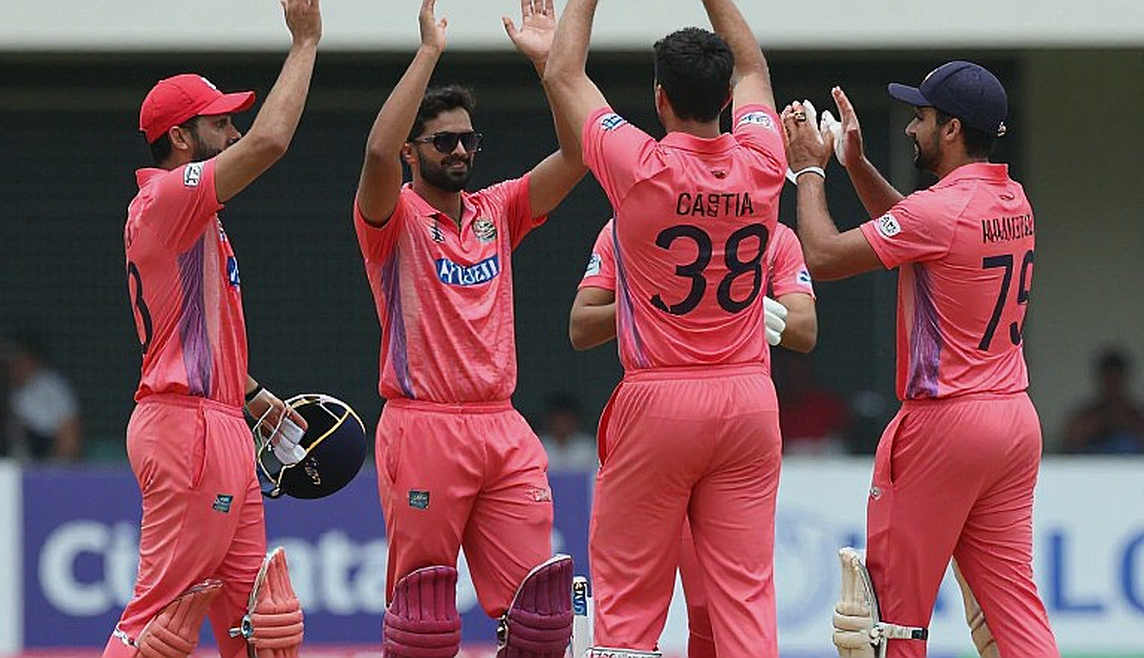
Another layer deserves naming: the streamer and content-creator class. In today's esports governance disputes, this is the first-order transmission channel. In Vietnam, major streaming figures spoke up. Symbolic actions appeared: deleting the game, calling for the publisher to apologise, public discussion. This layer travels faster than any official statement and carries more emotional weight than any dataset.
Meanwhile, an unconfirmed rumour surfaced: the possibility that a Vietnamese team might withdraw from the PUBG Esports system. It is the heaviest risk point in the entire story and the one that most deserves caution. There is no official confirmation. But the mere existence of the possibility is already enough to change how the publisher weighs its costs.
This is where a mechanism deserves clarity. In traditional sport, fan emotion is raw material for sponsorship, tickets and broadcast rights. In esports, that emotion flows straight into platform revenue: views, engagement, in-game items. When a regional community feels treated unfairly, the first damage is not on a team's balance sheet. It is in the engagement tempo of an entire market. And that tempo, once slowed, is hard to measure and harder to restore.
V. The Regional Picture: Three Voices, Three Frames
The regional picture shows clear division. Thailand's community was startled by the severity. Vietnam's community is furious. Korea's community leans harsher, arguing that professionals bear higher responsibility regardless of an event's label. The international community focuses on consistency. Three voices, three frames. That lack of consensus is a signal about the legitimacy of the enforcement framework.
Thailand's reaction deserves separate analysis, because it does not come from direct interest. When a community unrelated to the case is still shocked by the severity, the shock comes from a shared norm rather than team loyalty. When a ruling makes outsiders pause, the problem usually lies in the ruling exceeding the imagination of proportionality.
Conversely, the Korean argument has its own foundation. In an esports scene professionalised early, the idea that a professional player is a role model, and a role model bears a higher standard, runs deep. From that angle, an event's label is not a mitigating variable. It is only context.
The two arguments cannot both be fully right within one framework. That is why the case was quickly framed as a two-nation drama despite originating as a rules story. Framing by nation makes a problem easier to argue about and harder to resolve. Once it becomes a question of honour, people stop debating the text. They debate whose side they are on.
From a talent perspective, the long-term consequences can outlast two individuals. A case framed as a Vietnam–Korea spectacle can cool the flow of players and coaches between the two markets. In a region where distances are short and competitive cultures are close, freezing personnel movement is a quiet but long-term loss.
One more layer is rarely spoken of: psychological pressure inside the Vietnamese player community. Reports appeared of players crying and deleting the game. For a scene building its next generation, such moments leave marks on young people weighing a professional path. A sanction can erase a name. It cannot erase the memory of those who watched.
VI. The Contrarian Angle: Integrity Has No Weighting by Prize Pool
Here I must lean against the crowd, and I do so carefully. The argument that this was a friendly event and therefore the sanction should be light is rhetorically persuasive, yet unverified against the rulebook. In most publishers' systems, an event's label does not determine participants' integrity obligations. A professional competition account usually binds a player to the same set of standards regardless of prize money.
Put differently: if conduct distorts competitive outcomes, a small or large event does not make that conduct less serious. One can argue about degree, but one cannot argue that integrity is weighted by prize pool. If KRAFTON is establishing that principle, it is defending a standard rather than punishing a label.
But — and here I side with the community — if that is the principle, it must be declared in advance, transparently, and applied verifiably. A standard published only after enforcement resembles a retroactive law more than a rule of play. The problem is not the severity of the sanction. The problem is that the framework was never placed on the table for everyone to see.
And here is the final paradox: the best way to protect integrity is to publish its basis. A comparison table of similar cases — behaviour, evidence, rule applied at the time — would dissolve most of the dispute. KRAFTON has done half of it: they reviewed the evidence. The other half is showing that evidence to the public. They kept the other half back.
Three scenarios are imaginable. Worst case: sustained community pressure, the withdrawal rumour materialising, and a region-wide decline in trust in the publisher's impartiality. Middle case: KRAFTON issues a clarification on scope and standard, the story cools over weeks, but a layer of doubt settles underneath. Best case: the publisher publishes a precedent comparison, turning the episode into a transparent standard for the future.
Notably, all three scenarios depend on the same variable: speed. In esports governance disputes, silence is not read as caution. It is read as avoidance. Every day without information is a day the gap is filled with rumour, and once those rumours take shape, no statement can recall them.
VII. Closing
It turns out every summer has its symphony; only the listeners have changed. The summer of 2026 for PUBG Esports opened on a low note, and the question is no longer whether those two players violated the rules. The question is whether an ecosystem can grow when the ruler rests in the hands of the one who writes the rules, owns the arena, and collects the ticket money.
In Seoul, I turned off the screen. In a booth on the other side of the hemisphere, someone had just started typing again. The sound was steadier than I expected. The stage is empty, but I can still hear the applause of those at home.