
Aidil Sholeh and the Vietnam Open 2026 Title: What Was Actually Broken After the Final Point in Ho Chi Minh City
**Câu trả lời cốt lõi** Aidil Sholeh Ali Sadikin giành chức vô địch BWF World Tour đầu tiên tại Vietnam Open 2026, tầng Super 100, sau khi thắng Jason Teh 21-16, 21-14. Danh hiệu này phá vỡ chuỗi 27 tháng cầu lông nam đơn Malaysia không có vô địch World Tour, đồng thời đánh dấu thành công của mô hình tay vợt tự lập. **Dữ kiện chính** - Chung kết Vietnam Open 2026 diễn ra tháng 9 năm 2026 tại Thành phố Hồ Chí Minh, tầng Super 100. - Aidil thắng Jason Teh (Singapore, hạng 33 thế giới, hạt giống số 1) 21-16, 21-14. - Tiền thưởng nhà vô địch: 9.000 USD; đây là danh hiệu World Tour đầu tiên của Aidil. - Danh hiệu đơn nam World Tour trước đó của Malaysia: Australian Open 2024, tầng Super 500, của Lee Zii Jia. - Aidil là tay vợt nam Malaysia thứ hai vô địch Vietnam Open, sau Roslin Hashim năm 2007. - Lee Zii Jia bị loại ở vòng hai cùng giải trước Zhe Ying Wu (Đài Bắc Trung Hoa), không được xếp hạt giống. **Nguồn** Khel Now, tổng hợp từ bài đăng BadmintonRanks ngày 13 tháng 9 năm 2026 | Cross-checked: VuaBong.vn **Hỏi đáp liên quan** Hỏi: Chức vô địch Vietnam Open 2026 có giúp Aidil Sholeh vào top 30 thế giới không? Đáp: Chưa thể xác định, vì bản tin nguồn không công bố thứ hạng hiện tại của Aidil và điểm Super 100 được đánh giá là khiêm tốn. Hỏi: Vì sao hạt giống số 1 tại Vietnam Open 2026 chỉ xếp hạng 33 thế giới? Đáp: Do giải thuộc tầng Super 100 cuối mùa, các tay vợt hàng đầu thường nghỉ hoặc dồn lực cho giải tầng cao hơn, khiến bảng đấu thiếu chiều sâu. Hỏi: Tư cách tay vợt tự lập ảnh hưởng thế nào tới suất dự Thomas Cup của Aidil Sholeh? Đáp: Chưa có thông tin xác nhận; tiêu chí lựa chọn đội tuyển quốc gia của hiệp hộp Malaysia cần được theo dõi thêm.
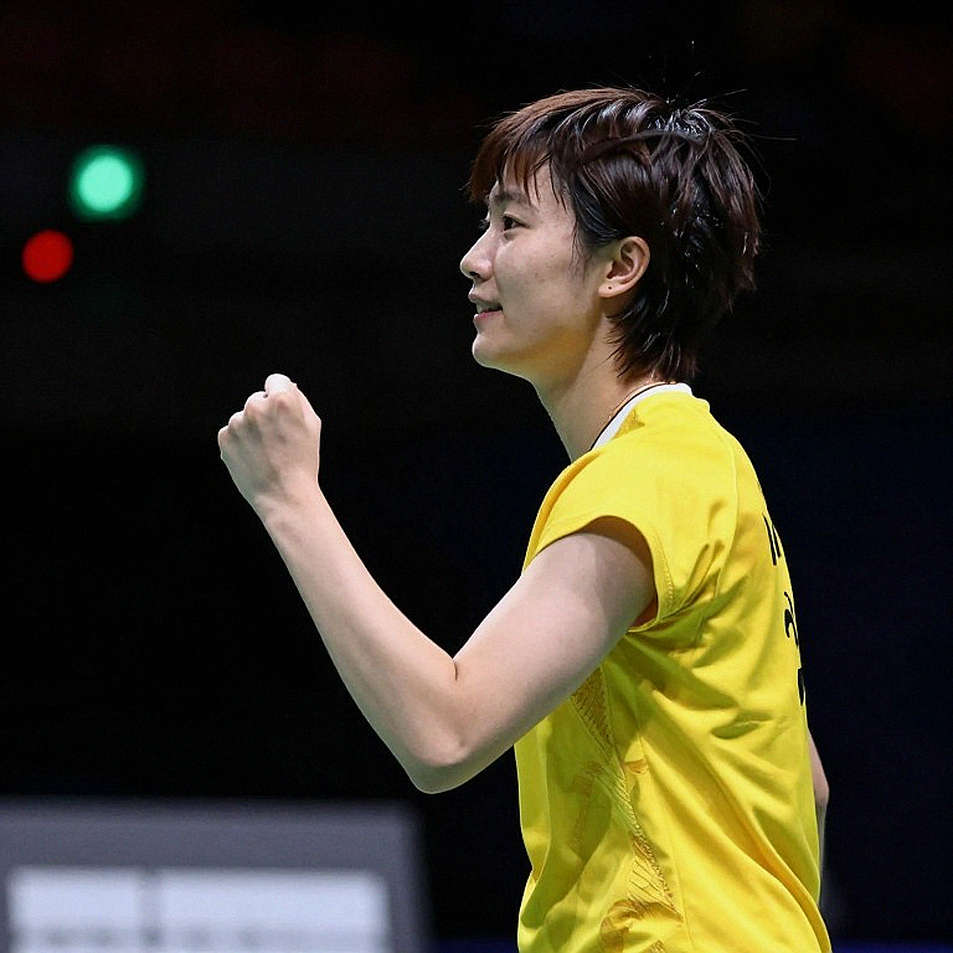
Late on a Sunday afternoon in September 2026, inside a hall in Ho Chi Minh City, the scoreboard stopped at two lines of numbers: 21-16 and 21-14. Aidil Sholeh Ali Sadikin put down his racket and looked up at the stands. In that moment he did not look like a man who had just won a badminton tournament. He looked like a man who had just paid off a debt nobody in the arena knew he owed.
I was sitting in the media area, roughly thirty metres from the court. Beside me, a colleague finished filing the news flash and stood up to leave. I stayed. Based on my years of watching matches at Super 100 level, I knew that the most important thing on an afternoon like this is never the scoreline. It is whatever was broken behind the scoreline.
A first BWF World Tour title. A Super 100 crown. USD 9,000 in prize money. On the face of it, a small story. Placed next to the number 27 — the months Malaysian men's singles had gone without a World Tour title of any kind — the story changes colour entirely. What was broken was not a losing streak. It was a silence.
A news report has many ways of saying a man won. The hardest way is to say a system just showed its crack.
Context: what a Super 100 actually is
The Vietnam Open sits at the Super 100 tier of the BWF World Tour, the lowest rung of the professional badminton ladder, beneath Super 300, Super 500, Super 750 and Super 1000. Fewest ranking points. Smallest prize pool. Lowest ability to attract elite entry.
When a Super 100 event falls in late season, in September, at a point where top-ten players rest or prioritise bigger events, the field depth falls automatically. At Vietnam Open 2026, the top seed in men's singles was Jason Teh of Singapore, ranked No. 33 in the world. At a Super 500 or Super 750, the top seed is usually a top-five or top-eight player. The distance between No. 33 and the top five is not small.
What that tells us is that this was a tournament for people who are building. Young players chasing points. Independent players without national-team support. Players trying to hold a career together after injury. And players looking for one moment to believe in themselves.
Aidil Sholeh belongs to the last group.
The USD 9,000 champion's cheque belongs in context. After tax, travel, hotel, food, and any share paid to a coach, the remainder does not change a professional's financial position. It pays for the next trip. This is why so many talented Southeast Asian players quit at 22 or 23 — not because they were not good enough, but because they could not afford to be good.
Core analysis
What 21-16, 21-14 tells us, and what it does not
The scoreline is the only firm data point available. A straight-games win over a higher-ranked opponent means no third game, control at the closing stages, and no late collapse. But there is no stroke data, no rally length, no error rate, no service strategy. Any technical claim about how Aidil played would be guesswork, and I refuse to guess where facts might arrive in a few days.
One inference is defensible, flagged low-confidence: a 21-16 opener widening to 21-14 is the typical shape of a player who solves an opponent inside the match. In-match adjustment. But one match is not a pattern.
Aidil's real profile lies in three finals
Aidil reached the final at Indonesia Masters II in 2026. He reached the final at Al Ain Masters in 2026. Now he has won Vietnam Open 2026. Three finals across three years, and the third one converted.
One title is a moment. Three finals is a trajectory.
The opponent: top seed, world No. 33
Jason Teh entered as top seed at world No. 33. That combination says less about Aidil than about the tournament. Their head-to-head now stands at 2-0 to Aidil. Two matches is too small a sample to establish a durable counter-dynamic. I will watch the third meeting.
A Malaysian record spanning nineteen years
Aidil is only the second Malaysian man to win the Vietnam Open, after Roslin Hashim in 2026. Nineteen years between the two names. That is a fact about Malaysian participation history, not about the tournament's competitive depth — but the gap still has diagnostic value.
The 27-month drought is the central number
The previous Malaysian men's singles World Tour title was Lee Zii Jia's Australian Open 2026, at Super 500 level. This one is Super 100. The tier has moved downward. Twenty-seven months does not measure Aidil's rise. It measures everyone else's absence.
Lee Zii Jia and single-star fragility
In the same tournament, Lee Zii Jia exited in round two to unseeded Zhe Ying Wu of Chinese Taipei. Aidil was left to carry Malaysia's challenge. When the national No. 1 falls in round two of a Super 100 to an unseeded opponent, that is a form signal. When it happens in the same week a nation celebrates breaking a 27-month drought, it is a structural signal.
The independent pathway
Aidil is reported as an independent shuttler, outside the centrally managed national setup. That is arguably more significant than the title. Independent players manage their own schedule, fund their own travel, assemble their own support staff, and absorb all financial risk. When one of them wins a World Tour event — even at the lowest tier — it questions whether centralised programmes are the only route to a champion.
The first press credential in a room full of men taught me one thing: outsiders do not ask for a seat, they build one. Aidil built his in Ho Chi Minh City.
The contrarian angle: four blind spots
First, calling this "history" quietly admits decline. In a healthy badminton nation, winning a Super 100 is not history. It is a normal step. A win only becomes history when history has stood empty too long.
Second, the risk of over-reading a single sample. The source describes the win as cementing Aidil's status as one of Malaysia's top shuttlers. That is opinion. Set beside it the Super 100 tier, a top seed at No. 33, and USD 9,000, and the picture is of a man who reached the ceiling of the tier he was in — not of a man who moved a level.
Third, the human story is being buried under the national story. No report asked how much Aidil spent to be in Ho Chi Minh City, where he slept, or what changed in his head between his second final and his third. Sport is the scene; I belong to what is left after the scene. I do not write about winners. I write about the people who get back up.
Fourth, the institutional question. Team-event selection and Olympic quotas follow written criteria. Whether an independent shuttler is assessed on equal terms is an open question, and one to track in the coming months.
What to watch over the next six to twelve months
His results at Super 300 and Super 500 — two quarter-finals or better in his first three events at that tier would change the story completely. Lee Zii Jia's form. Malaysia's wider pipeline. And whether the association names an independent player to a major team event.
Takeaway
A stadium has an address, but passion has no map. The hall in Ho Chi Minh City will close. The results will be filed into a database among thousands of others. What will not be filed anywhere is the moment at the end of the second game when Aidil realised he had walked to the end of a road he built himself. No system gave him that ending. He paid to get there. He paid to stay there. And he took it.
Forty-six years on, I am still learning how to tell a match with no ending. Aidil's match ended on the scoreboard. His story has not. It will be written at Super 300, at Super 500, at events where the costs are higher, the opponents stronger, and nobody calls him history anymore.