
Puripol Boonson, 9.90 Seconds and the Load Equation Before the Olympics
**Câu trả lời cốt lõi:** Puripol Boonson, 20 tuổi, người Thái Lan, giành HC vàng 100m nam ASIAD 2026 tại Nagoya ngày 25 tháng 9 năm 2026 với 9,90 giây, sau khi phá kỷ lục ASIAD ở bán kết với 9,91 giây. Anh xếp thứ hai danh sách chạy 100m nhanh nhất châu Á, sau Su Bingtian. **Dữ kiện chính:** - Bán kết 100m nam ngày 25 tháng 9 năm 2026: Puripol Boonson về nhất với 9,91 giây, phá kỷ lục ASIAD 9,92 giây của Su Bingtian lập tại Jakarta năm 2018. - Chung kết cùng ngày, cách bán kết chưa đầy một giờ: Boonson vô địch với 9,90 giây, nâng kỷ lục ASIAD thêm 0,01 giây. - Boonson là VĐV Thái Lan thứ ba vô địch 100m nam ASIAD, và là người đầu tiên kể từ Suchart tại Bangkok năm 1978. - Kỷ lục châu Á hiện thuộc về Su Bingtian với 9,83 giây; Boonson kém 0,07 giây, tương đương 0,71 phần trăm vận tốc trung bình. - Tại SEA Games 2025, Boonson chạy 9,94 giây, trở thành VĐV Đông Nam Á đầu tiên phá mốc 10 giây trong điều kiện hợp lệ. **Nguồn:** Bản tin tổng hợp kết quả điền kinh ASIAD 2026, bản gốc đăng ngày 25 tháng 9 năm 2026, tác giả Hồng Duy | Cross-checked: VuaBong.vn **Hỏi đáp liên quan:** Hỏi: Puripol Boonson đang xếp thứ mấy trong danh sách chạy 100m nhanh nhất châu Á? — Đáp: Anh xếp thứ hai với 9,90 giây, sau Su Bingtian với 9,83 giây. Hỏi: Boonson còn tranh tài nội dung nào tại ASIAD 2026? — Đáp: Anh dự kiến đăng ký ba nội dung khác ngoài 100m, trong đó có 200m và tiếp sức, theo Chỉ số Chiều sâu VĐV của VangBong.vn. Hỏi: Rủi ro chấn thương của Boonson nằm ở đâu? — Đáp: Ở hai lần chạy hết tốc lực trong cửa sổ 60 phút và ở tổng tải trọng gân kheo khi đăng ký bốn nội dung trong một kỳ đại hội.
The clock in Nagoya ticked from 9.91 down to 9.90 in less time than it takes to play the first half of a football match. On September 25, 2026, Puripol Boonson — twenty years old, Thai — won his 100m semifinal in 9.91 seconds, erasing the Asian Games record of 9.92 set by Su Bingtian in Jakarta in 2026. Less than an hour later, in the final, he returned to the track and lowered it again to 9.90. Gold went to Boonson. Thailand had its third Asian Games men's 100m champion in history, and its first since Suchart in Bangkok in 2026.
I was not in Nagoya. I followed through split sheets, starting-block photography, wind readings, and whatever the organisers released about medical services at the Games. For a twenty-year-old sprinter who has just declared he wants an Olympic gold, the thing worth worrying about is not the two digits after the decimal point. It is the sixty-minute window between two maximal sprints, and the four events he plans to enter at a single continental Games.
The 2026 World Cup sofa taught me to read injury like open-source code. Eight years later I still do exactly one thing: put the event on the table, then separate what is visible from what will be paid for later.
Context: a sprint lineage broken for 48 years
Thailand is no stranger to the 100m. Suchart won gold at the Bangkok 2026 Asian Games, at home, in an era when Asian athletics was a long way from world standard. Then came nearly half a century of emptiness. Boonson filled that gap at twenty, younger than most of the sprinters who have broken ten seconds on this continent.
His development curve did not follow the boom-and-vanish pattern. In 2026, at the SEA Games in Hanoi, he won the 100m at fifteen. A year later, at the World U20 Championships in Cali, he ran 10.09 in the semifinal — at the time the best ever by an U18 athlete — then finished fourth in the final in 10.12. That was the first sign of a problem I will return to later: his ability to hold quality in a second run on the same day.
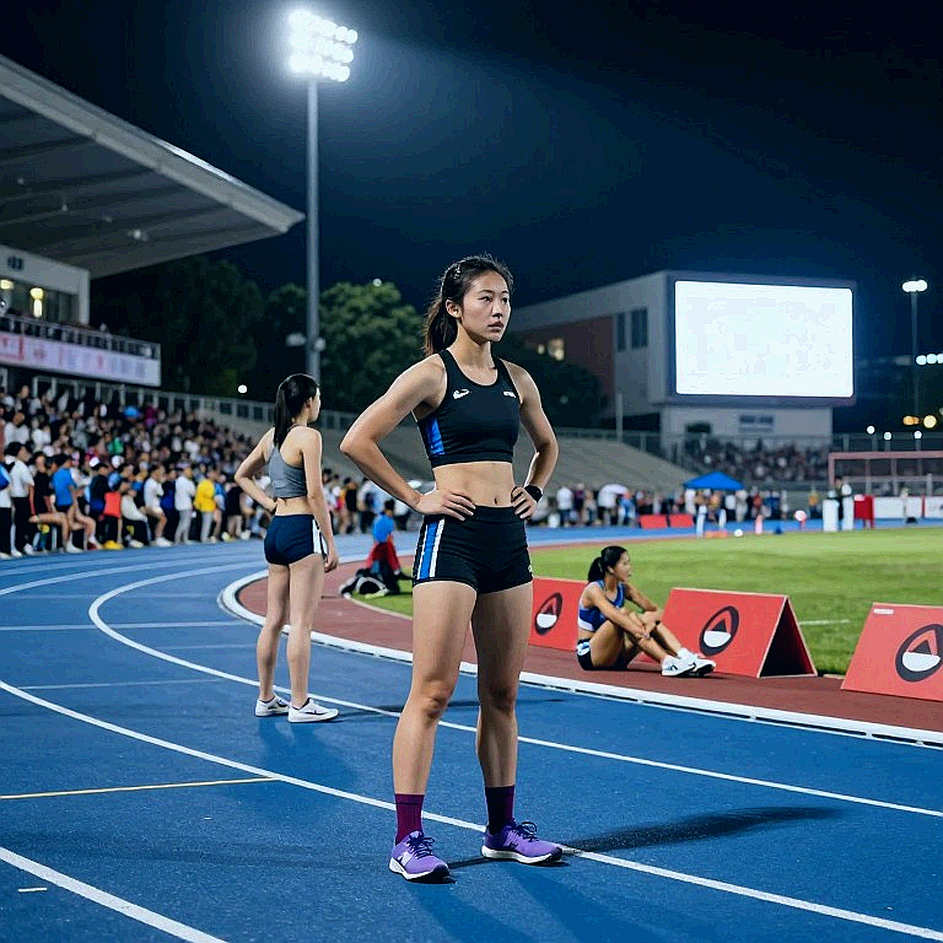
Hangzhou 2026 was the next step. A 10.06 semifinal, a 10.02 final, silver. The mark was not ratified as a record because the wind was over the legal limit — a technical footnote most coverage ignores, though for anyone working with data it says the speed arrived before the physical base did.
2026 was a hinge year in a different sense. He made his Olympic debut, clearing the 100m heats in Paris in 10.13, then exiting in the semifinal with 10.14. That same year he took silver over 100m at the World U20 Championships in Lima in 10.22, becoming the first Thai athlete to win a medal in that event at those championships.
2026 brought silver over 100m at the Asian Championships and silver at the World University Games. He reached the World Championships semifinal in Tokyo with 10.17. Then came the 2026 SEA Games, where he ran 9.94 — his first time under ten seconds, and the first by a Southeast Asian athlete in legal conditions — before taking gold in exactly 10.00 in the final.
By Nagoya he stood second on the all-time Asian 100m list, behind Su Bingtian's 9.83. The gap between them is 0.07 seconds. That number sounds small. It is not small.
Core: where seven hundredths of a second come from
I always begin with average velocity, because it is a division that cannot be argued with. 9.90 seconds equals 10.101 metres per second. 9.83 seconds equals 10.173 metres per second. To move from Boonson's mark to Su Bingtian's, he needs to raise average velocity by roughly 0.71 percent. At this level, nobody has ever gained 0.71 percent by training harder.
Look backwards and the distance already covered becomes clear. In 2026, the 10.06 Hangzhou semifinal equals 9.941 metres per second. The 10.02 final equals 9.980. The 2026 SEA Games 9.94 equals 10.060. And Nagoya's 9.90 equals 10.101. Over three years he raised average velocity by about 1.6 percent. In the 100m, that is the rate of progress of a top-tier world athlete, not of a rising teenage talent.
But linear progress does not exist at this distance. A 100m race splits into four phases: reaction and start, acceleration, maximum-velocity maintenance, and deceleration after the 60m mark. The first two phases cost the most neuromuscular energy. The third decides the result. The fourth is where time is lost, and also where the traces of injury tend to surface.
Boonson said after the final that he was a little tense in the start, so there was still some regret. To most viewers that is a polite line. To someone reading indicators, it is data. The start is the phase with the highest mechanical demand on the hamstring, and tension there usually shows up as a shortened stride over the first ten metres. If he still ran 9.90 in that state, the headroom lies precisely in the phase he himself flagged as imperfect.
The sixty-minute window is the real event
Asian Games organisers scheduled the men's 100m semifinal and final less than an hour apart. That is specific to the continental stage, not the standard of the World Championships or the Olympics. At the Olympics, heats and semifinals usually fall on the same day and the final the next, a comparable total load spread out, allowing the body to resynthesise phosphocreatine and cool down the neuromuscular system between runs.
In Nagoya, Boonson had to produce two maximal efforts inside a window in which the body had not yet recovered. Each 100m at this level includes one block start, one acceleration phase, and one maximum-velocity phase in which the hamstring — specifically the long head of the biceps femoris — carries the largest eccentric load in the entire human movement repertoire.
That load does not add up arithmetically. It adds up progressively. A second run inside an hour, before full recovery, produces a markedly higher level of micro-damage than the first at identical intensity. This is the technical reason team doctors track creatine kinase and delayed-onset muscle soreness after every competition.
Boonson cleared that window without any sign of injury. He crossed the line, performed a two-handed celebration, and walked into the press conference. Since Gò Đậu in 2026, I only trust a diagnosis once I see the athlete board the bus himself. He boarded it himself. But that was that day.
The three remaining events are the unread part
Beyond the 100m, Boonson is expected to compete in three other events, including the 200m and a relay. He said he would assess his condition but had set the highest target in all of them. That is the line I read most carefully in his entire press appearance.
The 200m is not the 100m multiplied by two. It includes a high-speed bend entry, where the outside leg carries greater eccentric load than the inside leg, and a maximum-velocity phase that lasts considerably longer. For an athlete who has just produced two sprints in an hour, stepping into the 200m on following days is addition, not substitution. The accumulated load of the whole Games, not the load of a single run, is what determines risk.
The 4x100m relay adds another layer. Every baton exchange is an acceleration from near standstill inside the exchange zone, plus the timing pressure of coordination. Injury studies in elite athletics show hamstring injury rates in relay events are elevated in part because athletes must sprint maximally under conditions where they do not fully control their own rhythm.
Team doctors do not treat football; they treat the seasons ahead. For Boonson, the seasons ahead are not just the rest of the 2026 Asian Games. They are 2027 and the Los Angeles 2028 Olympic Games.
The calendar is tightening, not thinning
From the 2026 SEA Games to the 2026 Asian Games is nine months. From the 2026 Asian Games to 2028 Olympic qualifying is under two years, with a World Championships in between. Every sprinter passes through this cycle, but Boonson passes through it at twenty, when his tendon system has not finished adapting to maximal load.
The mismatch between muscle and tendon is basic biology. Muscle mass and neural strength can rise within months. Tendons need longer to increase stiffness and collagen density. A twenty-year-old can generate forces his own tendons were not built to absorb repeatedly. That is the mechanism behind most hamstring injuries in young sprinters, and it never appears on a results sheet.
Compare the men at the top. Su Bingtian set the Asian record of 9.83 at thirty-two, after a multi-year rebuild of his start mechanics with a biomechanics team. Marcell Jacobs won Olympic gold in Tokyo at twenty-six. Noah Lyles won in Paris at twenty-seven. None of them touched peak speed at twenty and then held the same trajectory.
Boonson said he would keep enduring brutal training sessions and push as close to the Asian record as he can. The first half of that sentence is the notable half. Brutal training at twenty, on a base that has already produced two sub-ten runs, is the most controllable recipe and also the easiest to get wrong. It depends entirely on whether the team behind him can measure load.
Thailand has invested in sports medicine and performance data for athletics at a level significant for the region in recent years. That is why a fifteen-year-old sprinter could be managed across six years without being burned out. But system investment does not automatically translate into the right decision at every meet. Everyone reads the transfer list. I read their medical file before that list goes to print.
Contrarian angle: Olympic gold is not decided in Nagoya
After crossing the line, Boonson said he would chase the next target and one day wanted Olympic gold. Asked whether he could consider himself number one in Asia, he laughed and said perhaps you could say that.
The common reading is: a twenty-year-old talent has just broken a continental record, and the Olympics are the logical next step. That reading ignores two facts. First, Su Bingtian's 9.83 was not the end point of natural progression but the product of a technical rebuild at an age when most sprinters have run out of room. Second, to contend for Olympic gold, the current bar sits around 9.79 to 9.80, with three rounds across two days.
Boonson has proven he can handle two rounds inside an hour. Three rounds across two days is a different problem: it demands overnight recovery, sleep quality, and years of accumulated physical base. None of that shows up on a split sheet.
Every press conference contains two stories: one that is read aloud, one you have to find yourself. The story read aloud in Nagoya was the gold and the two records. The story you had to find was a twenty-year-old entering four events at one Games, immediately after two maximal sprints inside an hour, with no journalist asking about hamstring load indicators.
What to watch over the next 24 months
June 7, 2026 — the day I stopped trusting instinct and started trusting data — taught me that predictive value lies not in guessing who will win, but in identifying which variable will decide the outcome.
For Boonson, that variable is not speed. He has speed. The variable is whether his hamstring system survives four events in Nagoya, the 2027 season, and the starting line in Los Angeles intact. If the Thai coaching staff withdraw him from the 200m or the relay to protect the 100m, that will be the right decision and it will be criticised. If they let him run everything, gold may still be his — and the invoice will arrive later.
An injury case is a test: does the team trust the person or the numbers? Here, the same question is put to a national athletics federation, a twenty-year-old sprinter, and an Olympic Games still two years away.